




Warum das schwierig ist
Tracker economics turn on a small number of variables, and the ones that dominate are commercial rather than technical.
- The revenue gain from tracking is concentrated in morning and evening hours, so its value depends on the tariff structure rather than on annual yield alone
- Incremental capex covers structure, foundations, drives, controllers and wiring, and each of those scales differently with site conditions
- Foundation cost per megawatt rises with tracking because tracker foundations carry higher and more complex loads, and the increase varies by soil
- O&M cost rises with moving parts, and the spread between a well-maintained and a poorly maintained tracker fleet is large
- Terrain and row spacing interact with tracking, since a tracker needs straighter rows and its backtracking behaviour changes the land requirement
- Financing terms amplify or suppress the case, because the decision is about incremental return rather than absolute yield
Technische Anforderungen
These are the inputs an honest tracker economics assessment requires.
- Hourly or sub-hourly energy modelling rather than annual yield figures, so the tracker gain can be valued against the actual tariff
- Tariff structure per period: flat, time-of-use, or market-based with an assumed capture rate
- Incremental capex breakdown separating structure, foundation, drive and control systems from the installation cost difference
- Foundation design implications by soil type, since tracker foundations frequently drive the incremental cost
- O&M cost model covering drive and controller maintenance, spares and expected availability, with the assumed strategy stated
- Cost of capital and required return, plus terrain constraints such as slope tolerance and row straightness
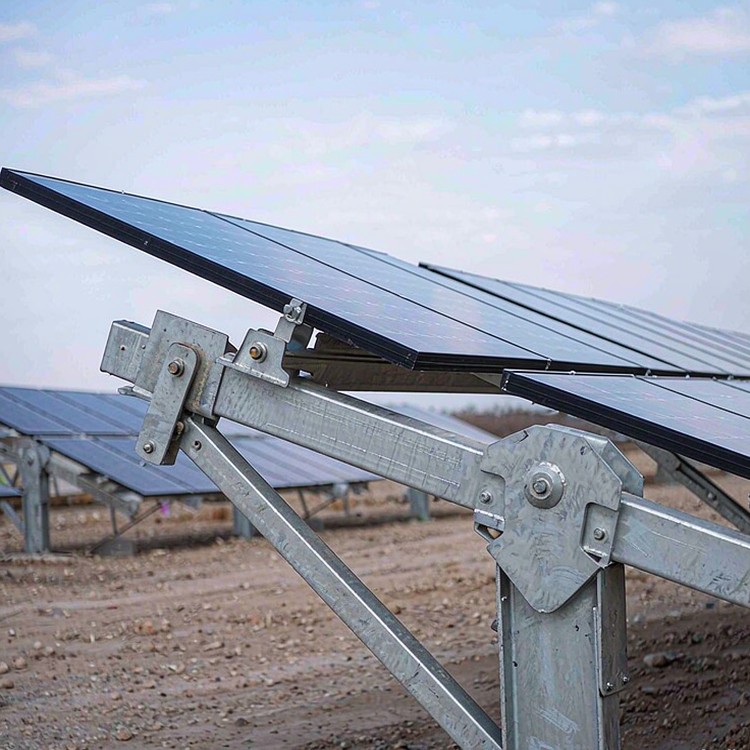
Selection guidance: insist on hourly modelling. An annual yield comparison inverts the answer on many projects, because it hides where in the day the tracker gain occurs and what that energy is worth.
Wie wir es lösen
- Hourly production modelling feeding an incremental cash flow analysis, so the tracker gain is valued at the price it will actually earn
- Segmented capex breakdown separating structure, foundation, drive and control elements so each can be tested against its revenue contribution
- Foundation assessment by soil zone, because tracker uplift and torsional loads frequently make the foundation the swing cost item
- O&M strategy modelled explicitly, including the expected maintenance interval for drives and control systems and the availability assumption used
- Terrain feasibility reviewed against the tracker actual slope and row-straightness tolerance rather than assuming tracked and fixed layouts need the same land
- Sensitivity analysis on tariff, capital cost and maintenance cost, so the decision is made against a range rather than a point estimate
Jenseits der Struktur
- Hybrid layout assessment with trackers on the favourable terrain zones and fixed-tilt on the constrained ones, which is often the highest-value configuration on a mixed site
- Configuration comparison at the same land area, so land cost and revenue are not double-counted in the comparison
Referenz-Benchmarks
Die folgenden Benchmarks sind öffentlich dokumentierte Branchenreferenzprojekte vergleichbarer Art und Größenordnung, die zur Veranschaulichung der Ingenieurpraxis dienen. Sie stellen nicht unsere Leistungsbilanz dar.
- A 300 MW project in Texas where hourly modelling showed the tracker gain concentrated in high-value evening periods, strengthening a case that an annual yield comparison had made marginal.
- A 200 MW project in Spain where foundation cost on rocky ground consumed most of the tracking premium, making a hybrid layout the better outcome.
- A 150 MW site in Chile where the tariff structure rewarded daytime production, reducing the incremental value of tracking despite a strong annual yield gain.
Standards und Konformität
- Windlastfälle nach ASCE 7 / EN 1991 / AS-NZS 1170 mit standortspezifischen Geländekategorien
- IEC 62727 Anforderungen an die Struktur von Spurführungsanlagen, sofern Spurführungsstrukturen in den Anwendungsbereich fallen
- Dokumentation gemäß EN 1090-2 oder AISC 360 für Fertigung und Ausführung
- Feuerverzinkung nach ISO 1461, Korrosivitätsklassifizierung nach ISO 9223 für die Zinkmasse
- Qualitätsmanagementsystem nach ISO 9001:2015, Umweltmanagementsystem nach ISO 14001 auf Anfrage
- Eine externe aeroelastische Windkanalstudie für großformatige Module ist verfügbar.
Qualitätssicherung
Die Chargendokumentation wird chargenweise ausgestellt: Werkszeugnisse mit Rückverfolgbarkeit zu den Chargennummern, Verzinkungsprotokolle mit gemessener Schichtdicke, Maßprüfberichte von den Vormontagevorrichtungen und Chargenrückverfolgbarkeit der Hardware. Die Garantie deckt bestimmte Lastfälle und Umwelteinwirkungsklassen ab, sodass Ansprüche anhand von Daten und nicht durch Verhandlungen reguliert werden.
Dokumentation, die Sie erhalten
Jede Sendung enthält ein auf Ihr Anlagenverzeichnis abgestimmtes Dokumentenpaket: zertifizierte Materialprüfberichte, Aufzeichnungen zur Beschichtungsdicke pro Charge, Prüfprotokolle für Drehmoment und Vorspannung, Packlisten mit Containernummern und einen Satz wartungsrelevanter Zeichnungen. Falls der Zielmarkt lokale Zertifizierungen oder Übersetzungen von Dokumenten erfordert, erstellen wir diese im Voraus und nicht erst im Hafen.
Lebensdauer- und Wartungsplanung
Die Ersatzteilplanung ist integraler Bestandteil der Konstruktion: Die Klemmgeometrie ermöglicht den Austausch einzelner Module ohne Schienenbruch, die Pfahlköpfe können nach Setzungen neu nivelliert werden, und die Ersatzteilpakete sind auf Ihre Umgebungsklasse und Kapazität abgestimmt. Dadurch bleiben Nacharbeiten während der Nutzungsdauer schnell, planbar und unabhängig vom Produktkatalog des ursprünglichen Lieferanten.
Kosten- und kommerzielle Überlegungen
- Tracker incremental capex typically runs 8 to 15 percent above fixed-tilt at the structure and foundation package level, before controls
- Foundation cost is the most variable element and the one most likely to invalidate the case on difficult ground
- Drive and control systems add capex and an ongoing maintenance obligation, with spares and technical support forming part of lifecycle cost
- The revenue gain typically falls in the range of 10 to 25 percent of annual energy, with a higher proportion of it in the more valuable hours
- Assessment cost is modest and usually returned many times over, since the wrong choice is expensive to reverse after construction
Häufig gestellte Fragen
Is tracking always worth it?
Why hourly modelling rather than annual yield?
What is the biggest surprise in tracker projects?
What is a hybrid layout and when does it help?
How much does O&M really differ?
Verwandte Leitfäden und Anwendungsseiten
Fahren Sie mit den Seiten fort, die Ihrem Projekttyp am ehesten entsprechen.
- Wirtschaftlichkeit von Tracker- gegenüber Fixed-Title-Konten – die Gruppenübersicht für dieses Skalenband
- Festneigbare vs. nachgeführte Teleskope: Ertrags- und Kostenvergleich
- Geländeanpassungsfähigkeit und Rückverfolgung des Trackers
- Tracker-Anwendungen: Komplexes Gelände und hügelige Standorte
- Anwendungen von Tracker-Systemen
- Solarenergieprojekte an Hängen und sanften Hängen
Was wir für ein Angebot benötigen
- Site location, irradiance data and the intended capacity
- Tariff structure and any time-of-use or market-based pricing assumptions
- Preliminary geotechnical information, since foundation cost is the main swing item
- Terrain survey or slope data for the developable area
Sprechen Sie mit einem Statiker
Send the site data and the tariff structure you are working to, and we will return an incremental cash flow comparison between tracking and fixed-tilt with the assumptions stated.
 English
 Español
 Deutsch
 Português
 Français
 Italiano