




Why This Is Difficult
Physical testing earns its cost in two situations: when code coefficients are a poor fit for the geometry, and when the structure responds dynamically rather than statically.
- Code pressure coefficients are developed for generic geometries, so they are conservative for some configurations and unrepresentative for others
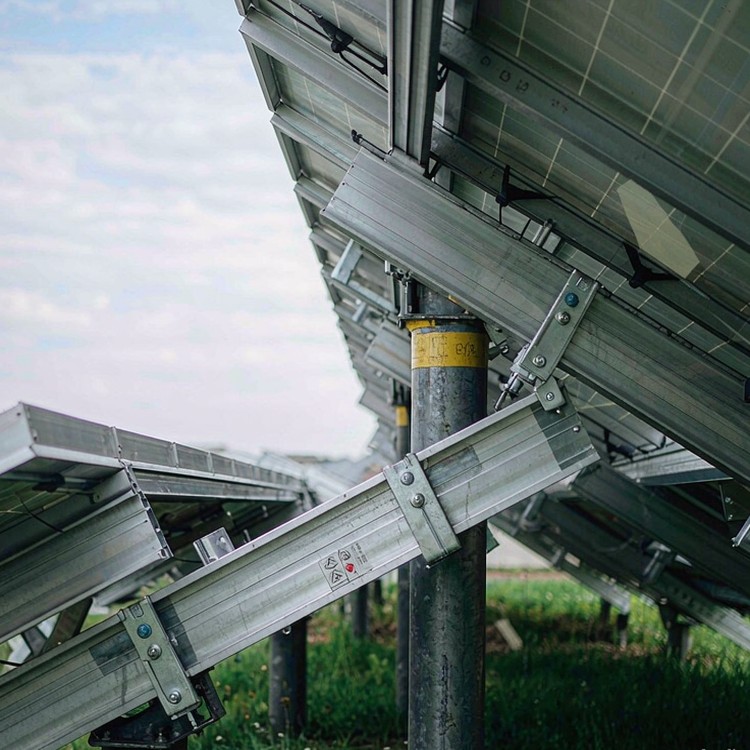
- Trackers present a large, low-stiffness surface that can respond dynamically, producing loads a static calculation does not predict
- Stow strategy, the angle at which the array is parked before high wind, is validated by testing rather than assumed from a data sheet
- Large-format modules reduce the number of attachment points relative to area, changing the load path and increasing deflection sensitivity
- Testing can recover tonnage in the interior of a large array, where conservative coefficients are applied over the greatest area
- Lenders and technical advisers increasingly request a testing report or an equivalent justification on tracker-based projects above a certain scale
Engineering Requirements
These are the inputs and decisions involved in a wind tunnel programme.
- Array configuration and geometry for the model: module size, tilt range, row pitch, array height and the number of rows to be represented
- Site wind climate: basic wind speed, turbulence intensity and directional distribution, since the test matrix is built from these
- Terrain and topographic context, so the boundary layer in the tunnel represents the actual site
- Dynamic characteristics of the real structure, namely natural frequencies and damping, supplied by the structure engineer
- Stow strategy to be tested, including angle, wind speed trigger and wind direction coverage
- Required test outputs: static pressure coefficients, dynamic response, and the aeroelastic stability envelope
Selection guidance: agree the test matrix and the stow strategy before commissioning the study. A test conducted without a stow case to validate produces coefficients but no operational answer.
How We Solve It
- Wind tunnel study scoped to the actual configuration, producing pressure coefficients that reflect the array rather than a generic geometry
- Aeroelastic testing for tracker and flexible structures, measuring dynamic response rather than inferring it from static coefficients
- Stow strategy validation, so the parking angle and the wind speed trigger are demonstrated rather than assumed
- Directional testing, since the worst case is frequently not the perpendicular wind but an oblique direction that produces torsion
- Results delivered in a form the structural engineer can apply directly, with a test report suitable for lender or third-party review
- Comparison against the code calculation, so recovered tonnage and the resulting saving are visible rather than claimed
Beyond the Structure
- Test data reused across a project family, so a second site with the same configuration and similar wind climate uses the same study
- A tested stow strategy also protects against field damage, which is a maintenance cost avoided rather than a capex cost recovered
Reference Benchmarks
Benchmarks below are publicly documented industry reference projects of comparable type and scale, cited to illustrate engineering practice. They are not our delivery record.
- A 500 MW tracker portfolio where a wind tunnel study demonstrated a stow strategy that reduced structural demand and avoided a costly design revision.
- A 200 MW project using large-format modules where dynamic testing identified an oblique-wind response the static calculation had not shown as governing.
- A multi-site programme where one study covering a common configuration was applied across four sites with similar wind climates, spreading the cost.
Standards and Compliance
- ASCE 7 / EN 1991 wind loads resolved with site-specific terrain and exposure factors
- IEC 61215 / IEC 61730 module interface compatibility verified against your module datasheet
- EN 1090 or AISC execution classes for welded and bolted steelwork
- Hot-dip galvanizing to ISO 1461, zinc mass specified by soil and atmospheric corrosivity
- ISO 9001 production quality management with batch-level traceability
- CE / EN 1090 documentation pack where destination markets require it
Quality Assurance
Every batch ships with mill certificates, coating-thickness logs and bolt records; welds follow EN 1090 or AISC execution classes. Structure warranty runs to 10 years against a 25-30 year service design life, and spare-part packages are documented so year-12 repairs do not depend on year-1 memory.
Documentation You Receive
Documentation is built for audits, not decoration: structural calculation notes stating load cases and standards used; foundation design basis mapped to your geotechnical report; material certificates for steel and fasteners; galvanizing certificates with measured coating thickness per batch; assembly drawings with torque tables; and packing documentation matched to container manifests. For financed projects we add lender-format compliance statements; for public tenders we respond to documentation schedules line by line.
Service Life and Maintenance Planning
Service life is a design output, not a promise. Zinc mass, fastener coating class, drainage detailing and dissimilar-metal isolation are selected against the corrosivity category of your site, and the expected first-maintenance interval is stated in writing. For aggressive environments we step the coating system up at design stage, which is always cheaper than a retrofit.
Cost and Commercial Considerations
- Wind tunnel studies are priced per test campaign, with cost driven by model complexity and the number of configurations tested
- The cost is usually recovered in recovered tonnage or avoided foundation depth on arrays of significant scale in marginal wind zones
- Additional configurations add incremental cost, so a well-defined test matrix is more economical than sequential single-case testing
- Dynamic testing costs more than static pressure measurement but is the only way to establish an aeroelastic envelope
- A validated stow strategy has operational value beyond capex, since it reduces storm damage risk and the associated outage and repair cost
Frequently Asked Questions
When is wind tunnel testing worth the cost?
What is aeroelastic testing and why does it matter?
Does testing change the stow strategy?
Can results from one project be used on another?
What does the test report contain?
Related Guides and Application Pages
Continue with the pages closest to your project type.
What We Need to Quote
- Array configuration, module format and the tilt range to be considered
- Site wind climate data and the design wind speed requirement
- Structural natural frequencies and damping, or the structure design it will be applied to
- Intended stow strategy, or a request for the study to determine one
Talk to a Structure Engineer
Send the array configuration and the site wind climate, and we will return a proposed test matrix, the coefficients it will produce and an estimate of the tonnage it could recover.
