


Por que isso é difícil?
Land requirement is frequently under-estimated at development stage, and the reasons are mostly items that only appear once the layout is drawn.
- Ground coverage ratio drives the majority of the variation, and it is itself the output of an economic optimisation rather than a fixed value
- Module efficiency determines how much capacity fits into a covered area, so module technology changes land requirement directly
- Setbacks, access roads, drainage, fence lines and substation footprint consume land that carries no modules
- Terrain reduces usable area, since slopes, streams, wetlands and unsuitable ground are excluded after survey rather than before
- Tilt choice changes row pitch, and therefore land per megawatt, so the tilt decision has a land cost as well as an energy effect
- Land lease terms, local planning restrictions and agricultural land classification can override the engineering optimum entirely
Requisitos de engenharia
These are the inputs required for a defensible land requirement estimate.
- Module efficiency and dimensions for the intended technology, since capacity density follows directly from them
- Target ground coverage ratio, or the land constraint that will determine it
- Tilt or tracker configuration, since it sets row pitch and therefore row spacing
- Setback and access requirements from local planning, including road widths, fence distances and drainage provision
- Site survey identifying slopes, watercourses, protected areas and ground unsuitable for construction
- Lease terms or land cost per hectare, and any restriction on the proportion of a parcel that may be developed
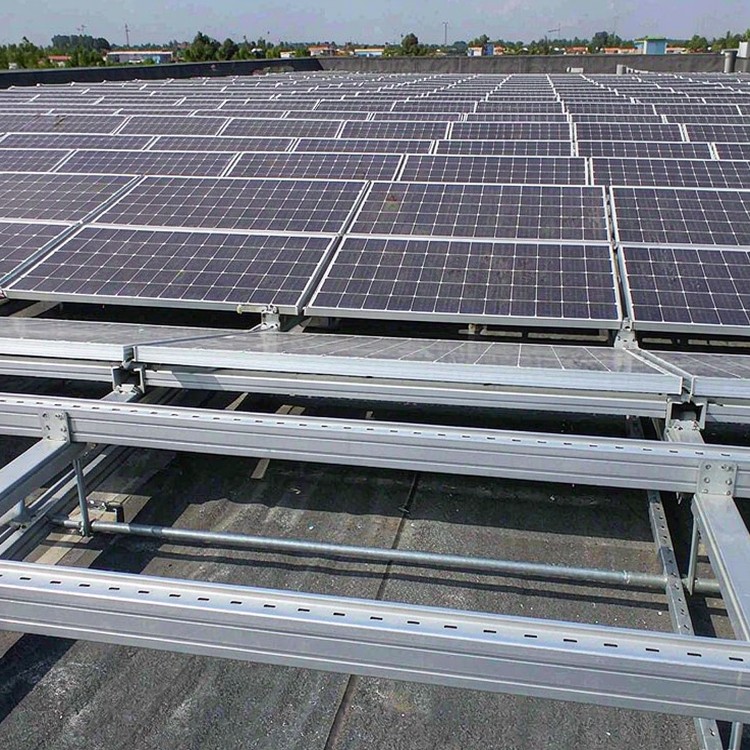
Selection guidance: calculate land requirement from the layout, not from a ratio. Acres per megawatt is an output of the design, and treating it as an input is how projects acquire land they cannot use or discover they need more.
Como resolvemos isso
- Capacity density calculated from the actual layout, with the gross area broken into net module area and the land consumed by setbacks and infrastructure
- GCR and module efficiency carried explicitly, so land requirement can be re-estimated when either changes
- Terrain-adjusted usable area, with excluded zones mapped rather than assumed away
- Setback and access provision built into the layout from the start, so planning requirements are not discovered after land is secured
- Land requirement presented per megawatt at several GCR values, giving the development team a range rather than a single figure
- Sensitivity to module efficiency, since a technology change moves the land requirement more than most other parameters
Além da estrutura
- Guidance on the land parcels that suit the layout and those that do not, supporting lease negotiation rather than post-hoc accommodation
- Documentation of the assumptions, so that a later capacity change can be translated into a land change without repeating the survey
Benchmarks de referência
Os benchmarks abaixo são projetos de referência da indústria, de tipo e escala comparáveis e documentados publicamente, citados para ilustrar a prática de engenharia. Eles não representam nosso histórico de entregas.
- A 200 MW tracker project in Australia where capacity density improved after module efficiency increased, reducing the land requirement by a meaningful margin at the same GCR.
- A 150 MW project in the United States where planning setbacks and access requirements consumed a larger land fraction than the array design itself.
- A 100 MW site in Spain where terrain exclusion reduced usable area enough to make a lower GCR economically preferable to retaining the original capacity target.
Normas e Conformidade
- EN 1991-1-3 / ASCE 7 casos de carga de neve e gelo adequados ao seu período de retorno de projeto
- IEC 61215 / IEC 61730 para zona de fixação do módulo e compatibilidade da estrutura
- Classes de execução de estruturas metálicas EN 1090 / AISC com registros de qualificação de procedimentos de soldagem
- Galvanização ISO 1461, sistemas de pintura ISO 12944 onde é especificado revestimento duplex
- Gestão da qualidade na produção segundo a norma ISO 9001, com rastreabilidade do lote até o número de lote.
- Suporte para documentação de código de construção e licenciamento local em sua jurisdição.
Garantia de Qualidade
Cada lote é enviado com certificados de fábrica, registros de espessura do revestimento e listas de parafusos; as soldas seguem as normas EN 1090 ou as classes de execução AISC. A garantia da estrutura é de 10 anos, considerando uma vida útil projetada de 25 a 30 anos, e os pacotes de peças de reposição são documentados para que os reparos no 12º ano não dependam da memória do 1º ano.
Documentação que você receberá
A documentação é elaborada para auditorias, não para decoração: notas de cálculo estrutural indicando os casos de carga e as normas utilizadas; base de projeto da fundação mapeada de acordo com o seu relatório geotécnico; certificados de materiais para aço e fixadores; certificados de galvanização com a espessura da camada medida por lote; desenhos de montagem com tabelas de torque; e documentação de embalagem conferida com os manifestos de contêineres. Para projetos financiados, adicionamos declarações de conformidade no formato exigido pela instituição financeira; para licitações públicas, respondemos aos requisitos de documentação item por item.
Planejamento de Vida Útil e Manutenção
A viabilidade econômica dos sistemas de montagem é definida no oitavo ano, não na assinatura do contrato. O peso da galvanização, a classe de revestimento dos fixadores e a proteção das bordas determinam se a inspeção do oitavo ano encontrará parafusos apertados ou manchas de ferrugem. Publicamos os intervalos esperados para a primeira manutenção por classe ambiental e os respaldamos com registros de revestimento por lote, para que as discussões sobre garantia comecem com base em dados concretos.
Custos e considerações comerciais
- Acres per megawatt is not a cost, but it determines land cost, and land cost per hectare varies by more than an order of magnitude between markets
- Items that consume land without carrying modules, such as setbacks, roads and drainage, are a real cost with no revenue attached
- Over-estimating land requirement at development stage ties up capital in land that may not be developable, while under-estimating it delays the project
- Module efficiency improvements reduce land per megawatt, which is often worth more than the module price premium that delivers it
- Land cost is fixed for the layout, so the GCR and efficiency decisions that determine density are among the highest-leverage choices in development
Perguntas frequentes
How many acres per megawatt should we plan for?
What affects capacity density most?
Should we calculate land before or after the layout?
Does a tracker use more land than fixed-tilt?
How does terrain change the land requirement?
Guias e páginas de aplicativos relacionados
Continue com as páginas mais próximas do seu tipo de projeto.
- Row Spacing, GCR & Capacity Density – a visão geral do grupo para esta escala
- Otimização GCR para matrizes de rastreadores
- Análise de sombreamento entre linhas e projeto de espaçamento entre linhas
- Projetos de energia solar em escala de utilidade pública
- Projetos de energia solar para agricultura mecanizada e rotação de culturas
- Desert & Sand-Dune Solar Projects
O que precisamos para cotar
- Target capacity and the intended module technology with efficiency data
- Site boundary survey or topographic mapping of the parcel
- Local planning requirements for setbacks, access and fencing
- Land cost or lease terms, and any development restriction on the parcel
Fale com um engenheiro estrutural.
Send the target capacity, module technology and site boundary, and we will return a capacity density estimate with the land fraction consumed by setbacks and infrastructure shown separately.
 English
 Español
 Deutsch
 Português
 Français
 Italiano