






Por que isso é difícil?
Freight cost on racking is driven by the ratio of volume to weight, and the ratio is set by component geometry.
- Steel rail and beam sections are volume-limited rather than weight-limited, so container utilisation is usually governed by packing arrangement rather than by mass
- Rail length drives container choice, since a rail that fits a 40 foot container in one length avoids joined sections and wasted void space
- Pre-assembly improves site productivity but reduces packing density, so the level has to be selected against both freight and labour cost
- Packaging protects coatings in transit, and over-packaging costs container space while under-packaging costs coating repairs on site
- Mixed loads containing a full bill of materials for one array block unload faster on site but pack less densely than segregated component shipments
- Destination port handling, inland transport and site storage all scale with container count, so the effect of packing density extends well beyond the sea freight line
Requisitos de engenharia
These are the inputs that determine container loading density for a racking package.
- Full component list with dimensions, weights and the longest item in the package
- Pre-assembly level intended, since factory assembly and packing density trade against each other
- Container type and any restriction on internal dimensions, particularly for high-cube or open-top units
- Destination port, inland transport mode and any weight limit on the final leg
- Site storage capacity and the delivery cadence planned, since density affects how much material arrives at once
- Coating and packaging requirement, including any client specification for protection in transit
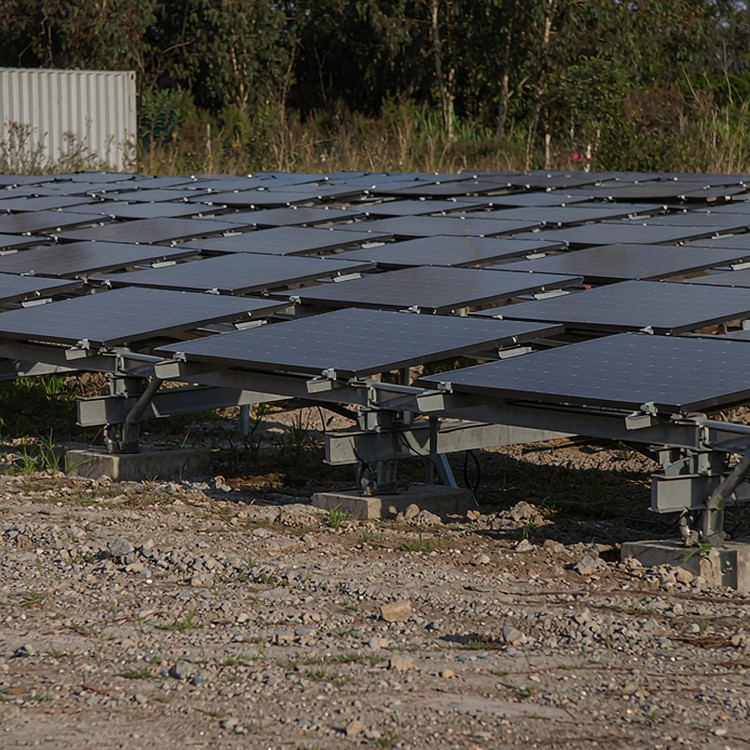
Selection guidance: decide the pre-assembly level before optimising packing. Packing density and site labour are interdependent, and optimising one without the other produces a quotation that is efficient in the wrong place.
Como resolvemos isso
- Rail and beam lengths selected to fit standard container internal dimensions in a single piece, eliminating joints and void space
- Nesting and stacking geometry designed for the component family, so packing density comes from arrangement rather than from force
- Pre-assembly level chosen against both freight density and site labour, with the trade-off quantified rather than assumed
- Packaging specification matched to transit risk: sufficient protection for coatings and edges without consuming container volume unnecessarily
- Loading plans issued per container with component lists, so receiving and inventory control at site does not depend on opening every unit
- Delivery packaging grouped by installation sequence, so containers unload to the work front rather than into a laydown area
Além da estrutura
- Container count per megawatt stated in the quotation, making freight comparable between bidders rather than hidden in delivery terms
- Loading plans revised when the bill of materials changes, so late design changes do not silently increase freight cost
Benchmarks de referência
Os benchmarks abaixo são projetos de referência da indústria, de tipo e escala comparáveis e documentados publicamente, citados para ilustrar a prática de engenharia. Eles não representam nosso histórico de entregas.
- A 300 MW project in the Middle East where rail lengths were set to standard container dimensions, avoiding joined sections and reducing container count per megawatt.
- A 150 MW project in Chile where a partial pre-assembly level was selected after quantifying the freight density loss against the site labour saving.
- A 200 MW programme in Australia where installation-sequence packing allowed containers to be unloaded directly to work fronts, cutting laydown storage.
Normas e Conformidade
- Combinações de carga de vento ASCE 7 / EN 1991 e carga sísmica EN 1998 / IBC, quando aplicáveis.
- Níveis de teste de carga mecânica do módulo IEC 61215 compatíveis com a pressão de projeto do seu conjunto de matrizes.
- Classes de execução EN 1090-1/-2 ou AISC para componentes de aço estrutural
- Galvanização ISO 1461 com massa de zinco escalonada por categoria de corrosividade C2 a C5.
- Gestão da qualidade ISO 9001:2015 e qualificação documentada de fornecedores.
- Apoio da DNV ou equivalente para avaliação de viabilidade bancária de projetos financiados
Garantia de Qualidade
A documentação do lote é emitida por lote: certificados de fábrica rastreáveis aos números de lote, registros de galvanização com a espessura do revestimento medida, relatórios de inspeção dimensional de gabaritos de pré-montagem e rastreabilidade do lote de componentes. A garantia cobre casos de carga e classes de exposição ambiental específicos, portanto, as reclamações são resolvidas com base em dados, e não em negociação.
Documentação que você receberá
Cada remessa inclui um pacote de documentos alinhado ao seu registro de ativos: relatórios de testes de materiais certificados, registros de espessura de revestimento por lote, fichas de verificação de torque e pré-carga, listas de embalagem com números de contêineres e um conjunto de desenhos relevantes para a manutenção. Quando o mercado de destino exige certificação local ou documentos traduzidos, nós os preparamos com antecedência, em vez de no porto.
Planejamento de Vida Útil e Manutenção
Planeje a manutenção com base em indicadores mensuráveis, não em estimativas de calendário: inspeção visual anual de amostras de torque de fixação, condição do revestimento nas bordas de corte e zonas de contato com o solo; inspeção detalhada após o primeiro ano com condições climáticas extremas; e verificação de reaperto após o primeiro ciclo térmico em instalações de longa duração. Fornecemos a lista de verificação de inspeção e os critérios de aceitação juntamente com o manual de instalação.
Custos e considerações comerciais
- Freight per megawatt is driven by containers per megawatt, so packing density is a direct cost lever rather than a logistics detail
- Pre-assembly reduces site labour and increases freight volume, and the net effect depends on the relative cost of the two in the destination market
- Packaging material cost is small relative to the coating repair cost it prevents, but excessive packaging costs container space
- Inland transport and port handling scale with container count, so the savings from good packing density continue after the sea leg
- Site storage and double handling are often invisible in a quotation and visible in the construction budget, which is why delivery grouping matters
Perguntas frequentes
How much does container packing affect cost?
Is pre-assembly worth the freight cost?
How is loading planned?
Can coating damage in transit be avoided?
What if the design changes after the loading plan is issued?
Guias e páginas de aplicativos relacionados
Continue com as páginas mais próximas do seu tipo de projeto.
- Logistics, Pre-Assembly & Installation – a visão geral do grupo para esta escala
- Projeto de pré-montagem para instalação em campo
- Produtividade e cronograma de construção da cravação de estacas
- Montagem flexível e aplicações de grande vão
- Mountain & Steep-Terrain Solar Projects
- Projetos de energia solar para o mercado regional
O que precisamos para cotar
- Full component list with dimensions and weights, including the longest item
- Intended pre-assembly level and any site labour considerations
- Destination port, inland transport mode and final-leg weight limits
- Site storage capacity and the delivery cadence planned
Fale com um engenheiro estrutural.
Send the component list and the destination, and we will return a loading plan with containers per megawatt, a packaging specification and a delivery grouping matched to your construction sequence.
 English
 Español
 Deutsch
 Português
 Français
 Italiano