


Perché questo è difficile
Screws are usually selected for reasons other than cost, and the reason in each case changes the specification.
- Refusal in dense or rocky strata stops driven piles but does not stop a screw, which can be advanced with controlled torque
- Vibration-sensitive ground near pipelines, buildings, instrumentation or landfill caps rules out impact driving and often vibratory driving as well
- Sites with a decommissioning obligation need foundations that can be fully removed and the ground reinstated
- Installation torque gives a capacity indication on every pile rather than on a tested sample, which changes the verification economics
- Screw piles tolerate a wider range of soil conditions within one site, reducing the cost penalty of variable ground
- In deep frost zones the screw can be designed to bear below the frost line without the driving stresses a long driven pile would carry
Requisiti di ingegneria
These are the decisions that define a ground screw specification.
- Soil profile with corrosivity testing, since both helix diameter selection and coating class depend on it
- Design loads per foundation with the governing uplift and compression cases stated separately
- Installation torque target correlated to capacity, established from a site test programme rather than assumed from tables
- Helix geometry: number of helices, diameter and spacing, selected against soil type and required capacity
- Coating system for buried steel, with corrosion allowance or sacrificial thickness defined for the site soil class
- Equipment access and reinstatement plan, particularly where vegetation, surface finish or capped ground must be preserved
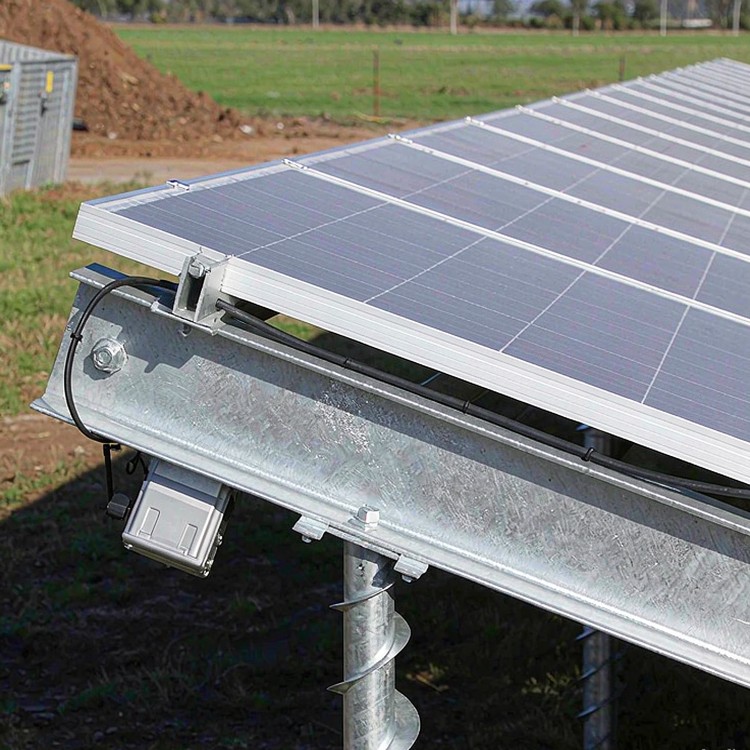
Selection guidance: correlate installation torque to capacity with a site test. Torque correlation is what makes screw piles verifiable, and a correlation assumed from a table rather than measured is not verification.
Come lo risolviamo
- Helix geometry selected against the site soil type, with capacity delivered by bearing on the helix rather than by shaft friction alone
- Torque-correlated installation, so every foundation carries an installation record that indicates its capacity
- Corrosion allowance and coating system specified by soil class, with the buried section treated separately from the above-ground structure
- Installation with compact equipment where access or surface protection demands it, without a piling rig
- Reversible design: foundations can be extracted at decommissioning and the ground reinstated to meet restoration obligations
- Extension shafts for deeper frost penetration or for bringing the connection above finished grade without changing the foundation
Oltre la struttura
- Ground disturbance limited to the screw footprint, preserving surface vegetation, drainage and any capping layer
- Installation records per foundation issued as part of the as-built set, supporting both warranty and future capacity assessment
Parametri di riferimento
I parametri di riferimento riportati di seguito sono progetti di settore di tipo e dimensioni comparabili, documentati pubblicamente e citati a scopo illustrativo delle migliori pratiche ingegneristiche. Non rappresentano il nostro storico di realizzazione.
- A 40 MW landfill project in Italy using ground screws to avoid penetrating the cap, with foundations extracted and the surface reinstated at end of life.
- A 60 MW project in Japan where vibration limits near existing infrastructure ruled out driving, and torque-correlated screws provided per-foundation capacity records.
- A 25 MW community solar programme in the United States on shallow bedrock, where screws removed the refusal problem that had stopped a driven pile design.
Standard e conformità
- Carichi del vento ASCE 7 / EN 1991 risolti con fattori di terreno ed esposizione specifici del sito
- Compatibilità dell'interfaccia del modulo IEC 61215 / IEC 61730 verificata rispetto alla scheda tecnica del modulo.
- Classi di esecuzione EN 1090 o AISC per carpenteria metallica saldata e bullonata
- Zincatura a caldo secondo ISO 1461, massa di zinco specificata in base alla corrosività del suolo e dell'atmosfera.
- Gestione della qualità della produzione secondo la norma ISO 9001 con tracciabilità a livello di lotto.
- Documentazione CE/EN 1090 ove richiesta dai mercati di destinazione.
Garanzia di qualità
Il controllo qualità si basa su punti di controllo: verifica dell'ingresso del materiale, ispezione in corso di saldatura e posizione dei fori, campionamento dello spessore del rivestimento e controllo del contenitore prima della spedizione. Ogni punto di controllo genera un documento che il vostro team di controllo qualità può archiviare, e l'ispezione pre-spedizione è a disposizione del vostro ispettore o di una terza parte.
Documentazione che riceverai
La documentazione è importante quanto l'acciaio stesso. Per ogni consegna riceverete certificati di collaudo del laminatoio riconducibili ai numeri di lotto; registri di zincatura per lotto conformi alla norma ISO 1461 o allo standard da voi specificato; rapporti di ispezione dimensionale delle dime di preassemblaggio; tracciabilità dei lotti di bulloni e componenti; disegni as-built laddove siano state apportate modifiche in cantiere; e un documento di garanzia che specifica i casi di carico coperti, la durata di vita utile prevista e le procedure di reclamo. Tutto è indicizzato, in modo che il registro delle risorse non dipenda dalla memoria di un singolo ingegnere.
Pianificazione della durata di servizio e della manutenzione
La durata di servizio è un risultato di progettazione, non una promessa. La massa di zinco, la classe di rivestimento dei dispositivi di fissaggio, i dettagli di drenaggio e l'isolamento tra metalli diversi vengono selezionati in base alla categoria di corrosività del sito e l'intervallo previsto per la prima manutenzione viene indicato per iscritto. Per ambienti aggressivi, in fase di progettazione, il sistema di rivestimento viene potenziato, il che è sempre più economico di un intervento successivo.
Considerazioni di costo e commerciali
- Ground screws typically cost more per foundation than driven piles, with the gap driven by helix size, coating class and shaft length
- Installation speed is usually lower than driven piles in favourable soils, but higher where refusal would otherwise have stopped the rig
- Torque-correlated installation reduces verification cost, because per-foundation records replace an extensive separate test programme
- Reinstatement value is a real line item on leased or capped land, where extraction and surface restoration may be contractually required
- Lead time: 4-8 weeks for standard screw families, longer where a high hot-dip coating class or stainless components are specified
Domande frequenti
When do ground screws make more sense than driven piles?
How is capacity verified for a screw pile?
What about corrosion of buried steel?
Can screws be installed without heavy equipment?
Can they be removed and reused?
Guide correlate e pagine applicative
Proseguite con le pagine più pertinenti alla tipologia del vostro progetto.
- Foundation Strategy by Project Scale – la panoramica del gruppo per questa fascia di scala
- Driven Pile Foundations for Solar Racking Systems
- Geotechnical Investigation for Solar Projects
- Progetti solari su impianti salini-alcalini, piane di marea e saline.
- Gobi, Gravel & Hardpan Solar Projects
- Wetland, Marsh & Mangrove Solar Projects
Cosa dobbiamo preventivare
- Soil investigation data with resistivity and chemical test results for corrosivity class
- Design load per foundation, with governing uplift and compression cases stated separately
- Whether extraction or reinstatement is required at end of life
- Access constraints and the equipment you expect to use for installation
Rivolgiti a un ingegnere strutturale.
Send the soil investigation and load case, and we will return a helix configuration, a torque target and a coating specification with the installation record structure the project will need.
 English
 Español
 Deutsch
 Português
 Français
 Italiano