





What This Group Covers
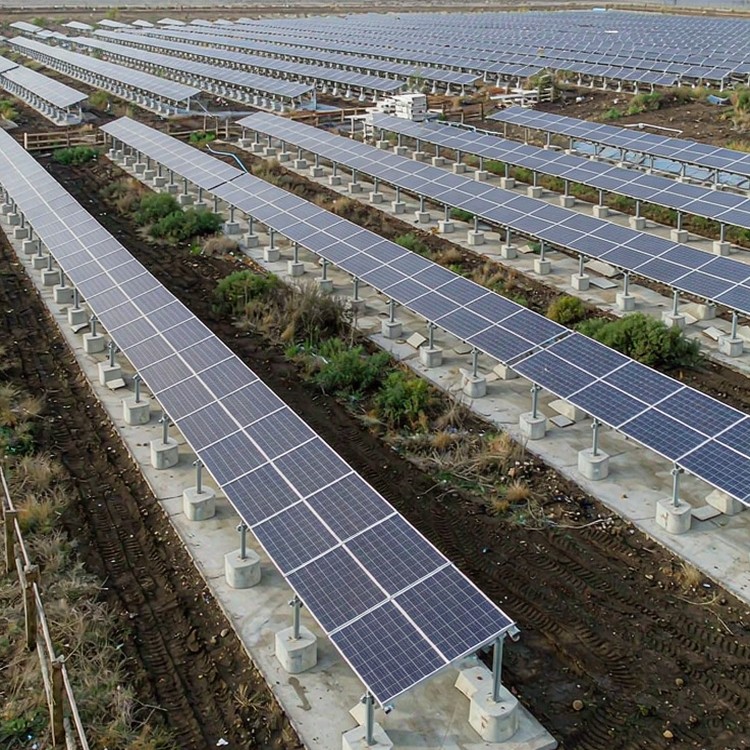
At small scale the penalty for a conservative row pitch is a slightly underused plot. At utility scale, the same decision determines whether a project fits inside its land option at all, and shifts the levelised cost of energy by several percent in either direction.
- Ground coverage ratio definition, typical ranges and how GCR drives both yield and land use
- Inter-row shading analysis at hourly resolution, including the effect of backtracking on tracker arrays
- Row pitch selection by latitude, tilt, module format and terrain
- Land use metrics: acres per megawatt, capacity density and how they vary with GCR and latitude
- The cost side of the trade-off: land, civil works, cabling, fencing and access roads per megawatt
- Sensitivity analysis showing how GCR moves both energy yield and project cost
Three Configurations to Start From
Three layout strategies cover most projects:
Density line
Tight row pitch, high GCR, maximum megawatts per acre. Best for: Expensive land, capacity-capped sites, flat tariffs. Relative cost: 1.0 (baseline).
Balanced line
GCR 0.40-0.45 with backtracking on trackers, conventional pitch. Best for: Most utility-scale projects with average land cost. Relative cost: 3-6% lower density, 2-5% higher yield.
Yield line
Wide row pitch, low GCR, maximum generation per installed megawatt. Best for: Cheap or leased land, yield-driven revenue structures. Relative cost: 8-15% lower density, 4-8% higher yield.
Why row spacing decisions are demanding
Row spacing looks like a geometry exercise and behaves like a financial one. Every metre added to the row pitch changes land requirement, civil works volume, cable length and yield simultaneously, and the optimum depends on local land cost and the revenue structure rather than on a universal rule.
- GCR and yield are non-linear: small reductions in row pitch produce proportionally larger shading losses, especially at low sun angles
- Land cost is highly local, so a row pitch that is optimal in one market is wasteful in another
- Civil works scale with site area, so tighter spacing reduces earthworks, drainage and road length as well as land purchase
- Cable and trenching costs fall with tighter spacing, which often offsets part of the yield loss and is frequently left out of the comparison
- Terrain constrains the theoretical optimum: on undulating ground the achievable pitch is set by grading cost and drainage, not by geometry
- Tracker backtracking changes the shading relationship, so a GCR that is wrong for fixed-tilt may be reasonable for tracking
Engineering Requirements
These are the inputs and analyses that decide row pitch and capacity density on a real project.
- Hourly irradiance and sun path data for the site, so shading loss is calculated across the year rather than at a single design hour
- Tilt and orientation fixed before row pitch is optimised, since the two interact strongly
- Land cost, lease terms and civil works unit rates, so the trade-off can be evaluated in money rather than in area
- Terrain model and grading plan, establishing the achievable pitch before drainage and earthwork constraints are applied
- Cabinet, inverter and cable routing strategy, since electrical architecture constrains how rows can be grouped
- Backtracking configuration for tracker arrays, with the resulting shading behaviour modelled rather than assumed
Selection guidance: evaluate row pitch in money per megawatt-hour, not in yield percentage alone. Tight spacing usually recovers more cost in land, civil works and cabling than the yield loss suggests.
Key Parameters
| Parameter | Typical specification |
|---|---|
| Ground coverage ratio | 0.35-0.50 typical for tracker arrays; 0.40-0.45 is the current industry equilibrium |
| Row pitch | Set by 3D shading study at design tilt and latitude, not by a fixed rule |
| Land use | Typically 5-10 acres per MW at mid-latitude, wider at high latitude or low GCR |
| Shading loss | GCR-dependent; small pitch reductions produce proportionally larger losses at low sun angles |
| Civil works | Earthworks, drainage and access roads scale with site area and therefore with row pitch |
| Cabling | DC and AC cable lengths and trenching scale inversely with spacing density |
| Backtracking | Recovers a substantial share of shading loss on tracker arrays at no capital cost beyond control settings |
| Terrain limit | Achievable pitch constrained by grading cost, drainage and row straightness requirements |
How We Deliver It
- Hourly shading model run across the full year at the site’s actual sun path, reporting both energy loss and revenue impact
- GCR sensitivity study expressed in cost and revenue terms, covering land, civil works, cabling and generation together
- Backtracking configuration matched to actual row pitch and terrain, recovering yield without additional capital
- Terrain-adjusted layout: row pitch varied across the site where grading and drainage make a uniform pitch uneconomic
- Electrical architecture coordination so row grouping matches inverter and combiner placement, minimising cable runs
- Capacity density statement per parcel, giving the owner a defensible megawatt figure for land negotiation and permitting
Standards and Compliance
- ASCE 7 / EN 1991 wind loads resolved with site-specific terrain and exposure factors
- IEC 61215 / IEC 61730 module interface compatibility verified against your module datasheet
- EN 1090 or AISC execution classes for welded and bolted steelwork
- Hot-dip galvanizing to ISO 1461, zinc mass specified by soil and atmospheric corrosivity
- ISO 9001 production quality management with batch-level traceability
- CE / EN 1090 documentation pack where destination markets require it
Quality Assurance
Quality control is checkpoint-based: material intake verification, in-process weld and hole-position inspection, coating thickness sampling and pre-shipment container review. Each checkpoint produces a document your quality team can file, and pre-shipment inspection is open to your inspector or a third party.
Installation and Site Productivity
Field productivity decides whether a design is cheap or expensive. We engineer for the install crew: kit-based delivery so nothing is sorted on the ground; bolt-only connections with washers pre-fitted in the shop; foundation heads that accept the structure within a documented adjustment envelope instead of requiring rework; and module clamps that align without shimming. The installation manual includes planned crew sizes, equipment recommendations and realistic daily output by assembly type, plus tolerance acceptance criteria your site engineer can check with a tape and a level.
Documentation You Receive
Each shipment carries a document pack aligned to your asset register: certified material test reports, coating thickness records per batch, torque and preload verification sheets, packing lists with container numbers and a maintenance-relevant drawing set. Where the destination market requires local certification or translated documents, we prepare them in advance rather than at the port.
Cost and Commercial Considerations
- Land cost per megawatt is directly proportional to row pitch, and is the dominant term in the trade-off wherever land is scarce
- Civil works, drainage and access roads scale with site area, so tighter spacing reduces them in step with land
- DC and AC cabling typically falls 5-12 percent in cost when GCR rises from 0.40 to 0.48, partially offsetting yield loss
- Backtracking recovers several percent of annual yield at negligible capital cost and is usually the first optimisation to make
- A one percent shift in annual yield is generally worth more than a one percent shift in structure tonnage at utility scale
Reference Benchmarks
- Utility-scale tracker projects in the United States where GCR around 0.40-0.45 balances land use against shading loss under wholesale pricing.
- Japanese distributed projects where high land cost and a capped interconnection drove GCR above 0.50 with low-tilt fixed structures.
- Gulf and North African utility plants where very low land cost allowed wide row pitch and the constraint became civil works and cable length rather than land area.
- European agrivoltaic and dual-use projects where row pitch was set by agricultural machinery access rather than by shading economics.
Service Life and Maintenance Planning
The economics of mounting systems are decided at year eight, not at signing. Galvanizing weight, fastener coating class and edge protection determine whether the year-eight inspection finds tight hardware or rust streaks. We publish expected first-maintenance intervals by environment class and back them with batch coating records, so warranty conversations start from data.
How We Control Delivery
| Stage | What we do | What you receive |
|---|---|---|
| Input review | sun path, irradiance and land cost data confirmed before modelling | modelling input sheet and assumptions register |
| GCR study | row pitch sensitivity run across a defined range with cost and revenue outputs | GCR sensitivity report with recommended value |
| Layout freeze | row pitch, row grouping and electrical architecture agreed together | layout drawing and capacity density statement |
| Civil coordination | grading and drainage plan checked against the chosen pitch | coordinated site plan |
| Shading verification | final layout re-run at hourly resolution to confirm the design loss | final shading and yield report |
| Handover | backtracking settings and row pitch confirmed as-built | as-built layout and commissioning records |
Send your parcel, land cost and tariff basis – we will return a GCR sensitivity study and the capacity density that maximises project value rather than panel count.
Guides in This Group
GCR Optimization for Tracker Arrays
How ground coverage ratio moves both yield and land cost, and how to pick the value that maximises value.
Inter-Row Shading Analysis & Row Pitch Design
Hourly shading modelling, row pitch selection and the non-linear cost of tightening rows.
Land Use, Acres per MW & Capacity Density
Land metrics by latitude, tilt and GCR, and how to budget acreage before the layout exists.
Related Application Directories
This scale band is often combined with the following application groups, which cover terrain, land type and site conditions.
Frequently Asked Questions
What ground coverage ratio should we use?
How much does tighter row spacing actually cost in yield?
Is backtracking always worth enabling?
How many acres per megawatt should we budget?
Does row pitch affect the structure design?
What We Need to Quote
- Parcel area, land cost or lease terms, and any capacity cap from the interconnection agreement
- Site latitude, terrain model and grading constraints
- Tilt and orientation decisions, or agreement to optimise them as part of the study
- Tariff or revenue structure, so the yield side of the trade-off can be priced
Talk to a Structure Engineer
Send your site data, target capacity and construction programme, and our engineers will return a structure concept, a quantity estimate and a costed supply package.
