




Why This Is Difficult
Pile design is governed by uplift rather than by bearing in most solar arrays, and uplift capacity is a soil property that varies laterally. That combination is what makes uniform pile schedules so unreliable.
- Uplift resistance rather than bearing capacity is the governing design criterion, and it depends on soil classification, embedment depth and section geometry together
- Soil strata change laterally as well as with depth, so a pile length that satisfies the average may fail in the weakest zone of a large site
- Refusal on rock, boulders or compacted fill stops the piling crew and forces a change of method or foundation type
- High groundwater reduces effective embedment and complicates both driving and the corrosion assumption for buried steel
- Pile head positional and height tolerance governs whether the structure fits without rework, and rework on a hundred thousand piles is a schedule event
- Corrosion of buried steel depends on soil resistivity, moisture and chloride, which is a separate design case from the atmospheric exposure above ground
Engineering Requirements
These are the inputs and commitments that make a pile programme predictable rather than reactive.
- Geotechnical investigation at a density matched to site variability, with soil classification and groundwater level recorded per borehole
- Pull-out and lateral testing on the actual pile section in the actual ground, before design freeze, wherever uplift governs
- Soil-zone mapping that assigns foundation type and pile length to each zone, rather than a single site-wide specification
- Refusal assessment identifying where pre-drilling or a change of foundation type is likely, with those options costed in the proposal
- Tolerance matrix defining pile head position and height acceptance criteria and the correction method when tolerance is exceeded
- Soil-side corrosion specification based on measured resistivity and chloride content, with coating mass stated accordingly
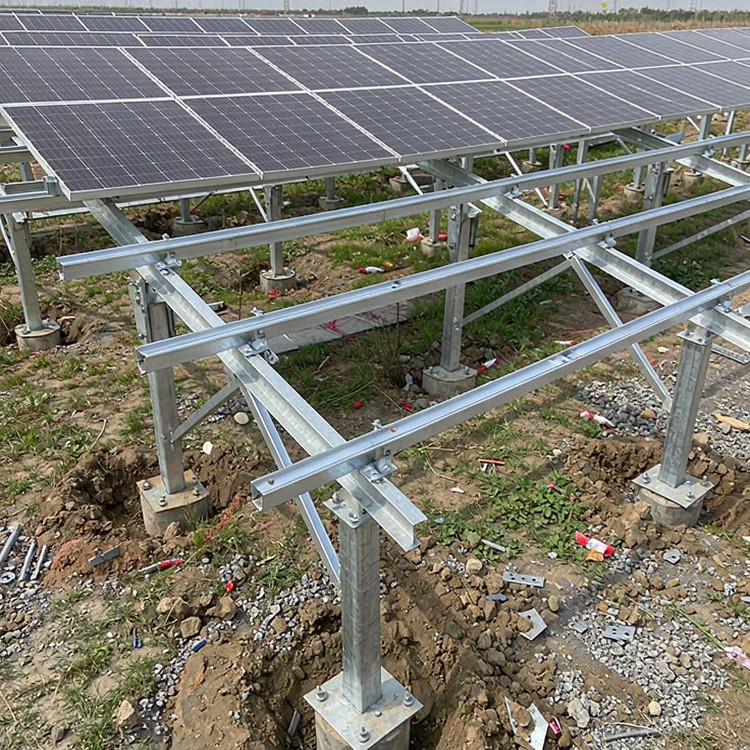
Selection guidance: test before you freeze. Pull-out results change pile length, and pile length change is cheap before fabrication and expensive after.
How We Solve It
- Soil-zone foundation schedules with pile type and length assigned per borehole zone, priced so that changes remain traceable
- Pull-out and lateral test protocols written into the supply scope, with acceptance criteria agreed before mobilization
- Refusal mitigation costed at proposal stage, covering pre-drilling, pile tip geometry changes and foundation type substitution
- Tolerance matrix signed by both foundation and structure suppliers, defining acceptance criteria and the correction method
- Soil-side corrosion specification set by measured resistivity and chloride rather than by a default class
- Pile driving guidance on site: crew training, template jigs, acceptance criteria and a defined response procedure for refusal
Beyond the Structure
- Driving records per pile retained as part of the quality pack, giving a verifiable installation record across the site
- Pile head detailing designed so that re-levelling after minor settlement is possible without replacing the foundation
Reference Benchmarks
Benchmarks below are publicly documented industry reference projects of comparable type and scale, cited to illustrate engineering practice. They are not our delivery record.
- The Sudair plant in Saudi Arabia, 1.5 GW on sandy terrain using driven piles and roughly 3.5 million modules, where single-package pile-and-structure supply compressed the construction schedule.
- Gulf and North African utility projects where driven pile rates above 250 per rig per day on competent soil made foundation productivity rather than capacity the governing programme constraint.
- Northern European sites where glacial till and boulders made refusal the decisive risk, and pre-drilling provisions were priced into the contract rather than treated as a change.
Standards and Compliance
- ASCE 7 / EN 1991 wind and EN 1998 / IBC seismic load combinations where applicable
- IEC 61215 module mechanical load test levels matched to your array design pressure
- EN 1090-1/-2 or AISC execution classes for structural steel components
- ISO 1461 galvanizing with zinc mass stepped by corrosivity category C2 to C5
- ISO 9001:2015 quality management and documented supplier qualification
- DNV or equivalent bankability review support for financed projects
Quality Assurance
Every batch ships with mill certificates, coating-thickness logs and bolt records; welds follow EN 1090 or AISC execution classes. Structure warranty runs to 10 years against a 25-30 year service design life, and spare-part packages are documented so year-12 repairs do not depend on year-1 memory.
Documentation You Receive
Documentation is built for audits, not decoration: structural calculation notes stating load cases and standards used; foundation design basis mapped to your geotechnical report; material certificates for steel and fasteners; galvanizing certificates with measured coating thickness per batch; assembly drawings with torque tables; and packing documentation matched to container manifests. For financed projects we add lender-format compliance statements; for public tenders we respond to documentation schedules line by line.
Service Life and Maintenance Planning
Plan maintenance around measurable triggers, not calendar guesses: annual visual inspection of fastener torque samples, coating condition at cut edges and ground-contact zones; a detailed inspection after the first extreme weather year; and re-torque verification after the first thermal cycle on long runs. We supply the inspection checklist and acceptance criteria with the installation manual.
Cost and Commercial Considerations
- Pile scope is typically the largest single line within racking cost and the largest source of cost variance across a large site
- Pile length steps should be priced discretely so that refusal and soil-variation assumptions remain visible at contract stage
- Pre-drilling, where required, is priced per pile and can add 10-25 percent to foundation cost if it applies site-wide
- Pull-out testing is a small fixed cost that consistently reduces foundation contingency on variable sites
- Driving productivity losses from poor sequencing or refusals typically exceed the material cost difference between foundation options
Frequently Asked Questions
Why is uplift rather than bearing the governing criterion?
How many pull-out tests do we need?
What happens when a pile refuses?
How should we specify pile corrosion protection?
Can pile heads be adjusted after installation?
Related Guides and Application Pages
Continue with the pages closest to your project type.
What We Need to Quote
- Geotechnical report with borehole logs, groundwater level and soil classification
- Soil resistivity and chloride data, or agreement to test on site
- Site layout with construction zones and access constraints
- Required tolerance and the structure interface it has to meet
Talk to a Structure Engineer
Send your geotechnical report and layout, and we will return a soil-zone pile schedule, a refusal mitigation plan and a costed supply package.
