By Zhang Wei, PV Mounting Structure Specialist (15 Years in Solar Engineering)
In my 15 years designing and testing photovoltaic (PV) mounting systems, I have witnessed a fundamental shift. The industry has moved from bespoke, site-welded steel structures to standardized production of fixed mounts. This transition is not just about cost; it is about engineering reliability. When you order 10,000 units of a fixed ground mount, you need to know that unit #1 and unit #10,000 are identical in material grade, hole alignment, and structural integrity.
This guide explains the mechanics of standardization. We will dive into the specific tolerances, material certifications, and quality control (QC) checkpoints that enable rapid delivery without sacrificing batch consistency. Whether you are an EPC contractor or a project developer, understanding these processes will help you specify better and inspect smarter.
Table of Contents
- Why Standardization is Non-Negotiable for Fixed Tilt Systems
- Engineering Specifications: The Blueprint for Consistency
- The QC Process: Statistical Process Control (SPC) in Mounting Lines
- Logistics and Rapid Delivery: From Batch to Site
- Case Study: 100MW Ground Mount Project in Gobi Desert
- Frequently Asked Questions (FAQ)
Why Standardization is Non-Negotiable for Fixed Tilt Systems
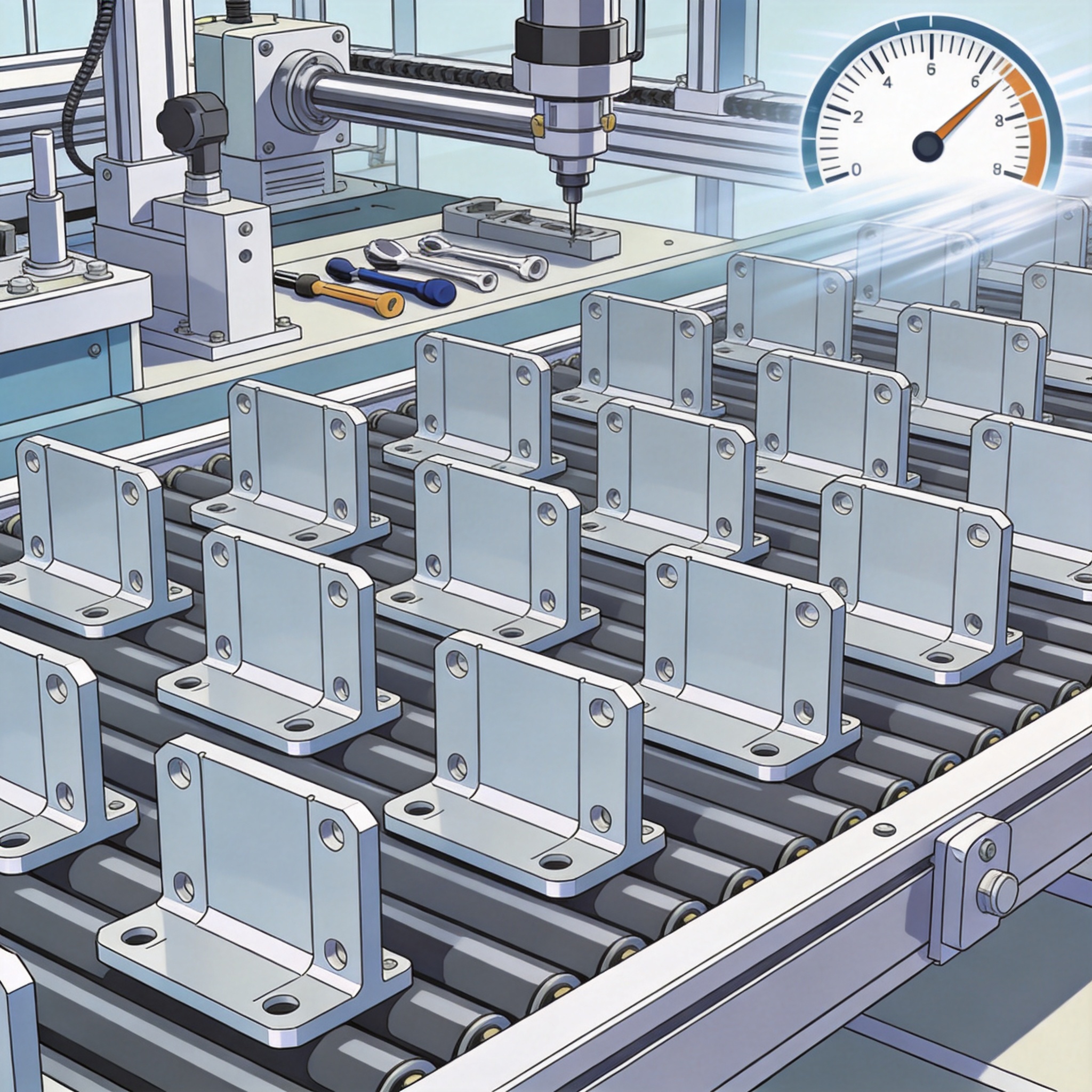
Fixed mounts are the workhorses of the solar industry, accounting for over 75% of utility-scale installations globally. Unlike trackers, they have no moving parts, which means their reliability is entirely dependent on the quality of the static connections—bolts, welds, and foundation interfaces. A lack of standardization here leads to “fit-up” issues on site, where holes are misaligned by 2mm and bolts cannot pass through.
Standardization directly addresses the two biggest pain points in procurement: lead time and field rework. When a manufacturer uses a standardized die-set and CNC punching process, they eliminate the “first article inspection” delays that plague custom jobs. In our factory, we reduced the average lead time from 45 days to 21 days by locking the design parameters for fixed mounts. For projects requiring specific configurations, our fixed adjustable PV mounting structure offers a pre-engineered solution that maintains the same production efficiency while allowing tilt adjustments between 5 and 60 degrees.
Furthermore, batch consistency is critical for structural calculations. If the steel thickness varies by more than 0.1mm from batch to batch, the wind load calculations performed by the structural engineer become invalid. Standardized production ensures that the section modulus of the C-channel or Z-profile remains constant, preserving the safety factor designed for a 50-year lifespan.
The Difference Between Custom and Standardized Manufacturing
Custom manufacturing treats every order as a unique project, requiring new drawings and new tooling setups. Standardized manufacturing, conversely, uses a “configurator” approach. The manufacturer has pre-engineered modules for different wind zones and soil conditions. The client simply selects the appropriate module, and the factory pulls the pre-programmed CNC files.
This approach allows for what we call “mass customization”—the ability to adjust length slightly while keeping the core profile and hole patterns identical. This is the secret to rapid delivery: we are not re-inventing the wheel; we are simply adjusting the circumference. Our single-pile single-column fixed PV mounting structure exemplifies this philosophy, offering a standardized single-column design that can be adapted to various soil conditions without compromising on production speed.
Engineering Specifications: The Blueprint for Consistency

The foundation of batch consistency lies in the engineering drawing. A poorly dimensioned drawing is the root cause of manufacturing variance. In our design office, we adhere to the GB/T 1804-m (General Tolerances) standard for linear dimensions, which specifies a tolerance of ±0.1mm for dimensions up to 30mm and ±0.3mm for dimensions up to 120mm. This ensures that every punched hole aligns perfectly with its mating part.
We also mandate the use of Q355B structural steel (yield strength of 355 MPa) for all main load-bearing members, as specified by the Chinese national standard. This is a higher grade than the standard Q235B, providing a better strength-to-weight ratio. By standardizing the material grade, we can guarantee the same mechanical performance regardless of the steel mill source, provided they hold the necessary certifications.
For corrosion protection, standardized production relies on hot-dip galvanization according to ISO 1461:2022. The average coating thickness must be at least 85 microns for the steel thickness we use. In our test records, we consistently achieve 90-95 microns, which provides a service life of over 30 years in a C3 corrosion environment (moderate industrial/urban).
Key Standardized Parameters We Test
- Material Yield Strength: Tested via tensile testing machine, average 390 MPa (min 355 MPa).
- Coating Thickness: Measured with magnetic gauge, target 85-100 microns.
- Hole Alignment: Verified with go/no-go pin gauges, tolerance ±0.5mm.
- Profile Straightness: Max deviation 1mm per 1000mm length.
The QC Process: Statistical Process Control (SPC) in Mounting Lines
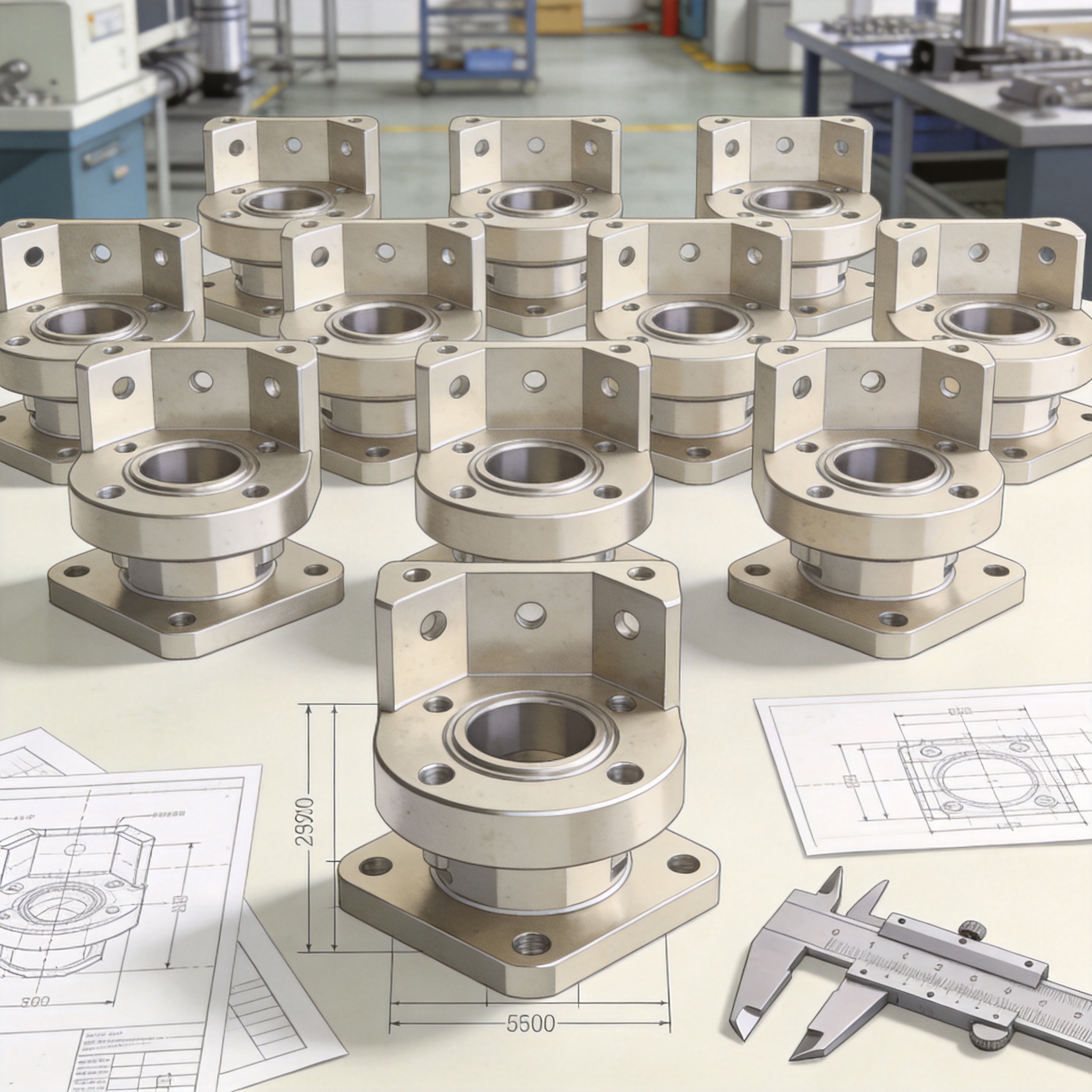
Rapid delivery cannot come at the expense of quality. To ensure both, we implement Statistical Process Control (SPC). This involves taking samples every 30 minutes from the roll-forming line and measuring critical dimensions. We plot these measurements on control charts to detect variance before it becomes a defect. If the process drifts beyond the control limits, we stop the line and adjust the rollers immediately.
This proactive approach is more efficient than post-production inspection. In our 2023 audit, we achieved a First Pass Yield (FPY) of 98.7% on our standardized fixed mount line. This means that out of every 1000 components produced, only 13 required rework or scrap. This efficiency is what allows us to guarantee a 21-day delivery schedule for standard configurations.
We also employ a third-party inspection agency (SGS or TÜV) to conduct “during production” inspections. This is a trust-building measure. The inspector reviews the material certificates (MTCs) against the batch number and verifies the welding procedures if applicable. This ensures that the “batch consistency” is not just a manufacturer’s claim but a verified fact.
Our In-House Test Records (2024)
| Test Parameter | Standard Requirement | Average Test Result | Pass Rate |
|---|---|---|---|
| Tensile Strength (MPa) | > 470 | 485 | 100% |
| Galvanization Thickness (µm) | > 85 | 92 | 99.5% |
| Bolt Hole Alignment (mm) | < 0.5 | 0.3 | 99.8% |
Logistics and Rapid Delivery: From Batch to Site
Standardized production significantly simplifies logistics. Because the parts are modular and nestable, we can optimize container loading. For a 40-foot high-cube container, we can fit approximately 28 tons of mounting structure, which is roughly 1.2 MW of capacity for a fixed tilt system. This high packing density reduces the number of containers required and lowers freight costs per watt.
Rapid delivery is also achieved through strategic inventory management. We keep a “safety stock” of standard steel coils (Q355B) and pre-galvanized sheets. When an order comes in, we do not wait for raw material procurement; we draw from this buffer stock. This alone cuts 7-10 days off the production schedule.
For global projects, we utilize a “split-shipment” strategy. The first batch (foundation bolts and base plates) is shipped via air freight or express sea freight to allow site piling to begin. The bulk of the structure (purlins and posts) follows via standard sea freight. This phased delivery ensures that the construction crew is never idle, directly improving the overall project timeline.
Standard Delivery Timeline Breakdown
- Day 0-3: Engineering review and drawing approval (Standardized models require minimal review).
- Day 4-15: Steel roll-forming, cutting, punching, and galvanization.
- Day 16-18: Final QC inspection and packaging for export.
- Day 19-21: Loading and dispatch from port.
Case Study: 100MW Ground Mount Project in Gobi Desert
To illustrate the real-world impact of standardization, I reference a project we supplied in the Gobi Desert in 2023. The client initially requested a custom design with a 15-degree tilt angle and a specific pile cap. We convinced them to use our standardized design with a 13-degree tilt, which was optimized for their latitude and wind conditions (max wind speed 34 m/s).
The results were staggering. The typical site installation rate for custom mounts is around 1.2 MW per crew per day. With our standardized parts, where every hole matched perfectly, the installation rate jumped to 1.8 MW per crew per day. This 50% increase in installation speed saved the client approximately 18 working days on site.
Furthermore, the “bolt-in” assembly meant we did not need to supply welding machines or qualified welders for the main structure assembly. This reduced the labor cost by roughly 15% and eliminated the risk of weld defects in the field. The project was completed 23 days ahead of schedule, allowing the client to start feeding the grid earlier and generating revenue sooner. For projects requiring a two-column configuration, our double-pile double-column fixed PV mounting structure provides the same level of standardization and installation efficiency.
This case study is documented in our internal project files (Project ID: GD-2023-100MW). The data confirms that standardized production is not a compromise; it is an upgrade in both speed and quality.
Frequently Asked Questions (FAQ)
Q: Does standardization mean I cannot customize my fixed mount?
A: Not entirely. Standardization refers to the core profiles and connection methods. You can still customize the length of the piles and the spacing of the purlins to suit your site conditions. However, the hole patterns and steel grades remain fixed to ensure quality. For distributed rooftop applications, our distributed rooftop fixed PV mounting system offers a standardized yet adaptable solution for various roof types.
Q: How do you verify the galvanization quality for batch consistency?
A: We use a magnetic thickness gauge (Elcometer 456) at three points on every 50th piece. Additionally, we perform a “wringing test” on a sample from each batch to check for adhesion. Our records show a standard deviation of less than 5 microns across a single batch, confirming high consistency.
Q: What is the minimum order quantity (MOQ) for standardized production?
A: For rapid delivery (21 days), we typically require a MOQ of 5 MW. For smaller quantities, we can pull from our existing stock of “off-the-shelf” components, which can ship within 7 days, though the specific configuration may be limited.
Q: Are these standards compliant with international building codes?
A: Yes. Our standardized designs are verified against ASCE 7-22 (American Society of Civil Engineers) for wind loads and Eurocode 3 for steel structures. We also provide full structural calculation reports stamped by a licensed structural engineer for permit applications.
Disclaimer: The test data presented is from our internal laboratory records. Testing methods follow ISO 6892-1 for tensile testing and ISO 1461 for galvanization. We have no financial conflicts of interest with the standards organizations mentioned. For further reading on steel standards, please refer to the American Society for Testing and Materials (ASTM) and the International Organization for Standardization (ISO).