





Why This Is Difficult
Pre-assembly pays off through labour removed from site, and the mechanisms that limit it are physical rather than financial.
- Site labour cost per hour is typically several times factory labour cost, so labour transferred to the factory carries a multiplied saving
- Field assembly happens in weather, at height and often under schedule pressure, all of which reduce productivity and increase rework
- Transport volume and weight limits cap the pre-assembly level, since a larger sub-assembly packs less densely
- Lifting capacity on site constrains unit weight, and a sub-assembly that cannot be lifted by available equipment is not pre-assembled in any useful sense
- Tolerance accumulation is reduced by factory assembly, because jig-based work holds dimensions that site work cannot
- The optimum differs by market, since it depends entirely on the ratio of factory to field labour cost in the destination country
Engineering Requirements
These are the inputs that determine the right pre-assembly level.
- Site labour rate and expected productivity for each assembly operation, so the value of removing site work can be calculated
- Transport mode and container dimensions, with the maximum unit size and weight that can be shipped
- On-site lifting equipment available, and the maximum unit weight it can handle
- Assembly sequence and the structure of the work fronts, since pre-assembly should match how the site actually builds
- Tolerance requirements at each interface, since factory assembly is most valuable where tolerances accumulate
- Site conditions, including weather exposure, access and the availability of a secure staging area
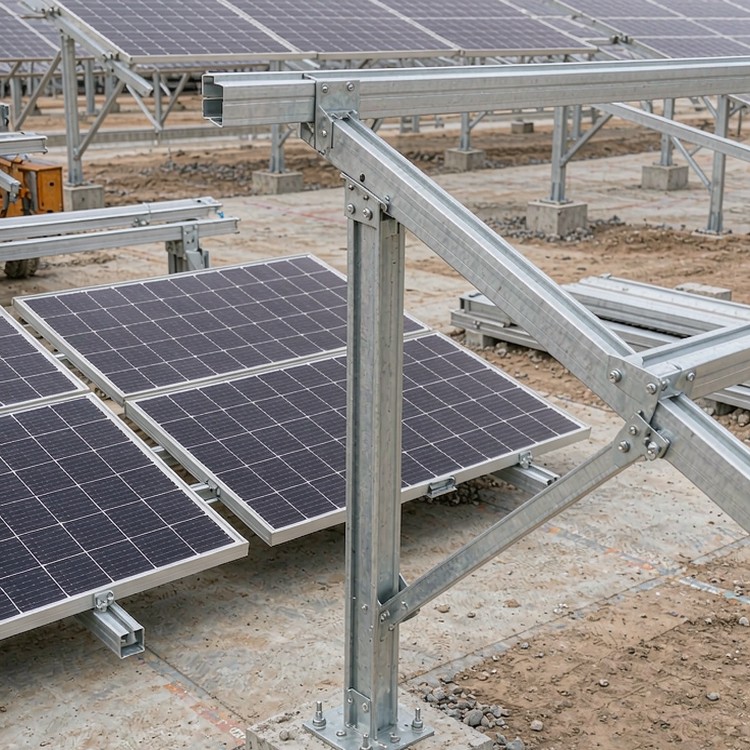
Selection guidance: compare factory and field labour cost per hour before deciding the level. The right answer varies by market, and a level chosen without that ratio is a preference rather than a decision.
How We Solve It
- Sub-assembly units designed to the largest size that transport and site lifting allow, capturing the maximum labour transfer within the physical limits
- Factory jig assembly for the interfaces where tolerances accumulate, so site work begins from an accurate starting geometry
- Kits labelled and packaged by installation sequence, so crews assemble rather than search
- Bolt and fastener lots supplied matched to each sub-assembly, eliminating site sorting and reducing the risk of incorrect fasteners
- Touch-up and joint detailing designed for factory completion, so the fewest possible operations remain for the field
- Installation manual stating the pre-assembly level, the equipment needed and the expected daily output per crew
Beyond the Structure
- Pre-assembly plan reviewed against the construction programme, since the level also sets how much staging area the site needs
- Support during the first work fronts, where a supervisor trains the crew on the assembly sequence before it becomes routine
Reference Benchmarks
Benchmarks below are publicly documented industry reference projects of comparable type and scale, cited to illustrate engineering practice. They are not our delivery record.
- A 200 MW project in Australia where sub-assemblies were sized to the maximum container dimensions, transferring a substantial share of field bolting to the factory.
- A 150 MW project in Chile where site lifting capacity, not container volume, set the pre-assembly ceiling and the design was adjusted accordingly.
- A 250 MW programme in the Middle East where tolerance-critical interfaces were factory jig-assembled, reducing rework during the first weeks of installation.
Standards and Compliance
- ASCE 7 / EN 1991 wind loads resolved with site-specific terrain and exposure factors
- IEC 61215 / IEC 61730 module interface compatibility verified against your module datasheet
- EN 1090 or AISC execution classes for welded and bolted steelwork
- Hot-dip galvanizing to ISO 1461, zinc mass specified by soil and atmospheric corrosivity
- ISO 9001 production quality management with batch-level traceability
- CE / EN 1090 documentation pack where destination markets require it
Quality Assurance
Quality control is checkpoint-based: material intake verification, in-process weld and hole-position inspection, coating thickness sampling and pre-shipment container review. Each checkpoint produces a document your quality team can file, and pre-shipment inspection is open to your inspector or a third party.
Documentation You Receive
The paper trail matters as much as the steel. With each delivery you receive mill test certificates traceable to heat numbers; galvanizing records per batch against ISO 1461 or your specified standard; dimensional inspection reports from pre-assembly jigs; bolt and hardware lot traceability; as-built drawings where site adaptations were made; and a warranty document naming covered load cases, service design life and claim procedures. Everything is indexed, so your asset register does not depend on one engineer’s memory.
Service Life and Maintenance Planning
Service life is a design output, not a promise. Zinc mass, fastener coating class, drainage detailing and dissimilar-metal isolation are selected against the corrosivity category of your site, and the expected first-maintenance interval is stated in writing. For aggressive environments we step the coating system up at design stage, which is always cheaper than a retrofit.
Cost and Commercial Considerations
- Pre-assembly reduces site labour hours, and the value of the reduction depends on the local labour rate rather than on the quantity of work moved
- Freight volume rises with the pre-assembly level, so the trade is between container count and site labour hours
- Staging area requirements change with unit size, and a larger staging footprint may itself be a cost on constrained sites
- Tolerance-critical factory assembly reduces rework, which is a cost that rarely appears in a quotation and frequently appears in a construction budget
- Installation productivity improvement is the most measurable outcome, and it should be stated as daily output per crew rather than as a percentage claim
Frequently Asked Questions
How much pre-assembly is worth doing?
Does pre-assembly reduce quality risk?
What limits how far we can go?
How is the pre-assembly level decided?
Does pre-assembly change the site programme?
Related Guides and Application Pages
Continue with the pages closest to your project type.
What We Need to Quote
- Site labour rates and expected productivity for installation operations
- Transport mode, container dimensions and any over-dimensional cargo allowance
- Lifting equipment available on site, with its capacity
- Construction programme and the number of work fronts expected
Talk to a Structure Engineer
Send the site labour rates, transport constraints and programme, and we will return a recommended pre-assembly level per component family with the freight and labour effects quantified.
