



Key Benefits
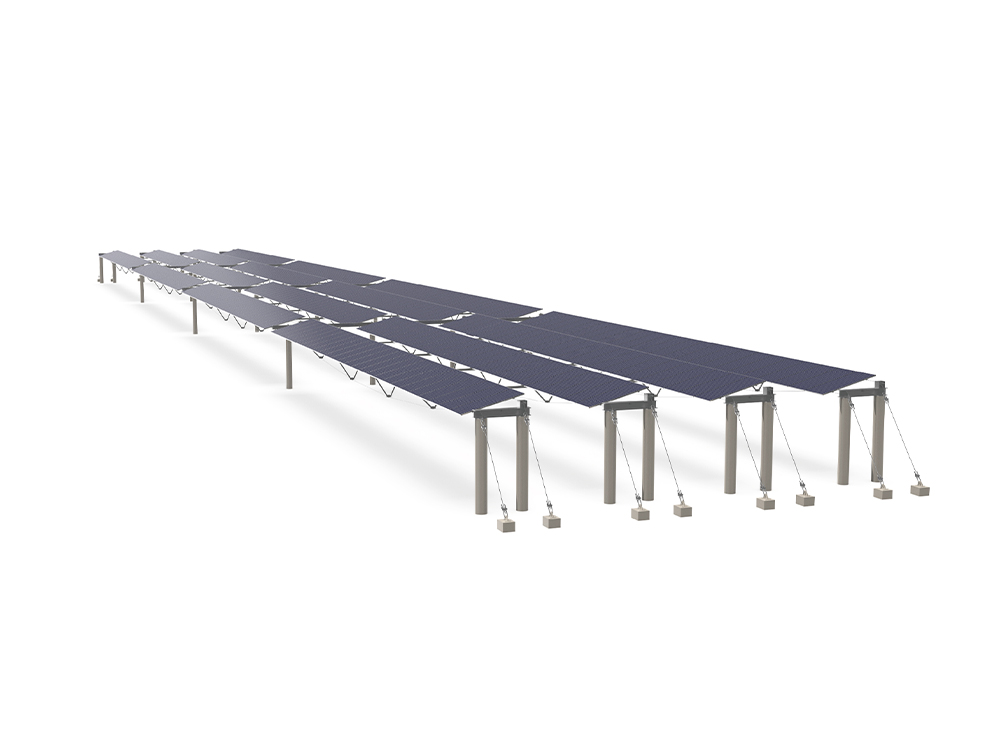
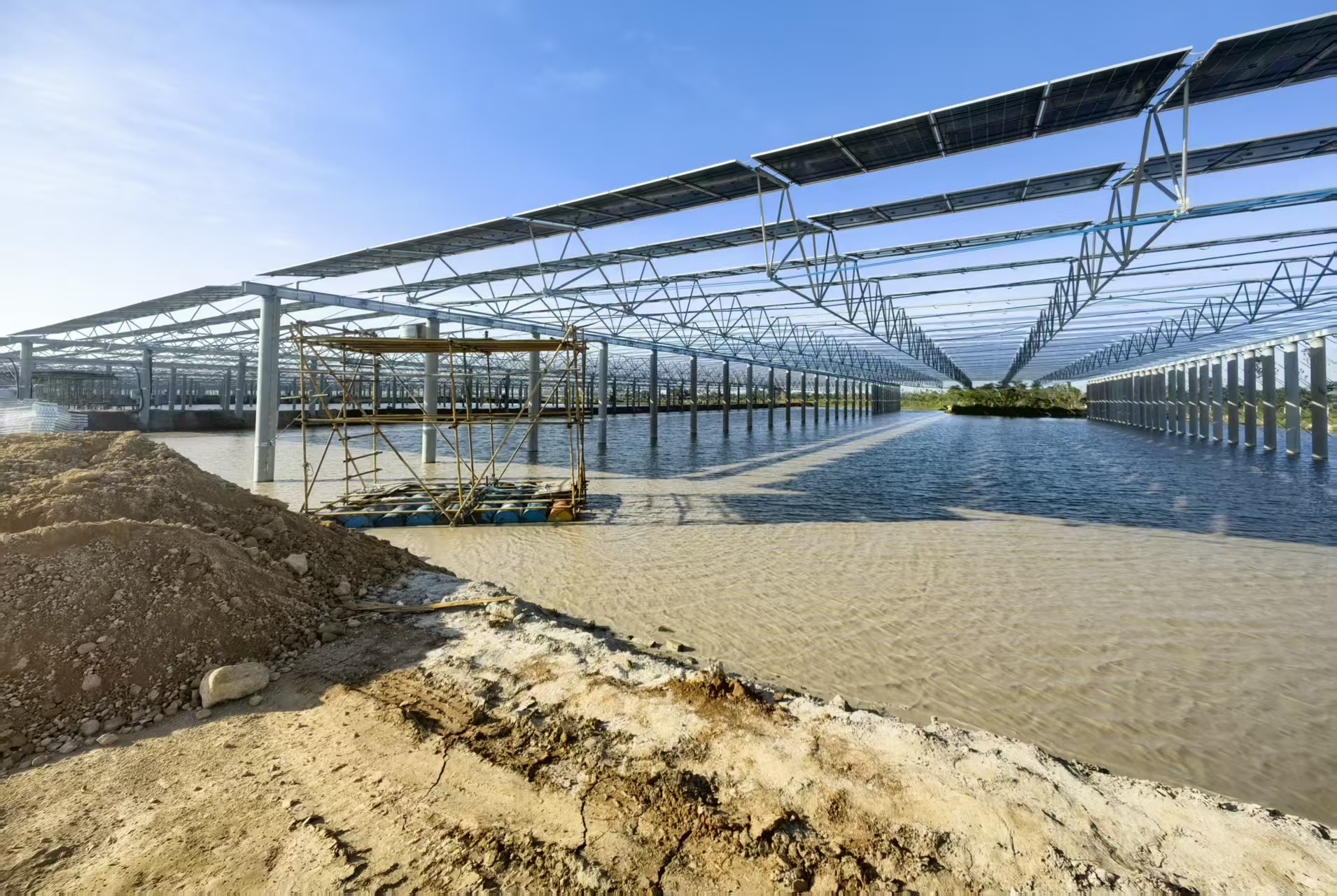
This Double-Layer Cable-Supported Flexible PV Mounting Structure is a high-tension solar racking system engineered for large-scale ground-mount projects and water-surface photovoltaic plants. It solves the problem of uneven terrain and high wind loads by using prestressed steel cables to support two layers of solar panels, maximizing land usage and energy yield per square meter. Why choose this? Because it reduces steel consumption by up to 40 percent compared to traditional fixed-tilt racks, lowers foundation costs, and offers a 30-degree optimal tilt angle for superior solar capture in commercial arrays.
Structural Efficiency and Material Savings
- Double-Layer Design: Supports two rows of PV modules in a single span, effectively doubling the power density of your project site.
- Cable-Supported Tension System: Eliminates the need for dense steel purlins and columns, cutting material costs and installation labor hours significantly.
- Flexible Span Capability: Handles spans of 12 to 20 meters without intermediate piles, making it ideal for landfills, reservoirs, and rocky ground where digging is difficult.
Wind Resistance and Durability
- High-Tension Prestressed Cables: The cable system absorbs and distributes wind uplift forces evenly, preventing panel micro-cracks and structural fatigue.
- Hot-Dip Galvanized Steel Components: Provides 20-plus years of corrosion resistance, compliant with ISO 1461 standards for harsh outdoor environments.
- Adjustable Tilt Angle: Fixed at 30 degrees for optimal annual irradiance, but the cable tension can be adjusted on-site to fine-tune panel flatness.
Installation and Logistics Advantages
- Pre-Assembled Kits: Every bracket, cable clamp, and turnbuckle is prefabricated, reducing on-site welding and drilling by 90 percent.
- Lightweight Components: Each individual part weighs under 25 kg, so no heavy cranes are required—just a small crew and basic hand tools.
- Compatibility: Works with all standard framed solar panels (60-cell and 72-cell) and most thin-film modules using clamping or bolt-down mounting.
Real Customer Feedback
“We installed this double-layer system on a 15-megawatt project over a former coal ash landfill. The cable tensioning was straightforward, and our crew finished the mounting in 11 days—about 40 percent faster than our last fixed-tilt project. The 30-degree tilt gave us a 4.2 percent higher energy yield in our first quarter compared to the 25-degree system on the adjacent lot. Honestly, the only minor issue is that the cable tightening requires a torque wrench and a bit of patience to get all rows perfectly level, but the included tension meter makes it manageable.”
— Markus Vogt, Senior Project Manager, Helios Engineering GmbH
Technical Specifications
System Dimensions and Capacity
- Module Layout: 2 panels portrait per bay (double-layer, 4 panels total per bay)
- Tilt Angle: 30 degrees (fixed)
- Maximum Span Between Piles: 18 meters (standard) / 20 meters (with reinforced end posts)
- Ground Clearance: 1.5 meters at lowest point
Material and Load Ratings
- Cable Spec: 12 mm galvanized steel wire rope, breaking strength 65 kN
- Steel Grade: Q355B hot-dip galvanized (thickness 2.5 mm to 4.0 mm)
- Wind Load Resistance: 45 m/s (equivalent to 160 km/h)
- Snow Load Capacity: 1.4 kN/m²
- System Weight: 8.5 kg per panel (including all mounting hardware)
Certifications and Standards
- ISO 9001: Quality management system for manufacturing
- IEC 62817: Solar tracker and mounting structure durability testing
- SGS Verified: Third-party load testing report available upon request
Comparison vs Competitor Fixed-Tilt Racks
| Feature | This Double-Layer Cable System | Traditional Steel Fixed-Tilt Rack |
|---|---|---|
| Steel Consumption per MW | 38 tons | 62 tons |
| Installation Time per MW | 8-10 days (4-person crew) | 14-18 days (6-person crew) |
| Foundation Piles per MW | 1,200 | 2,400 |
| Max Span Between Piles | 20 meters | 6 meters |
| Corrosion Warranty | 20 years | 12 years |
| On-Site Welding Required | None | Yes (for joints) |
FAQ
How do I tension the cables correctly?
Use the included torque wrench and tension meter. Tighten the turnbuckles in a cross-pattern sequence (front-left, back-right, front-right, back-left) until the meter reads 3.5 kN. Repeat the pass twice to account for cable creep. The system is designed to operate safely between 3.0 kN and 4.0 kN tension.
Can this structure handle high wind areas like coastal zones?
Yes. The prestressed cable design actively counters uplift pressure. However, for sites with sustained winds above 45 m/s, we recommend reducing the span to 14 meters and adding anti-vibration dampers (sold separately). For hurricane-prone regions, please contact our engineers for a site-specific wind load analysis.
Is the 30-degree tilt adjustable after installation?
No, the tilt is fixed at the factory. The field-adjustable element is only the cable tension for panel flatness. If you need a variable tilt angle, we offer a separate single-layer adjustable model with 10-35 degree manual adjustment.
What is the minimum slope of the terrain that this system can handle?
The system can accommodate a longitudinal slope of up to 10 degrees and a lateral slope of 5 degrees without custom parts. For steeper terrain, we provide adjustable-height end posts and mid-pile extension kits.
How long does shipping take and what is the packaging like?
Standard lead time for a 1 MW system is 25-30 days from order confirmation. All components are packed in fumigation-free plywood crates or steel pallets, with a maximum crate weight of 1.2 tons for easy container loading. Full assembly drawings and a QR code video guide are included in every shipment.


