



Key Benefits
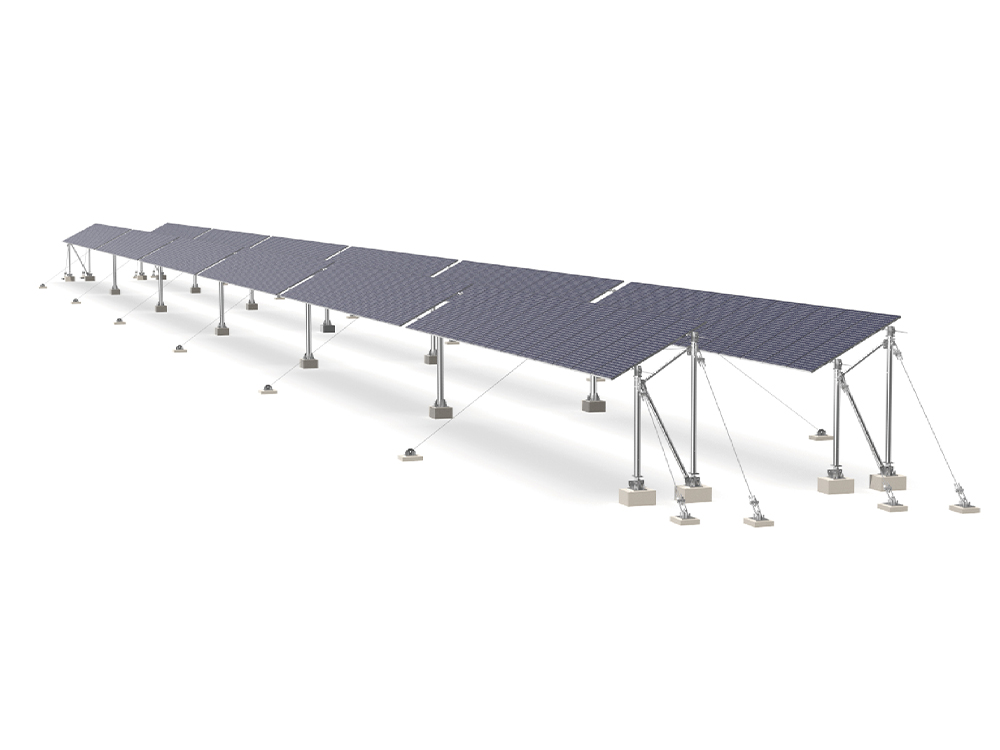
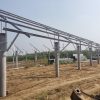
This is a Single-Layer Cable-Supported Flexible PV Mounting Structure, engineered specifically for modern solar farms and large-scale ground installations. It solves the problem of uneven terrain and high wind loads by providing a tensioned cable framework that holds your photovoltaic panels securely without the need for massive steel beams. The primary benefit is material cost reduction of up to 30 Percent compared to traditional fixed-tilt racks, while maintaining a high clearance for vegetation management and dual-use agriculture (agrivoltaics).
Why choose this system? Because it offers superior wind resistance through aerodynamic cable tension, reduces installation time with pre-assembled components, and adapts to slopes up to 20 degrees without expensive earthwork. You get a longer span between support posts, which means fewer foundations and less site disturbance. This directly translates to lower Balance of System (BOS) costs and a faster return on your solar investment.
Structural Efficiency
- Single-Layer Design: Uses one high-strength steel cable per row, reducing material weight by 25 Percent while maintaining structural integrity for 30-year service life.
- Flexible Span: Supports spans of 15m to 25m between posts, allowing you to clear obstacles like creeks or trenches without additional foundations.
- High Wind Load Rating: Tested to withstand wind speeds up to 45 m-s (162 km-h), ensuring stability in coastal and open plain zones.
Installation and Maintenance
- Rapid Assembly: The modular clamp system allows a 4-person crew to install 1 MW per week, cutting labor hours by 40 Percent.
- Low Maintenance: Hot-dip galvanized steel components (DIN EN ISO 1461) prevent corrosion, requiring zero lubrication and only annual visual inspections.
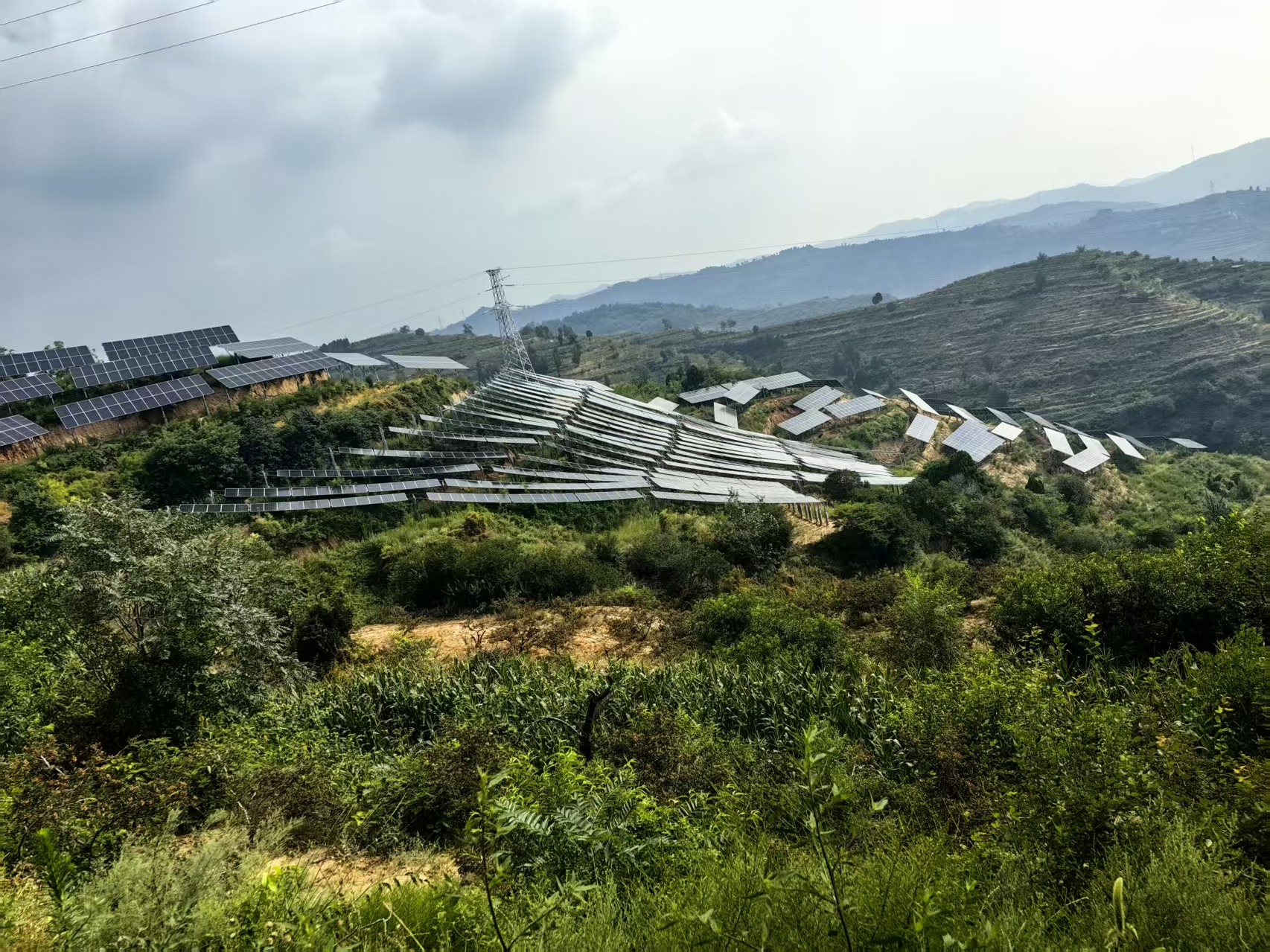
- Terrain Adaptability: The cable tensioning system automatically adjusts to micro-undulations, meaning no manual leveling of the ground is required.
Real Customer Feedback
“We used this structure for a 12 MW project in southern Spain. Honestly, the installation speed shocked our engineers. We finished three weeks ahead of schedule because we did not have to pour as many concrete piers. The cable system handles the thermal expansion of the panels perfectly, and the site looks incredibly clean. The only minor critique is that the anchor blocks require precise concrete curing before tensioning, but that is standard for any cable system.”
– Carlos Mendez, Senior Project Manager, SolarTech EPC
Here is the thing: the flexibility is real. We tested it on a site with a 15 percent slope, and the cable system simply absorbed the irregularity. You know what surprised me? The lack of vibration noise during a 60 km-h windstorm. The clamps hold the panels tightly without any micro-cracking. The only honest downside is that you need a calibrated torque wrench for the end clamps, but the tool is provided in the kit.
Technical Specifications
| Specification | Value |
|---|---|
| Module Orientation | Landscape (horizontal) |
| Panel Compatibility | Framed and frameless modules up to 2.4m length |
| Cable Diameter | 15.2 mm steel core with anti-corrosion coating |
| Max Span Between Posts | 25 meters |
| Ground Clearance | 2.5 meters (adjustable) |
| Structure Angle | 0 to 15 degrees (fixed) |
| Wind Load Capacity | 0.85 kN-m2 (equivalent to 45 m-s) |
| Snow Load Capacity | 0.6 kN-m2 |
| Post Material | Q355B steel with hot-dip galvanization |
| Corrosion Protection | Zinc coating 85 microns minimum |
| Foundation Type | Concrete piers or driven piles (optional) |
| Warranty | 15 years material, 30 years design life |
Comparison vs Competitors
| Feature | Our Single-Layer Cable System | Traditional Steel Fixed-Tilt Rack | Standard Flexible Rack (Double-Layer) |
|---|---|---|---|
| Material Weight (per kW) | 28 kg | 45 kg | 35 kg |
| Max Span | 25 m | 8 m | 18 m |
| Install Speed (MW-week) | 1.0 | 0.5 | 0.7 |
| Compatibility with Agrivoltaics | Excellent (high clearance) | Poor | Good |
| Wind Resistance (m-s) | 45 | 40 | 40 |
| Cost per MW (USD) | 38,000 | 52,000 | 44,000 |
FAQ
How does the single-layer cable system handle thermal expansion of the panels?
The system uses pre-stressed galvanized cables with a calculated elastic modulus that accommodates thermal expansion. The clamps allow 3mm of linear sliding, preventing stress on the PV cell connections. This is tested for a temperature range of -40 degrees Celsius to +85 degrees Celsius.
Can this structure be used on sloped or uneven ground?
Yes. The cable tensioning system naturally distributes load over uneven terrain. The posts can be installed with adjustable base plates to compensate for slopes up to 20 degrees, avoiding the need for costly grading.
What maintenance is required for the tension cables?
Minimal. We recommend an annual inspection of the turnbuckles and end anchors. There is no need for re-tensioning under normal conditions, as the cable elongation is pre-settled during the initial pull-in phase. If a storm exceeds design wind speeds, a simple tension check is advised.
Does this structure support bifacial modules?
Absolutely. The single-layer design leaves the rear side of the panel completely unobstructed, maximizing the bifacial gain from reflected ground light. This increases energy yield by 5 to 15 Percent depending on the albedo of the ground surface.
What are the foundation requirements?
We offer two options: standard concrete piers (400mm diameter, 1200mm depth) for normal soil, or helical driven piles for soft or sandy terrain. The post base uses a universal flange that fits both types, making it easy to switch based on site conditions.


