



Cosa tratta questo gruppo
Below a certain scale the answer is almost always fixed-tilt, because the premium cannot be recovered on a small energy base. Above it, the answer depends on the tariff, the land cost and the cost of capital rather than on the size of the plant alone.
- Yield gain from single-axis tracking, and how it varies with latitude, climate and module format
- Revenue value of that yield gain under flat tariffs, time-of-use pricing, capacity markets and PPAs
- Capital and operating cost penalty of tracking: structure, drives, controls, maintenance and spares
- Terrain adaptability: where trackers work, and where fixed-tilt is the only practical option
- Dual-axis tracking: the narrow set of conditions where it can still be justified
- Backtracking, wind stow behaviour and their effect on both yield and structural loading
Tre configurazioni da cui partire
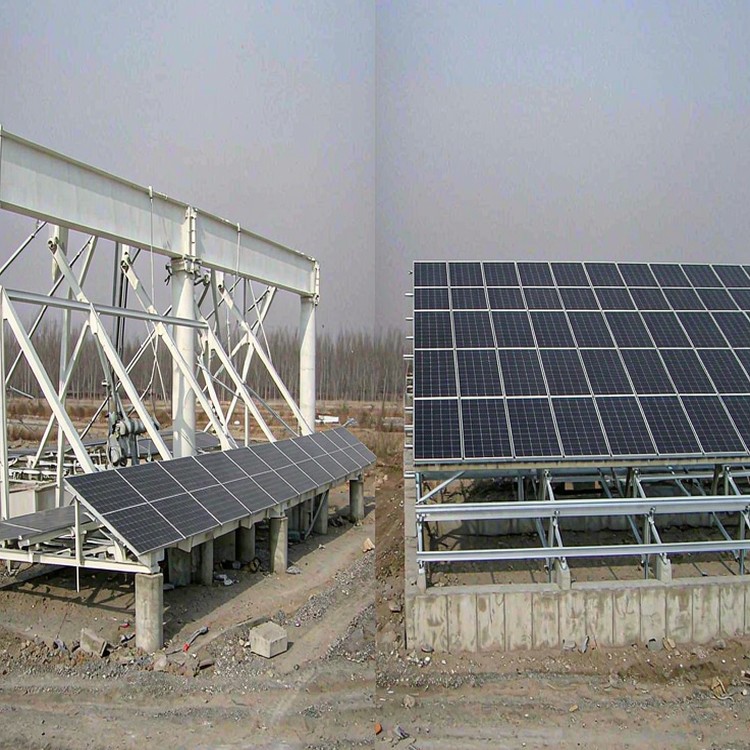
Three configurations cover most tracker decisions:
Fixed-tilt line
Static table structures, no drives or controls, minimal maintenance. Best for: Flat tariffs, cheap land, tight maintenance budgets, small projects. Relative cost: 1.0 (baseline).
Single-axis line
Horizontal or tilted single-axis trackers with backtracking and wind stow. Best for: Time-of-use pricing, high land cost, utility-scale projects. Relative cost: +8 to +18% capital, typically +15-25% yield.
Dual-axis line
Two-axis tracking, higher part count and control complexity. Best for: Niche sites where land is extremely constrained and yield is paramount. Relative cost: +35 to +60% capital.
Why the tracker decision is demanding
Tracking is easy to justify in a yield model and hard to justify in an operating budget. The yield gain is well documented; the maintenance obligation, the spare-part exposure and the failure modes that only appear after a few years of operation are what decide whether the premium was worth paying.
- The yield gain is real but its value depends on when the extra energy is produced, which is a tariff question rather than an engineering one
- Trackers add drives, controllers, bearings and sensors, all of which have finite service lives and need spares
- Wind stow behaviour becomes a safety-critical operating mode, and stow failures are a recognised cause of array damage in severe events
- Terrain tolerance is limited: rows need to be reasonably straight and level, which rules out sites where fixed-tilt would be straightforward
- Vegetation management around moving parts costs more than around static structures, and is frequently omitted from operating budgets
- Long tracker rows introduce aeroelastic behaviour that requires different structural verification than fixed-tilt arrays
Requisiti di ingegneria
These are the inputs that decide a tracker case, and the design requirements that follow once the decision is made.
- Revenue structure stated explicitly: flat tariff, time-of-use bands, capacity payment, or PPA with hourly pricing
- Yield simulation using site irradiance data at hourly resolution, not annual totals, so the value of the yield gain can be priced
- Cost model including drives, controllers, sensors, spares, additional maintenance labour and vegetation management over the operating life
- Wind stow design with a defined stow strategy, power or battery backup for stow positioning and an agreed response to grid loss
- Terrain survey and grading plan, since tracker performance and structural loading both depend on row straightness and slope
- Backtracking strategy defined for the actual row spacing and terrain, so shading loss is modelled rather than assumed
Selection guidance: run the tracker case on hourly revenue, not annual yield. Yearly energy gain figures routinely overstate or understate the economics depending on when the tariff pays.
Parametri chiave
| Parametro | Specifiche tipiche |
|---|---|
| Yield gain | Single-axis tracking typically adds 15-25 percent annual generation versus fixed-tilt at comparable latitude |
| Value driver | Share of generation in high-value hours determines whether the gain pays for the premium |
| Terrain limits | Rows generally need straightness and slope within manufacturer tolerance; tracking suits GCR 0.35-0.50 |
| Operating costs | Additional drive and controller maintenance, spares holding and vegetation management around moving parts |
| Wind stow | Automatic stow strategy with backup power; a safety-critical mode requiring defined failure response |
| Lead time | Trackers typically add 8-14 weeks versus fixed-tilt structures |
| Backtracking | Prevents row-to-row shading on sloped or closely spaced arrays; required for many tracker layouts |
| Dual-axis | Now niche: higher part count and cost rarely justified against single-axis outside specific conditions |
Come lo consegniamo
- Hourly yield and revenue modelling that prices when the extra generation occurs rather than how much of it there is
- Lifecycle cost model including drives, controllers, spares and additional vegetation management, so the comparison is not made on capital cost alone
- Terrain assessment before commitment, with a clear statement of where tracking is practical and where it is not
- Wind stow strategy defined in the design basis, with backup power for stow positioning and an agreed response to grid loss
- Backtracking configuration matched to actual row spacing and site slope, with shading loss modelled in the yield case
- Structure and drive supply coordinated as one scope, so the pile tolerance, torque tube and bearing interfaces are one supplier’s responsibility
Standard e conformità
- Combinazioni di carico del vento ASCE 7 / EN 1991 e sismico EN 1998 / IBC, ove applicabili.
- Livelli di prova di carico meccanico del modulo IEC 61215 adattati alla pressione di progetto del vostro impianto
- Norme EN 1090-1/-2 o classi di esecuzione AISC per componenti in acciaio strutturale
- Zincatura ISO 1461 con massa di zinco a gradini in base alla categoria di corrosività da C2 a C5
- Gestione della qualità ISO 9001:2015 e qualificazione documentata dei fornitori.
- Supporto per la valutazione di bancabilità dei progetti finanziati da parte di DNV o ente equivalente.
Garanzia di qualità
Batch documentation is issued per lot: mill certificates traceable to heat numbers, galvanizing records with measured coating thickness, dimensional inspection reports from pre-assembly jigs and hardware lot traceability. Warranty covers named load cases and environmental exposure classes, so claims are settled against data rather than negotiation.
Installazione e produttività in cantiere
Prima di confrontare il prezzo dell'acciaio, informatevi su come viene installata una struttura. I nostri sistemi si installano con attrezzature edili standard: nessun attrezzo proprietario, nessuna saldatura in cantiere nelle fasi critiche. Le fondazioni vengono installate con attrezzature standard del settore e dime di posizionamento che mantengono le tolleranze; i moduli strutturali arrivano preassemblati in kit sequenziati secondo il vostro piano di costruzione; il serraggio a coppia controllata con valori di coppia forniti sostituisce le saldature; e gli intervalli di regolazione compensano le tolleranze residue delle opere civili. Forniamo disegni di installazione, un manuale passo passo, tabelle di accettazione di coppia e tolleranza e supporto remoto durante la finestra di installazione. Su richiesta, un supervisore formerà la vostra squadra sui primi blocchi.
Documentazione che riceverai
Documentation is built for audits, not decoration: structural calculation notes stating load cases and standards used; foundation design basis mapped to your geotechnical report; material certificates for steel and fasteners; galvanizing certificates with measured coating thickness per batch; assembly drawings with torque tables; and packing documentation matched to container manifests. For financed projects we add lender-format compliance statements; for public tenders we respond to documentation schedules line by line.
Considerazioni di costo e commerciali
- Tracker structures typically add 8-18 percent to racking capital cost before drives and control hardware are counted separately
- Additional operating cost over 25 years – drives, controllers, spares, vegetation control – is the item most often missing from tracker business cases
- Wind stow failure risk carries an insurance and downtime cost that should be priced rather than assumed away
- Backtracking can recover several percent of annual yield on sloped or tightly spaced arrays, at no capital cost beyond control configuration
- Lead time adds 8-14 weeks, which matters when a project must reach commissioning inside a tax or tariff window
Parametri di riferimento
- Utility-scale projects in the United States and the Middle East where single-axis tracking dominates new capacity because time-of-use and wholesale pricing reward late-afternoon generation.
- Desert projects in the Gulf and North Africa where tracking is combined with high-dust design and thermal-cycle fatigue considerations.
- Projects in Chile and Australia where high land cost per megawatt made the yield gain from tracking economically decisive.
- Japanese and Central European distributed projects where flat tariffs and small scale kept fixed-tilt as the rational choice despite available tracking technology.
Pianificazione della durata di servizio e della manutenzione
La pianificazione della sostituzione è parte integrante della progettazione: la geometria dei morsetti consente la sostituzione dei singoli moduli senza tagliare le rotaie, le teste dei pali permettono il rilivellamento dopo l'assestamento e i pacchetti di ricambi sono dimensionati in base alla classe ambientale e alla capacità. Ciò garantisce che gli interventi di rilavorazione a metà vita siano rapidi, prevedibili e indipendenti dal catalogo prodotti del fornitore originale.
Come controlliamo la consegna
| Palcoscenico | Cosa facciamo | Ciò che riceverai |
|---|---|---|
| Revenue basis | tariff or PPA structure documented with hourly value bands | revenue assumption note and yield model input sheet |
| Yield model | hourly simulation run with site data and agreed system losses | yield and revenue comparison report |
| Terrain review | site plan checked against tracker slope and straightness tolerance | terrain suitability statement |
| Stow strategy | wind stow logic, backup power and grid-loss response defined | stow strategy and control narrative |
| Produzione | torque tube, bearing and drive interfaces verified against drawings | dimensional inspection and QC records |
| Handover | control settings, backtracking configuration and maintenance schedule issued | commissioning pack and O&M manual |
Send your tariff basis and site data – we will return an hourly yield and revenue comparison of tracker and fixed-tilt configurations for your project.
Guide in questo gruppo
Single-Axis Tracker Economics for Utility Projects
Hourly revenue modelling, lifecycle cost and the conditions that make tracking pay.
Fixed-Tilt vs Tracker: Yield & Cost Comparison
Direct energy and cost comparison, including the operating items most often omitted.
Tracker Terrain Adaptability & Backtracking
Slope tolerance, row straightness and backtracking configuration on real terrain.
Directory delle applicazioni correlate
Questa fascia di scala viene spesso combinata con i seguenti gruppi di applicazione, che riguardano il terreno, la tipologia di suolo e le condizioni del sito.
Domande frequenti
At what project scale does a tracker start to pay?
What does tracking really cost over the asset life?
How much land does tracking need compared with fixed-tilt?
Can trackers be installed on sloping or undulating ground?
Is dual-axis tracking still worth considering?
Cosa dobbiamo preventivare
- Revenue structure or tariff basis with hourly or time-band detail if available
- Site irradiance data at hourly resolution and the expected operating term
- Terrain survey and grading plan, including row straightness and slope constraints
- Operating budget assumptions for maintenance labour, spares and vegetation management
Rivolgiti a un ingegnere strutturale.
Inviateci i dati del vostro sito, la capacità prevista e il programma di costruzione, e i nostri ingegneri vi forniranno un progetto strutturale, una stima dei quantitativi e un pacchetto di fornitura con relativo costo.
 English
 Español
 Deutsch
 Português
 Français
 Italiano