
Perché questo è difficile
Long-term availability fails for reasons that have little to do with the component and everything to do with continuity.
- Product families are revised over time, so the clamp that fitted the original module frame may no longer be in production by the time replacement is needed
- Module formats change during the asset life, so replacement modules may need different clamping positions and therefore different clamps
- Original suppliers change ownership, exit the market or discontinue markets, which affects both spares and warranty support
- Inventory has a cost, so spares held in excess tie up capital while spares held in deficiency cause outage at the worst moment
- Spares for the structure interact with spares for the modules, so replacement planning has to consider both together
- Documentation determines whether a replacement component can be identified at all, since an undocumented structure cannot be re-ordered from a specification
Requisiti di ingegneria
These are the elements of a long-term spares and availability arrangement.
- Component families identified for spares purposes, distinguishing the parts most likely to require replacement from those that effectively never do
- Spares quantity by component family, sized against array capacity and the environment class rather than set as a flat percentage
- Availability commitment for high-turnover components over the asset life, with the form of the commitment stated
- Storage specification and rotation procedure, so stored spares remain usable rather than corroding on a shelf
- Documentation sufficient to re-order any component by specification, including drawings, material and coating details
- Interface with module replacement planning, since clamp compatibility depends on the module format in use at the time
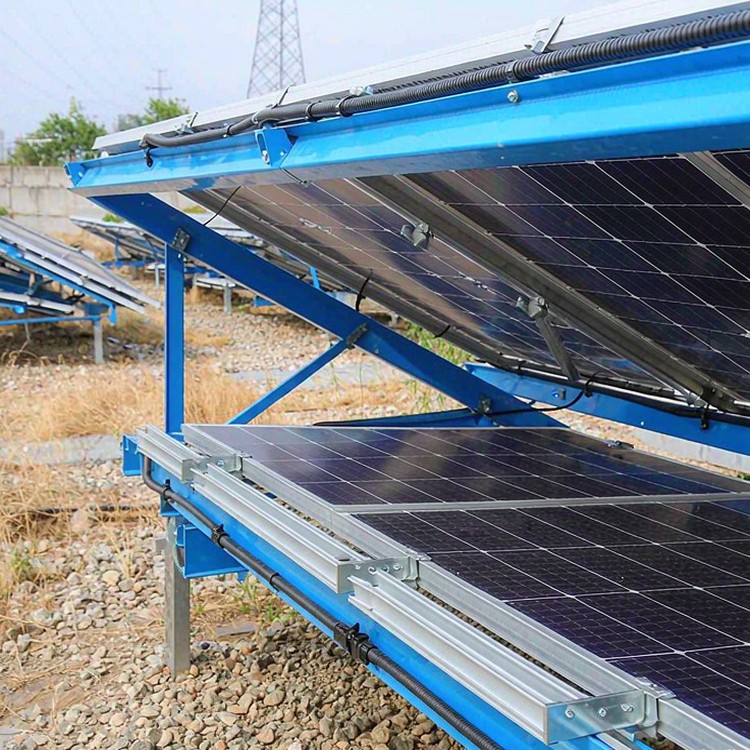
Selection guidance: specify availability and documentation, not only quantity. A stock of spares without the drawings to re-order more is a one-off provision rather than a long-term arrangement.
Come lo risolviamo
- Spares sized by component family against capacity and environment class, focused on the parts with realistic replacement probability
- Availability commitment stated for high-turnover components, covering the asset life rather than a fixed short period
- Drawings and specifications supplied with the structure, so any component can be re-ordered by specification even if the product family is revised
- Storage and rotation procedure documented, so spares remain usable and the stock reflects current requirements
- Compatibility assessment at module replacement, so the clamp position and load rating are checked against the replacement module format
- A spares register maintained with the asset, so inventory position and replacement history are visible to whoever operates the site
Oltre la struttura
- Fleet-level spares planning where an owner has multiple sites, since shared stock reduces the quantity held at each location
- Support at handover, so the incoming O&M contractor inherits a complete spares and documentation package
Parametri di riferimento
I parametri di riferimento riportati di seguito sono progetti di settore di tipo e dimensioni comparabili, documentati pubblicamente e citati a scopo illustrativo delle migliori pratiche ingegneristiche. Non rappresentano il nostro storico di realizzazione.
- A 200 MW owner-operator project in the United States holding spares sized by component family rather than as a flat percentage, reducing inventory while covering realistic replacement needs.
- A 150 MW project in Spain where drawings and specifications were supplied with the structure, allowing components to be re-ordered after the original product family was revised.
- A 250 MW portfolio in Australia where fleet-level spares planning allowed stock to be shared across sites instead of held at each.
Standard e conformità
- Carichi del vento ASCE 7 / EN 1991 risolti con fattori di terreno ed esposizione specifici del sito
- Compatibilità dell'interfaccia del modulo IEC 61215 / IEC 61730 verificata rispetto alla scheda tecnica del modulo.
- Classi di esecuzione EN 1090 o AISC per carpenteria metallica saldata e bullonata
- Zincatura a caldo secondo ISO 1461, massa di zinco specificata in base alla corrosività del suolo e dell'atmosfera.
- Gestione della qualità della produzione secondo la norma ISO 9001 con tracciabilità a livello di lotto.
- Documentazione CE/EN 1090 ove richiesta dai mercati di destinazione.
Garanzia di qualità
Ogni lotto viene spedito con certificati di produzione, registri dello spessore del rivestimento e documentazione relativa ai bulloni; le saldature sono conformi alle classi di esecuzione EN 1090 o AISC. La garanzia sulla struttura è di 10 anni, a fronte di una vita utile prevista di 25-30 anni, e i pacchetti di ricambi sono documentati in modo che le riparazioni al dodicesimo anno non dipendano dalla memoria del primo anno.
Documentazione che riceverai
La documentazione è pensata per le verifiche, non per essere meramente estetica: note di calcolo strutturale che indicano i casi di carico e gli standard utilizzati; base di progettazione delle fondazioni mappata sulla relazione geotecnica; certificati dei materiali per acciaio e elementi di fissaggio; certificati di zincatura con spessore del rivestimento misurato per lotto; disegni di assemblaggio con tabelle di coppia; e documentazione di imballaggio corrispondente ai manifesti dei container. Per i progetti finanziati aggiungiamo dichiarazioni di conformità nel formato richiesto dall'istituto di credito; per le gare d'appalto pubbliche rispondiamo ai capitolati di documentazione riga per riga.
Pianificazione della durata di servizio e della manutenzione
La durata di servizio è un risultato di progettazione, non una promessa. La massa di zinco, la classe di rivestimento dei dispositivi di fissaggio, i dettagli di drenaggio e l'isolamento tra metalli diversi vengono selezionati in base alla categoria di corrosività del sito e l'intervallo previsto per la prima manutenzione viene indicato per iscritto. Per ambienti aggressivi, in fase di progettazione, il sistema di rivestimento viene potenziato, il che è sempre più economico di un intervento successivo.
Considerazioni di costo e commerciali
- Spares inventory ties up working capital, so quantity should follow from replacement probability rather than from a conventional percentage
- Fleet-level spares reduce total inventory across a portfolio, since the coverage requirement is shared rather than duplicated
- Storage and rotation carry a cost that is small against the cost of a seized or corroded spare at the moment it is needed
- Documentation sufficient to re-order has almost no cost at supply stage and is very expensive to reconstruct later
- Availability commitments from a supplier who continues to operate in the market are worth more than a larger stock from one who does not
Domande frequenti
How many spares should we hold?
What happens when a product family is discontinued?
Does module replacement affect racking spares?
How do we handle spares across a portfolio?
What should be handed over with the asset?
Guide correlate e pagine applicative
Proseguite con le pagine più pertinenti alla tipologia del vostro progetto.
- IPP & Asset Owner Programs – la panoramica del gruppo per questa fascia di scala
- Racking Standardization for Asset Portfolios
- O&M Accessibility Design for Solar Racking
- Progetti solari per impianti di trattamento delle acque reflue
- Progetti solari galleggianti per acque interne
- Progetti complementari tra pesca ed energia solare
Cosa dobbiamo preventivare
- Fleet or site capacity and the intended maintenance cycle
- Environment class at each location, since it affects which components are likely to need replacement
- Whether spares will be held at site or centrally across a portfolio
- Any planned module replacement or repowering during the asset life
Rivolgiti a un ingegnere strutturale.
Send the capacity, locations and maintenance cycle, and we will return a spares schedule by component family with the availability commitment and the documentation set included.
 English
 Español
 Deutsch
 Português
 Français
 Italiano