




Perché questo è difficile
Without a standard, every site re-opens decisions that were already settled, and the cost of that repetition is larger than most programmes expect.
- Each new site otherwise triggers a fresh design cycle, consuming engineering capacity the programme cannot spare
- Multiple structure families multiply spares, tooling and installation procedures across the operating fleet
- Site-specific designs make performance comparison impossible, so the programme cannot learn from its own sites
- Module revisions and code updates arrive mid-programme and should be absorbed once, in a parameter, rather than once per site
- O&M crews move between sites, so a common structure family lets one procedure and one spares kit serve the whole fleet
- Lenders and owners increasingly expect a documented standard, because it simplifies asset management and future divestment
Requisiti di ingegneria
These are the elements that make a multi-site standardisation programme work.
- A defined parameter set capturing genuine site variation: wind speed and terrain, seismic, soil class, coating class and module format
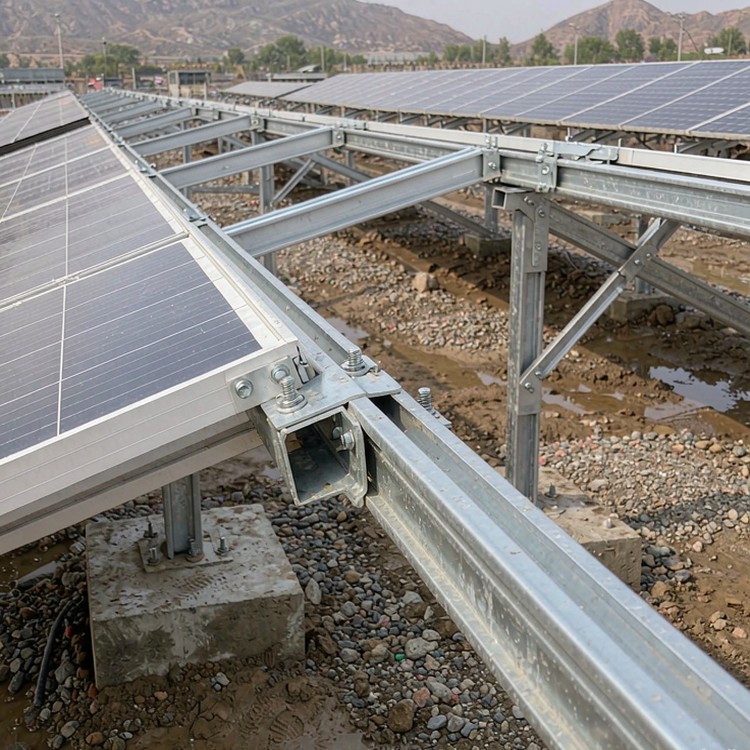
- One structural family with documented fixed and variable elements, so engineers know which parts may change and which may not
- A configuration matrix mapping each site to its parameter values, maintained as a live document rather than a set of drawings
- A change control procedure that handles mid-programme module or code updates through the parameter set rather than site by site
- Common fastener and clamp families across the programme, sized to a single spares list with defined stock levels
- A documentation template issued per site from one master, so as-built sets are directly comparable across the fleet
Selection guidance: define the parameter set before the second site is designed. Standardisation adopted after three sites have been built independently usually cannot recover the engineering already spent.
Come lo risolviamo
- One structural family across the programme, with variation expressed as parameters rather than as separate designs
- A configuration matrix maintained centrally, so any site’s parameter values can be retrieved and re-used for the next one
- Common fastener, clamp and bracket families, reducing the fleet spares list to a single document with defined stock levels
- Change control through the parameter set, so a module revision or code update is absorbed once and applied everywhere
- One documentation template for every site, making as-built sets directly comparable and audit-friendly
- A shared installation procedure, so crews trained on one site are productive on the next without retraining
Oltre la struttura
- Engineering effort reallocated from repeating settled design work to the sites that genuinely differ
- A programme-level drawing register, so the current approved revision is unambiguous at every site simultaneously
Parametri di riferimento
I parametri di riferimento riportati di seguito sono progetti di settore di tipo e dimensioni comparabili, documentati pubblicamente e citati a scopo illustrativo delle migliori pratiche ingegneristiche. Non rappresentano il nostro storico di realizzazione.
- A 12-site, 400 MW programme across three countries standardised on one structure family, with wind, seismic, soil and coating carried as parameters and no site-level redesign.
- An owner-operator fleet in the United States using a single clamp and fastener family across six utility-scale sites, holding one spares kit instead of six.
- A programme in Southeast Asia where a mid-programme module frame change was absorbed through the parameter set, affecting clamp position only and requiring no structural redesign.
Standard e conformità
- Casi di carico neve e ghiaccio conformi alla norma EN 1991-1-3 / ASCE 7, adattati al periodo di ritorno del progetto.
- Conformità alle norme IEC 61215 / IEC 61730 per la zona di fissaggio del modulo e la compatibilità con il telaio.
- Norme EN 1090 / AISC relative alle classi di esecuzione delle strutture in acciaio con registrazioni di qualificazione delle procedure di saldatura
- Zincatura ISO 1461, sistemi di verniciatura ISO 12944 dove è specificato il rivestimento duplex
- Gestione della qualità della produzione secondo la norma ISO 9001, tracciabilità dei lotti fino ai numeri di colata.
- Supporto per la documentazione relativa ai regolamenti edilizi locali e alle autorizzazioni edilizie nella vostra giurisdizione.
Garanzia di qualità
Ogni lotto viene spedito con certificati di produzione, registri dello spessore del rivestimento e documentazione relativa ai bulloni; le saldature sono conformi alle classi di esecuzione EN 1090 o AISC. La garanzia sulla struttura è di 10 anni, a fronte di una vita utile prevista di 25-30 anni, e i pacchetti di ricambi sono documentati in modo che le riparazioni al dodicesimo anno non dipendano dalla memoria del primo anno.
Documentazione che riceverai
La documentazione è pensata per le verifiche, non per essere meramente estetica: note di calcolo strutturale che indicano i casi di carico e gli standard utilizzati; base di progettazione delle fondazioni mappata sulla relazione geotecnica; certificati dei materiali per acciaio e elementi di fissaggio; certificati di zincatura con spessore del rivestimento misurato per lotto; disegni di assemblaggio con tabelle di coppia; e documentazione di imballaggio corrispondente ai manifesti dei container. Per i progetti finanziati aggiungiamo dichiarazioni di conformità nel formato richiesto dall'istituto di credito; per le gare d'appalto pubbliche rispondiamo ai capitolati di documentazione riga per riga.
Pianificazione della durata di servizio e della manutenzione
The economics of mounting systems are decided at year eight, not at signing. Galvanizing weight, fastener coating class and edge protection determine whether the year-eight inspection finds tight hardware or rust streaks. We publish expected first-maintenance intervals by environment class and back them with batch coating records, so warranty conversations start from data.
Considerazioni di costo e commerciali
- Standardisation usually carries a small unit-price premium at the first site because tooling and documentation are amortised over a single project
- The return appears across later sites as reduced engineering hours, lower design review cost and shorter approval cycles
- Fleet spares cost falls materially, because stock levels are set for one family rather than accumulated site by site
- Training and installation cost per site falls after the first, since procedure and crew knowledge transfer directly
- The largest avoided cost is rarely quantified in a quotation: engineering hours released from redesign work, which is the scarcest resource in a parallel-site programme
Domande frequenti
Does standardisation mean every site gets the same structure?
How many sites justify a standard?
What breaks a standardisation programme?
Can you supply the same structure family to sites in different countries?
How is the fleet spares list kept current?
Guide correlate e pagine applicative
Proseguite con le pagine più pertinenti alla tipologia del vostro progetto.
Cosa dobbiamo preventivare
- Site list with location, capacity and target energisation date for each
- Wind speed, terrain category, seismic parameters and soil class per site where known
- Module model and frame details, including any revision expected during the programme
- Countries of installation and any market-specific certification requirements
Rivolgiti a un ingegnere strutturale.
Send the site list with what is known about each site’s conditions, and we will return a parameter set, a configuration matrix template and a programme-level quantities estimate.
 English
 Español
 Deutsch
 Português
 Français
 Italiano