




Why This Is Difficult
Without a standard, every site re-opens decisions that were already settled, and the cost of that repetition is larger than most programmes expect.
- Each new site otherwise triggers a fresh design cycle, consuming engineering capacity the programme cannot spare
- Multiple structure families multiply spares, tooling and installation procedures across the operating fleet
- Site-specific designs make performance comparison impossible, so the programme cannot learn from its own sites
- Module revisions and code updates arrive mid-programme and should be absorbed once, in a parameter, rather than once per site
- O&M crews move between sites, so a common structure family lets one procedure and one spares kit serve the whole fleet
- Lenders and owners increasingly expect a documented standard, because it simplifies asset management and future divestment
Engineering Requirements
These are the elements that make a multi-site standardisation programme work.
- A defined parameter set capturing genuine site variation: wind speed and terrain, seismic, soil class, coating class and module format
- One structural family with documented fixed and variable elements, so engineers know which parts may change and which may not
- A configuration matrix mapping each site to its parameter values, maintained as a live document rather than a set of drawings
- A change control procedure that handles mid-programme module or code updates through the parameter set rather than site by site
- Common fastener and clamp families across the programme, sized to a single spares list with defined stock levels
- A documentation template issued per site from one master, so as-built sets are directly comparable across the fleet
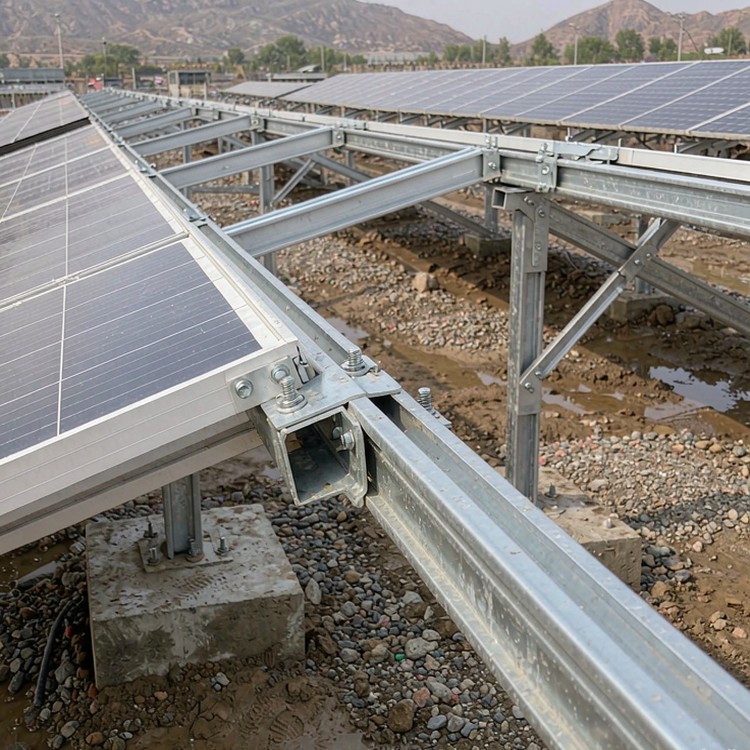
Selection guidance: define the parameter set before the second site is designed. Standardisation adopted after three sites have been built independently usually cannot recover the engineering already spent.
How We Solve It
- One structural family across the programme, with variation expressed as parameters rather than as separate designs
- A configuration matrix maintained centrally, so any site’s parameter values can be retrieved and re-used for the next one
- Common fastener, clamp and bracket families, reducing the fleet spares list to a single document with defined stock levels
- Change control through the parameter set, so a module revision or code update is absorbed once and applied everywhere
- One documentation template for every site, making as-built sets directly comparable and audit-friendly
- A shared installation procedure, so crews trained on one site are productive on the next without retraining
Beyond the Structure
- Engineering effort reallocated from repeating settled design work to the sites that genuinely differ
- A programme-level drawing register, so the current approved revision is unambiguous at every site simultaneously
Reference Benchmarks
Benchmarks below are publicly documented industry reference projects of comparable type and scale, cited to illustrate engineering practice. They are not our delivery record.
- A 12-site, 400 MW programme across three countries standardised on one structure family, with wind, seismic, soil and coating carried as parameters and no site-level redesign.
- An owner-operator fleet in the United States using a single clamp and fastener family across six utility-scale sites, holding one spares kit instead of six.
- A programme in Southeast Asia where a mid-programme module frame change was absorbed through the parameter set, affecting clamp position only and requiring no structural redesign.
Standards and Compliance
- EN 1991-1-3 / ASCE 7 snow and ice load cases matched to your design return period
- IEC 61215 / IEC 61730 for module clamping zone and frame compatibility
- EN 1090 / AISC steelwork execution classes with weld procedure qualification records
- ISO 1461 galvanizing, ISO 12944 paint systems where duplex coating is specified
- ISO 9001 production quality management, batch traceability to heat numbers
- Local building code and permitting documentation support for your jurisdiction
Quality Assurance
Every batch ships with mill certificates, coating-thickness logs and bolt records; welds follow EN 1090 or AISC execution classes. Structure warranty runs to 10 years against a 25-30 year service design life, and spare-part packages are documented so year-12 repairs do not depend on year-1 memory.
Documentation You Receive
Documentation is built for audits, not decoration: structural calculation notes stating load cases and standards used; foundation design basis mapped to your geotechnical report; material certificates for steel and fasteners; galvanizing certificates with measured coating thickness per batch; assembly drawings with torque tables; and packing documentation matched to container manifests. For financed projects we add lender-format compliance statements; for public tenders we respond to documentation schedules line by line.
Service Life and Maintenance Planning
The economics of mounting systems are decided at year eight, not at signing. Galvanizing weight, fastener coating class and edge protection determine whether the year-eight inspection finds tight hardware or rust streaks. We publish expected first-maintenance intervals by environment class and back them with batch coating records, so warranty conversations start from data.
Cost and Commercial Considerations
- Standardisation usually carries a small unit-price premium at the first site because tooling and documentation are amortised over a single project
- The return appears across later sites as reduced engineering hours, lower design review cost and shorter approval cycles
- Fleet spares cost falls materially, because stock levels are set for one family rather than accumulated site by site
- Training and installation cost per site falls after the first, since procedure and crew knowledge transfer directly
- The largest avoided cost is rarely quantified in a quotation: engineering hours released from redesign work, which is the scarcest resource in a parallel-site programme
Frequently Asked Questions
Does standardisation mean every site gets the same structure?
How many sites justify a standard?
What breaks a standardisation programme?
Can you supply the same structure family to sites in different countries?
How is the fleet spares list kept current?
Related Guides and Application Pages
Continue with the pages closest to your project type.
What We Need to Quote
- Site list with location, capacity and target energisation date for each
- Wind speed, terrain category, seismic parameters and soil class per site where known
- Module model and frame details, including any revision expected during the programme
- Countries of installation and any market-specific certification requirements
Talk to a Structure Engineer
Send the site list with what is known about each site’s conditions, and we will return a parameter set, a configuration matrix template and a programme-level quantities estimate.
 English
 Español
 Deutsch
 Português
 Français
 Italiano