




Por qué esto es difícil
Land requirement is frequently under-estimated at development stage, and the reasons are mostly items that only appear once the layout is drawn.
- Ground coverage ratio drives the majority of the variation, and it is itself the output of an economic optimisation rather than a fixed value
- Module efficiency determines how much capacity fits into a covered area, so module technology changes land requirement directly
- Setbacks, access roads, drainage, fence lines and substation footprint consume land that carries no modules
- Terrain reduces usable area, since slopes, streams, wetlands and unsuitable ground are excluded after survey rather than before
- Tilt choice changes row pitch, and therefore land per megawatt, so the tilt decision has a land cost as well as an energy effect
- Land lease terms, local planning restrictions and agricultural land classification can override the engineering optimum entirely
Requisitos de ingeniería
These are the inputs required for a defensible land requirement estimate.
- Module efficiency and dimensions for the intended technology, since capacity density follows directly from them
- Target ground coverage ratio, or the land constraint that will determine it
- Tilt or tracker configuration, since it sets row pitch and therefore row spacing
- Setback and access requirements from local planning, including road widths, fence distances and drainage provision
- Site survey identifying slopes, watercourses, protected areas and ground unsuitable for construction
- Lease terms or land cost per hectare, and any restriction on the proportion of a parcel that may be developed
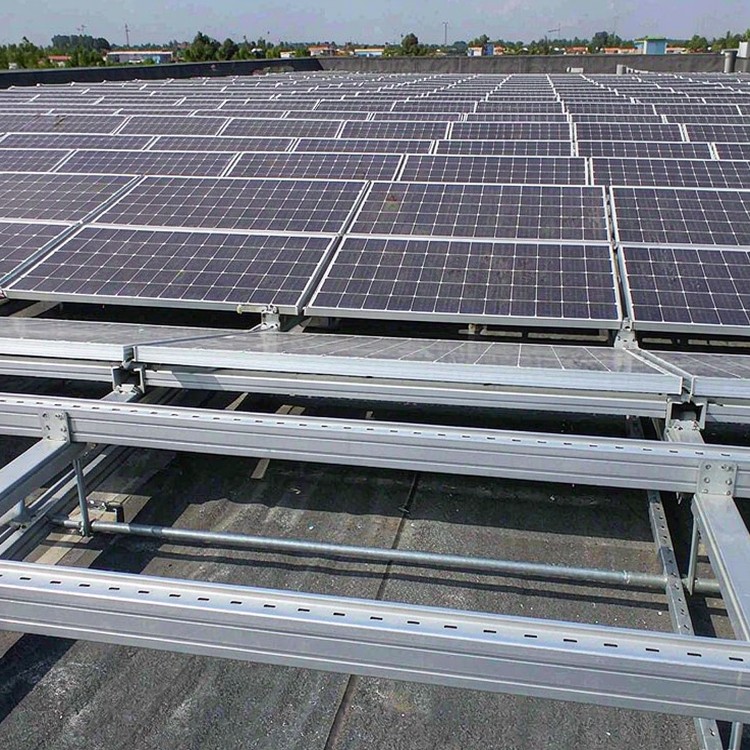
Selection guidance: calculate land requirement from the layout, not from a ratio. Acres per megawatt is an output of the design, and treating it as an input is how projects acquire land they cannot use or discover they need more.
Cómo lo resolvemos
- Capacity density calculated from the actual layout, with the gross area broken into net module area and the land consumed by setbacks and infrastructure
- GCR and module efficiency carried explicitly, so land requirement can be re-estimated when either changes
- Terrain-adjusted usable area, with excluded zones mapped rather than assumed away
- Setback and access provision built into the layout from the start, so planning requirements are not discovered after land is secured
- Land requirement presented per megawatt at several GCR values, giving the development team a range rather than a single figure
- Sensitivity to module efficiency, since a technology change moves the land requirement more than most other parameters
Más allá de la estructura
- Guidance on the land parcels that suit the layout and those that do not, supporting lease negotiation rather than post-hoc accommodation
- Documentation of the assumptions, so that a later capacity change can be translated into a land change without repeating the survey
Puntos de referencia
Los ejemplos que se muestran a continuación son proyectos de referencia del sector, documentados públicamente y de tipo y escala similares, que se citan para ilustrar la práctica de la ingeniería. No constituyen nuestro historial de proyectos.
- A 200 MW tracker project in Australia where capacity density improved after module efficiency increased, reducing the land requirement by a meaningful margin at the same GCR.
- A 150 MW project in the United States where planning setbacks and access requirements consumed a larger land fraction than the array design itself.
- A 100 MW site in Spain where terrain exclusion reduced usable area enough to make a lower GCR economically preferable to retaining the original capacity target.
Normas y cumplimiento
- Casos de carga de nieve y hielo según EN 1991-1-3 / ASCE 7, adaptados a su período de retorno de diseño.
- IEC 61215 / IEC 61730 para la zona de sujeción del módulo y la compatibilidad del bastidor.
- Clases de ejecución de estructuras de acero EN 1090 / AISC con registros de calificación de procedimientos de soldadura
- Galvanizado según ISO 1461, sistemas de pintura según ISO 12944 donde se especifica recubrimiento dúplex.
- Gestión de la calidad de producción según la norma ISO 9001, trazabilidad de lotes hasta los números de colada.
- Asistencia con la documentación relativa al código de construcción local y los permisos para su jurisdicción.
Seguro de calidad
Cada lote se envía con certificados de fábrica, registros de espesor de recubrimiento y registros de pernos; las soldaduras cumplen con las normas EN 1090 o las clases de ejecución AISC. La garantía de la estructura es de 10 años, frente a una vida útil de diseño de 25 a 30 años, y los paquetes de repuestos están documentados para que las reparaciones del año 12 no dependan de la información del año 1.
Documentación que usted recibe
La documentación está diseñada para auditorías, no para fines decorativos: notas de cálculo estructural que especifican los casos de carga y las normas utilizadas; base de diseño de la cimentación vinculada a su informe geotécnico; certificados de materiales para acero y fijaciones; certificados de galvanizado con espesor de recubrimiento medido por lote; planos de montaje con tablas de par de apriete; y documentación de embalaje que coincide con los manifiestos de los contenedores. Para proyectos financiados, añadimos declaraciones de cumplimiento en formato de entidad financiera; para licitaciones públicas, respondemos a los cronogramas de documentación línea por línea.
Planificación de la vida útil y el mantenimiento
La viabilidad económica de los sistemas de montaje se decide al octavo año, no al firmar el contrato. El peso del galvanizado, la clase de recubrimiento de los sujetadores y la protección de los bordes determinan si la inspección del octavo año detecta un ajuste perfecto o manchas de óxido. Publicamos los intervalos previstos para el primer mantenimiento según la clase de entorno y los respaldamos con los registros de recubrimiento por lotes, de modo que las conversaciones sobre la garantía se basan en datos.
Costos y consideraciones comerciales
- Acres per megawatt is not a cost, but it determines land cost, and land cost per hectare varies by more than an order of magnitude between markets
- Items that consume land without carrying modules, such as setbacks, roads and drainage, are a real cost with no revenue attached
- Over-estimating land requirement at development stage ties up capital in land that may not be developable, while under-estimating it delays the project
- Module efficiency improvements reduce land per megawatt, which is often worth more than the module price premium that delivers it
- Land cost is fixed for the layout, so the GCR and efficiency decisions that determine density are among the highest-leverage choices in development
Preguntas frecuentes
How many acres per megawatt should we plan for?
What affects capacity density most?
Should we calculate land before or after the layout?
Does a tracker use more land than fixed-tilt?
How does terrain change the land requirement?
Guías y páginas de aplicación relacionadas
Continúa con las páginas más cercanas al tipo de tu proyecto.
- Espacio entre filas, GCR y densidad de capacidad – la descripción general del grupo para esta banda de escala
- Optimización de GCR para matrices de rastreadores
- Análisis de sombreado entre filas y diseño de la separación entre filas
- Proyectos solares a gran escala
- Proyectos solares para tierras de cultivo mecanizadas y cultivos rotativos
- Proyectos solares en desiertos y dunas de arena
Lo que necesitamos citar
- Target capacity and the intended module technology with efficiency data
- Site boundary survey or topographic mapping of the parcel
- Local planning requirements for setbacks, access and fencing
- Land cost or lease terms, and any development restriction on the parcel
Hable con un ingeniero estructural.
Send the target capacity, module technology and site boundary, and we will return a capacity density estimate with the land fraction consumed by setbacks and infrastructure shown separately.
 English
 Español
 Deutsch
 Português
 Français
 Italiano