


Warum das schwierig ist
The case for advanced coatings is environment-specific, and it is often made on the wrong grounds.
- Zinc-aluminium-magnesium coatings outperform plain zinc in chloride-rich and moderately acidic environments, which is where coastal and industrial sites sit
- Cut-edge protection is superior, because the corrosion product migrates to seal exposed steel rather than allowing it to corrode preferentially
- Thinner coatings can achieve equivalent protection in some environments, which matters where coating thickness affects fit or weight
- The cost premium over hot-dip galvanizing is real, so the case has to rest on the site corrosivity category and the required service life rather than on a general preference
- Coating selection interacts with the fabrication method, since continuous-coated strip and batch-galvanized fabricated parts are different products with different limits
- Specification language for these coatings is less standardised than for galvanizing, so the required performance has to be stated as a measurable outcome rather than by a familiar standard number
Technische Anforderungen
These are the inputs required to decide whether an advanced coating is justified.
- Site corrosivity classification to ISO 9223, based on atmospheric and soil data rather than on a verbal description
- Required service life and the maintenance interval the owner is prepared to fund
- Component type and fabrication method, since continuous-coated strip and fabricated galvanized parts are suited to different processes
- Whether cut edges, holes and welded zones are present, since these are where the performance difference is greatest
- Any appearance or colour requirement, which may point toward a coated or duplex system rather than a bare metallic coating
- Comparison baseline: the coating specification that conventional galvanizing would deliver at the same site
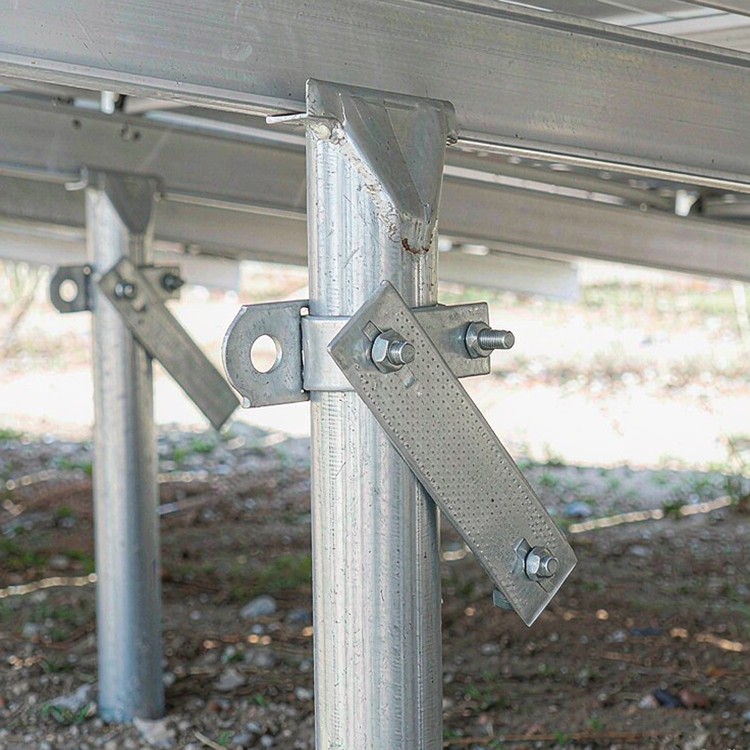
Selection guidance: compare the advanced coating against a correctly specified galvanized alternative at the same corrosivity category. Comparing it against an under-specified galvanized baseline overstates the benefit.
Wie wir es lösen
- Coating system selected against the site corrosivity category and the required service life, with the comparison made at equal durability rather than equal thickness
- Cut-edge and hole performance accounted for in the selection, since this is where advanced coatings show their largest advantage
- Fabrication method matched to the coating product, so the performance that the coating offers is not lost through subsequent processing
- Specification written as a performance requirement with test evidence, since standardised callouts for these coatings are less established
- Coating records and test data supplied per batch, so the specified performance can be verified on delivery
- Comparison against a parallel galvanized specification documented, so the cost premium and its justification are both visible to the buyer
Jenseits der Struktur
- Guidance on where the premium is not justified, so the coating level is applied selectively by component and environment rather than uniformly
- Maintenance interval stated by environment class, so the durability benefit can be valued against the maintenance budget it displaces
Referenz-Benchmarks
Die folgenden Benchmarks sind öffentlich dokumentierte Branchenreferenzprojekte vergleichbarer Art und Größenordnung, die zur Veranschaulichung der Ingenieurpraxis dienen. Sie stellen nicht unsere Leistungsbilanz dar.
- A coastal project in Japan where an advanced coating was selected for its cut-edge performance, allowing thinner sections to meet the durability requirement.
- A 150 MW industrial site in Poland where the corrosivity assessment showed conventional galvanizing was sufficient, and the advanced coating premium was not taken.
- A 100 MW project in a high-chloride environment where the coating system was applied selectively to the most exposed components rather than across the whole structure.
Standards und Konformität
- ASCE 7 / EN 1991 Windlastkombinationen und EN 1998 / IBC Erdbebenlastkombinationen, sofern anwendbar
- Die mechanischen Belastungstestpegel gemäß IEC 61215 sind auf den Auslegungsdruck Ihres Arrays abgestimmt.
- Ausführungsklassen nach EN 1090-1/-2 oder AISC für Bauteile aus Stahl
- ISO 1461 Verzinken mit Zinkmasse, gestaffelt nach Korrosivitätskategorie C2 bis C5
- Qualitätsmanagement nach ISO 9001:2015 und dokumentierte Lieferantenqualifizierung
- Unterstützung durch DNV oder eine gleichwertige Bankfähigkeitsprüfung für finanzierte Projekte
Qualitätssicherung
Die Qualitätskontrolle erfolgt punktbasiert: Überprüfung des Materialeingangs, Prüfung der Schweißnähte und Bohrungspositionen während des Produktionsprozesses, Stichprobenprüfung der Beschichtungsdicke und Containerprüfung vor dem Versand. Jeder Kontrollpunkt generiert ein Dokument, das Ihr Qualitätsteam ablegen kann. Die Versandprüfung kann von Ihrem Prüfer oder einem externen Dienstleister durchgeführt werden.
Dokumentation, die Sie erhalten
Die Dokumentation ist genauso wichtig wie der Stahl selbst. Mit jeder Lieferung erhalten Sie Werksprüfzeugnisse mit Rückverfolgbarkeit zu den Chargennummern, Verzinkungsprotokolle pro Charge gemäß ISO 1461 oder Ihrem vorgegebenen Standard, Maßprüfberichte von den Vormontagevorrichtungen, Chargenrückverfolgbarkeit von Schrauben und Beschlägen, Bestandspläne für bauseitige Anpassungen sowie ein Garantiedokument mit Angaben zu abgedeckten Lastfällen, geplanter Lebensdauer und Vorgehensweise bei Reklamationen. Alle Daten sind indexiert, sodass Ihr Anlagenverzeichnis nicht vom Gedächtnis eines einzelnen Technikers abhängt.
Lebensdauer- und Wartungsplanung
Die Wartung sollte anhand messbarer Kriterien und nicht anhand von Schätzungen im Kalender erfolgen: jährliche Sichtprüfung der Anzugsmomente von Befestigungselementen, Zustand der Beschichtung an Schnittkanten und Erdungskontaktstellen; eine detaillierte Prüfung nach dem ersten Jahr mit extremen Witterungsbedingungen; und Überprüfung des Anzugsmoments nach dem ersten Temperaturzyklus bei langen Strecken. Die Prüfcheckliste und die Abnahmekriterien stellen wir zusammen mit der Installationsanleitung zur Verfügung.
Kosten- und kommerzielle Überlegungen
- The coating premium is a real percentage of the structure price and should be assessed against the maintenance cost it displaces rather than on protection alone
- Applying the advanced coating selectively by component and exposure reduces the cost of achieving the same overall durability
- Where the coating allows thinner sections at equivalent durability, the material saving can partly offset the coating premium
- Maintenance cost avoided is the return, and it should be estimated on the site actual corrosivity rather than on a generic durability claim
- Coating verification testing adds a modest cost and is the only way to confirm the delivered product meets the specified performance
Häufig gestellte Fragen
Is ZAM steel worth the premium?
How does it compare with hot-dip galvanizing?
What about specification and standards?
Does the coating affect fabrication?
How do we compare bids with different coatings?
Verwandte Leitfäden und Anwendungsseiten
Fahren Sie mit den Seiten fort, die Ihrem Projekttyp am ehesten entsprechen.
- Corrosion Protection & 25-Year Durability – die Gruppenübersicht für dieses Skalenband
- Spezifikationen für die Feuerverzinkung von Solarmontagegestellen
- C5 Coastal & High-Salinity Corrosion Protection
- Saline-Alkali, Tidal Flat & Salt-Pan Solar Projects
- Offshore, Nearshore & Marine Solar Projects
- Ergänzende Projekte zwischen Fischerei und Solarenergie
Was wir für ein Angebot benötigen
- Site location and environment data for a corrosivity classification
- Required service life and maintenance interval
- Component list with fabrication method and the extent of welding and cutting
- The galvanized specification you are comparing against
Sprechen Sie mit einem Statiker
Send the site corrosivity data and the component list, and we will return a coating comparison at equal durability, with the premium and the maintenance interval difference stated.
 English
 Español
 Deutsch
 Português
 Français
 Italiano