




2 Engineering Disciplines Under This Hub
Wastewater-Treatment-Plant PV Racking
Wastewater Treatment PV Racking — Tank Covers, Clarifiers and Oxidation Ditches
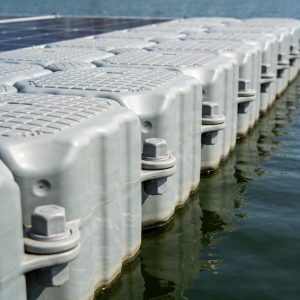
Aeration-Tank & Treatment-Pond PV Mounting
Aeration-Tank Solar Brackets, Sludge-Tank Covers and Wastewater-Lagoon Floating PV
Why Wastewater Treatment projects are demanding
Wastewater-treatment plants are ideal distributed PV hosts: steady daytime loads, existing electrical infrastructure, and underused pond and basin surfaces. The engineering is canopy design over live infrastructure – maintenance access for scraper bridges and aerators, corrosive atmospheres near works, and zero interference with treatment operations.
Site challenges we engineer around:
Challenge 01
H2S and corrosive off-gas attack coatings and fasteners near headworks
Challenge 02
Retrofit loads on existing structures need verification, not assumptions
Challenge 03
Plant operations continue: construction must not interrupt treatment
Challenge 04
Utilities demand storm-water and safety compliance around basins
How to choose the right page
- If the array sits over plant structures or on available ground, start with the treatment-plant page
- If it is mounted on treatment or aeration ponds, start with the pond page
- If H2S or aggressive humidity is present, raise it at RFQ – the coating class changes
Key technical parameters at a glance
Typical engineering envelopes for this segment; every project is recalculated against the destination-market code before fabrication:
| Parameter | Typical value / approach |
|---|---|
| Foundation options | ground screw, driven pile, rammed pile or ballast selected by soil report |
| Structural design life | 25-year service design with a 10-year structural warranty frame |
| Steel grades | Q235B / Q355B, hot-dip galvanized to ISO 1461, average zinc 85 um or above |
| Design wind | site-specific 3-second gust, typically 33-42 m/s per EN 1991-1-4 or ASCE 7 |
| Canopy cover | structures span sedimentation and aeration basins |
| Atmosphere | coating package rated for corrosive humid air |
Engineering requirements and design basis
- Canopy spans over basins avoiding machinery paths, with lift-in access preserved
- Corrosion selection for H2S and chloride environments per zone
- Structural verification of existing walls and slabs for canopy loads
- Phased installation keeping treatment trains online
What this hub covers
- Racking over aeration tanks and treatment structures
- Pond-mounted systems compatible with treatment operations
- Corrosion protection for hydrogen-sulphide and humidity exposure
- Access, safety and maintenance planning within operating works

Which configuration fits your site
Three supply configurations cover most wastewater treatment procurement cases:
| Configuration | Structure and finish | Best for | Cost index |
|---|---|---|---|
| Economy line | Q235B main steel, hot-dip galvanized to ISO 1461 | treatment basins inside fenced plants | 1.0 (baseline) |
| Standard line | Q355B main members, 85 um+ zinc, pre-assembled brackets | typical wastewater treatment tenders with standard code loads | +15-25% |
| Severe-site line | reinforced sections, duplex coating, sealed hardware | corrosive humid air over aeration tanks | +35-50% |
Engineered solution
- Zone-based corrosion packages matched to gas exposure maps
- Existing-structure load verification service for retrofits
- Phased construction plans that keep permit limits on effluent
- Safety and edge-protection packages around basins
- Utility-side metering and interconnection coordination

Industry benchmarks
The reference points below are anonymized industry benchmarks drawn from comparable public projects of this type. They are not claims about projects delivered by us, and no client, developer or operator is identified.
- Distributed PV at a Wuxi wastewater treatment plant with canopy and pond-edge mounting over treatment infrastructure, an early Chinese WWTP-PV reference.
- Distributed PV over a Wuhan WWTP’s basins in Hubei, with anti-corrosion canopies routed around municipal maintenance access.
- Distributed PV on a municipal WWTP in Huzhou with covered aeration tanks, typical of Jiangsu municipal PV retrofits.
- A water resource recovery facility in Oregon, US hosting solar canopies over treatment basins, a US municipal reference for canopy PV on infrastructure.
- A PV-storage project at a water-environment center in Huzhou, Zhejiang, pairing treatment-pond canopies with storage for demand management.
- PV on an industrial WWTP in Yancheng, Jiangsu handling high-salinity effluent zones; coating class selected for corrosive off-gas environments.
Installation method and site productivity
Installation method is a cost line, not an afterthought. We ship structures engineered around the equipment you will actually have: pile-driving rigs with template jigs for soils that accept driven piles; screw-pile drives with torque monitoring where refusal or vibration rules out impact; precast ballast pads where penetration is prohibited; and bolt-only table assembly with 80 percent+ shop fabrication so site welding stays at zero. Crew productivity typically runs 40-80 tables per day per rig on prepared corridors, and our installation manual states the assumed crew size, equipment list and daily output so your construction schedule is built on numbers, not optimism.
Standards and compliance
- ISO 12944 C4-C5 for gas-exposed zones
- Local water-utility construction and safety codes
- EN 1991 / ASCE 7 loads; retrofit structural verification practice
- Electrical codes for distributed generation interconnection
- ISO 9001 production quality management; batch traceability
- CE / EN 1090 documentation where destination markets require
Budget drivers and lead time
- Canopy over basins costs 2-3x ground-mount per MW but uses land the utility already owns
- Corrosion zoning prevents both overspend and early failure
- Existing-structure verification is small money that avoids redesign later
- Lead time: 8-14 weeks; treatment-plant windows gate construction phases
- Quotations state steel grade, zinc mass and coating system explicitly; Incoterms and container plans are quoted to your destination port
Comparing supplier quotations
Before signing, make the quotes apples-to-apples. Ask each bidder to confirm: design wind speed and terrain category used, snow or ice loads, seismic requirements if any; the geotechnical assumptions behind foundation pricing and who pays when soils disagree; the exact steel grade, coating standard and zinc mass; module clamping compatibility with your module datasheet revision; delivery terms – Incoterms, lead time ex-works versus to-port, partial-shipment flexibility; and warranty scope including fasteners and coatings, not just structure. Suppliers who answer these in writing are suppliers who have built before. We answer them by default, in the quotation, not after a chase.
Frequently asked questions
Why is corrosion such a factor at treatment works?
Can structures be placed over aeration tanks?
How is safety managed in an operating works?
Do you allow third-party or customer inspections before shipment?
How are warranty claims handled in practice?
Ready to Start Your Wastewater treatment Project?
What to include in your RFQ
- Where the array will sit: ground, tanks or ponds
- Hydrogen-sulphide readings or corrosion class assessment
- Loading limits on existing civil structures
- Operator access, isolation and safety requirements
From RFQ to commissioning: how we work
We structure every order around five checkpoints. First, technical screening: your drawings, soil data and wind or snow parameters are reviewed by a structure engineer, not a salesperson, and assumptions are written down before any number is quoted. Second, a costed proposal that separates structure, foundation hardware and optional items so you can compare bids line by line. Third, design freeze: shop drawings, connection details and coating specifications agreed in writing, with third-party review arranged when your owner or lender requires it. Fourth, controlled production with per-batch records – steel mill certificates, galvanizing thickness logs, bolt lot traceability. Fifth, logistics and installation support: sequencing to your EPC program, packing lists that match container plans, and a named engineer reachable during your install window.
Send your site layout and corrosion data – we will design for the operating works, not just for the structure.
Quality, warranty and delivery
We control quality at three gates: incoming steel certification, pre-assembly dimensional checks on jigs, and post-galvanizing thickness verification per batch. Warranty terms are written against load cases and environments, not adjectives – ask us to walk your QA team through the documents before award.
Control points from intake to handover
| Stage | What is checked | You receive |
|---|---|---|
| Material intake | steel grade and zinc mass verified against mill certificates | mill certificates and intake report |
| Production | weld quality, hole positioning and coating thickness sampled per batch | batch traceability sheet and QC photos |
| Pre-shipment | container loading plan, bolt-kit counts and packing list reviewed | packing list and loading photos |
| Site handover | installation walkthrough with torque values confirmed | installation manual, torque table and warranty letter |
| Site-specific check | basin-cover drainage and gas venting checked | project-specific method statement |
Documentation you receive
We document in the format procurement teams actually file. Standard set: technical proposal with design basis; issued-for-construction drawings; structural calculations signed by our engineering department, third-party endorsement arranged where required; material and coating certificates per batch; installation manual with step sequences, torque values and tolerance acceptance criteria; and packing lists reconciled against container numbers. Optional add-ons: wind-tunnel or code-based fatigue notes for extreme sites, seismic calculation packages, corrosion service-life projections by environment, and spare-parts schedules with recommended holding quantities. Tell us your owner’s documentation standard at RFQ stage and we quote to it rather than discovering it at delivery.
Service life and maintenance planning
The economics of mounting systems are decided at year eight, not at signing. Galvanizing weight, fastener coating class and edge protection determine whether the year-eight inspection finds tight hardware or rust streaks. We publish expected first-maintenance intervals by environment class and back them with batch coating records, so warranty conversations start from data. For sites with special exposure – fertilizer plants, livestock ammonia, coastal spray, geothermal soils – we adjust coating and drainage detailing at design stage. Module replacement cycles are planned too: clamp designs allow individual module swap without cutting rails, which keeps mid-life rework fast and cheap.
