




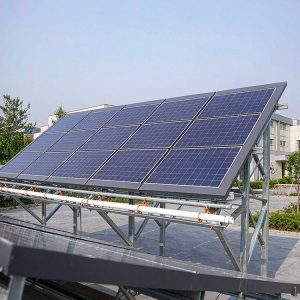
This page is one of several in our solar tracker (general) segment. See the full range of structures, foundations and configurations on the General Solar Tracker Systems & Control Strategies hub page.
Why Solar Tracker (General) sites are demanding
The tracker general family answers system-level questions: how stow strategies are engineered, how terrain limits drivelines, how reliability is documented and how controls integrate. Buyers comparing trackers need fleet data and survival logic, not animation videos.
Site challenges we engineer around:
Challenge 01
SCADA and cybersecurity integration obligations keep growing
Challenge 02
Stow logic varies in quality; survival margins are rarely documented
Challenge 03
Slope limits decide whether trackers fit the site at all
Challenge 04
Bearing and drive reliability data is marketing-heavy, evidence-light
Challenge 05
Environment needs are treated as custom per project
Challenge 06
Drive protection classes are underspecified
Challenge 07
Package boundaries stay vague
Engineering requirements and design basis
- Row-segmentation engineering
- SCADA integration with security compliance
- Wind-tunnel-backed stow criteria with documented margins
- Driveline slope analysis per block
Selection guidance: Buy tracker environment packages with published inclusions; specify drive sealing and protection classes explicitly for your exposure.
Engineered solution
- Terrain-adaptive options for rolling sites
- Reliability documentation with spares strategy
- Irregular-block layout engineering
- SCADA and controls packages
- Availability-based guarantee structures
On this specific application we additionally provide:
- Environment packages for trackers: desert, coastal, terrain variants with published scope
- Drive protection classes specified per exposure
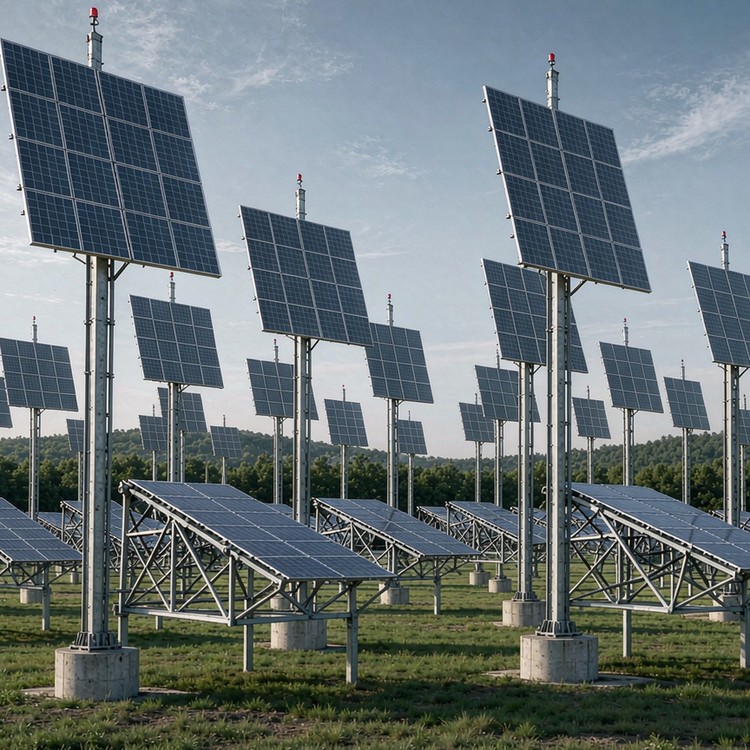
Installation method and site productivity
Installation method is a cost line, not an afterthought. We ship structures engineered around the equipment you will actually have: pile-driving rigs with template jigs for soils that accept driven piles; screw-pile drives with torque monitoring where refusal or vibration rules out impact; precast ballast pads where penetration is prohibited; and bolt-only table assembly with 80 percent+ shop fabrication so site welding stays at zero. Crew productivity typically runs 40-80 tables per day per rig on prepared corridors, and our installation manual states the assumed crew size, equipment list and daily output so your construction schedule is built on numbers, not optimism.
Industry benchmarks
Benchmarks below are publicly documented industry reference projects of comparable type and scale, cited to illustrate engineering practice. They are not our delivery record; delivered references for your configuration are supplied with quotations.
- A 540 MW PV plus roughly 1,140 MWh storage complex in the Northern Cape, on arid gravel plains with trackers and deep piles near calcrete layers.
- A 180 MW plant in the Thar desert near Jaisalmer on sandy substrates, with deep piles and dust-management practice.
Standards and compliance
- ASCE 7 / EN 1991 dynamic provisions
- IEC 62817 tracker qualification
- SCADA cybersecurity frameworks
- Execution classes for driveline supports
- ISO 9001 production quality management; batch traceability
- CE / EN 1090 documentation where destination markets require
Budget drivers and lead time
- Trackers earn their 8-15 percent premium through yield on high-DNI sites
- Stow engineering is safety-critical value, not overhead
- Spares and service network coverage decide real availability
- Lead time: 10-16 weeks
- Quotations state steel grade, zinc mass and coating system explicitly; Incoterms and container plans are quoted to your destination port
Comparing supplier quotations
A useful discipline: score quotations on completeness before price. A complete bid states the structural design basis, foundation assumptions, material and coating specifications, module interface details, QA documentation list, delivery schedule with Incoterms, and warranty terms with claim criteria. Missing items are not savings – they are decisions deferred to the most expensive moment, mid-installation. We issue quotations in this complete form as standard, and we will re-cost documented alternatives (heavier sections against fewer piles, higher zinc against shorter maintenance cycles) so your award decision trades real variables, not hidden ones. Ask competing bidders to do the same; the industry needs more comparable paper.
Frequently asked questions
What does a desert tracker package include?
How are coastal trackers protected?
Do packages slow customization?
More questions buyers ask
In which languages is the documentation provided?
Who owns the structural design – can we modify it?
What to include in your RFQ
- Site environment class
- Tracker platform interest
- Volume
From RFQ to commissioning: how we work
A typical engagement runs in five gates: (1) RFQ review – we check drawings, geotech reports and load assumptions before quoting, and flag gaps that would move cost later; (2) proposal – structural basis, bill of quantities, foundation options and Incoterms stated side by side; (3) engineering freeze – pile tests or pre-drilling trials where soils demand them, shop drawings signed off by both engineering teams; (4) production – batch QA documents issued per lot, pre-shipment inspection open to your inspector or a third party; (5) delivery and install support – container plans matched to EPC sequence, installation manuals, torque tables and commissioning guidance. Each gate produces a document you can file; buyers tell us the discipline matters more than the brochures.
Send documents to our engineering mailbox; a structure engineer replies within one working day – not a sales script, an engineering answer.
Quality, warranty and delivery
Production follows ISO 9001 procedures with batch traceability from coil to container; galvanizing runs to ISO 1461 with zinc mass selected by your site corrosivity class. We publish our first-maintenance estimates in writing, and our warranty documentation names what is covered, for how long, and under which load cases.
Documentation you receive
The paper trail matters as much as the steel. With each delivery you receive: mill test certificates traceable to heat numbers; galvanizing records per batch against ISO 1461 or your specified standard; dimensional inspection reports from pre-assembly jigs; bolt and hardware lot traceability; as-built drawings when site adaptations were made; and a warranty document that names covered load cases, service design life and claim procedures. O&M documentation includes a recommended inspection interval by environment class and a first-maintenance estimate in writing. Everything is indexed, so your asset register does not depend on one engineer’s memory.
Service life and maintenance planning
Racking is a thirty-year decision, and the first maintenance event is where cheap hardware shows its cost. We design coating systems from your site’s corrosivity class – C2 for dry inland zones, C3-C4 for most coastal and agricultural areas, C5 toward heavy industrial and marine exposure – and we state the expected time to first maintenance in writing. Bolt selection follows the same logic: coated high-strength fasteners with controlled torque, because mixed hardware is the most common early-corrosion finding in field inspections. A spare-parts kit sized to your environment ships with the order.
Search terms this page is engineered for
single axis tracker for desert, tracker system for rolling hills, tracker racking for Gobi desert, tracker for agrivoltaic farm, tracker bracket for windy plateau, tracker for fishery solar hybrid, tracker for reclaimed mining land.
Ready to Discuss Your Project?
Send the environment class – we will return the tracker package scope with drive protection classes and boundaries documented.
