




Why This Is Difficult
Qualification failures are procedural, and they are almost always avoidable with preparation.
- Certification requirements are stated in the tender documents and are usually mandatory rather than scored, so a missing item is an exclusion rather than a deduction
- Financial evidence such as audited accounts or a bank reference is required to demonstrate capacity, and obtaining it takes time that tender periods do not allow
- Production capacity evidence is increasingly required in tenders that expect volumed delivery against a programme
- Reference projects must usually be evidenced with documentation rather than asserted, and references must often be comparable in size and market
- Local requirements vary by market and can include registration, local partnership or language requirements that affect the bidder’s eligible structure
- Validity periods matter, since certificates and financial statements expire and a pack that was current last year may not be current at submission
Engineering Requirements
These are the items a racking qualification pack typically needs to contain.
- Structural and product certifications with the issuing body, standard, edition and validity period stated for each
- Quality management certification, together with the producing entity it applies to
- Financial evidence: audited accounts, bank references or equivalent, covering the period the tender specifies
- Production capacity evidence, including the facilities involved and the tonnage available against the tender requirement
- Reference project list with client, capacity, scope, delivery period and supporting documentation for each
- Market-specific requirements: registration, local presence, language of documentation and any local content provision
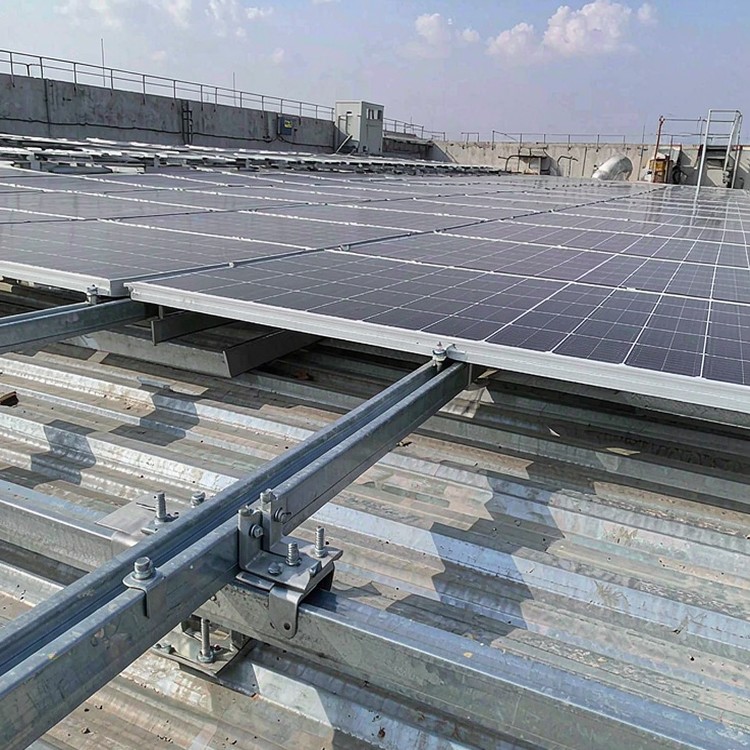
Selection guidance: build and maintain the qualification pack as a standing document. Assembled at tender stage it is a schedule risk; maintained continuously it is a submission task.
How We Solve It
- A standing qualification pack, maintained with current certificates, financials, capacity evidence and reference documentation
- Certification items indexed with their standards, validity periods and the entity they apply to, so the pack can be checked against a tender requirement quickly
- Reference project documentation prepared at project completion rather than reconstructed at bid stage, with client contact details and performance evidence
- Production capacity evidence by facility, since tenders frequently ask for the specific site that will produce the goods
- Financial documentation maintained on a rolling basis aligned to the audit cycle, so it is current whenever a tender requires it
- Market-specific requirement tracking, so registration or local content obligations are identified before a bid decision rather than after
Beyond the Structure
- Support for pre-qualification submissions, including responses to technical questionnaires and capacity declarations
- A named contact for tender coordination, so documentation requests are answered within the bid period
Reference Benchmarks
Benchmarks below are publicly documented industry reference projects of comparable type and scale, cited to illustrate engineering practice. They are not our delivery record.
- A 300 MW public tender in the Middle East where a maintained qualification pack allowed submission within a short bid window.
- A 200 MW government programme in Southeast Asia where reference project documentation prepared at project completion provided the performance evidence the tender required.
- A 150 MW public tender in Africa where market-specific registration requirements were identified before the bid decision rather than during document preparation.
Standards and Compliance
- ASCE 7 / EN 1991 / AS-NZS 1170 wind load cases with site-specific terrain categories
- IEC 62727 tracker structural requirements where tracking structures are in scope
- EN 1090-2 or AISC 360 fabrication and execution class documentation
- ISO 1461 hot-dip galvanizing, ISO 9223 corrosivity classification driving zinc mass
- ISO 9001:2015 quality system, ISO 14001 environmental management on request
- Third-party aeroelastic wind tunnel study available for large-format modules
Quality Assurance
Batch documentation is issued per lot: mill certificates traceable to heat numbers, galvanizing records with measured coating thickness, dimensional inspection reports from pre-assembly jigs and hardware lot traceability. Warranty covers named load cases and environmental exposure classes, so claims are settled against data rather than negotiation.
Documentation You Receive
Each shipment carries a document pack aligned to your asset register: certified material test reports, coating thickness records per batch, torque and preload verification sheets, packing lists with container numbers and a maintenance-relevant drawing set. Where the destination market requires local certification or translated documents, we prepare them in advance rather than at the port.
Service Life and Maintenance Planning
Replacement planning is part of the design: clamp geometry allows individual module swap without cutting rails, pile heads accept re-levelling after settlement, and spare-part packages are sized to your environment class and capacity. That keeps mid-life rework fast, predictable and independent of the original supplier’s product catalogue.
Cost and Commercial Considerations
- Qualification work is administrative cost, and it is incurred whether or not the bid succeeds, which makes pack maintenance more economical than pack assembly
- A missed qualification is a lost bid regardless of technical merit or price, and the cost is the whole bid opportunity
- Certification renewal and financial statement preparation are recurring costs that are far lower when scheduled than when expedited
- Reference documentation prepared at project completion costs a fraction of the same documentation reconstructed years later
- Market registration or local presence requirements can be a material cost and should be assessed before committing to a market rather than at tender stage
Frequently Asked Questions
What is typically required to qualify for a public solar tender?
How far in advance should the pack be prepared?
How are reference projects evidenced?
Do tenders require local presence?
What happens if certification is missing at submission?
Related Guides and Application Pages
Continue with the pages closest to your project type.
- Government Tender & Public Infrastructure – the group overview for this scale band
- Local Content & Origin Requirements in Solar Tenders
- Technical Support for Utility-Scale Solar Tenders
- Regional Market Solar Projects
- Sand-Control & Ecological Restoration Solar Projects
- Plateau, Alpine & Cold-Region Solar Projects
What We Need to Quote
- Tender document or the qualification criteria list, where available
- Destination market and any local content or registration requirement
- The certification and financial evidence the tender specifies
- Bid submission deadline and the documentation format required
Talk to a Structure Engineer
Send the tender qualification criteria, and we will return a completed qualification pack status against each requirement, together with any gap that needs action before submission.
