
Por que isso é difícil?
Accessibility costs appear in the operating account rather than the capital account, which is why they are systematically under-designed.
- Module replacement is the most frequent maintenance task, and if it requires rail disassembly the cost per event rises substantially
- Torque verification requires physical access to connections, and connections buried under rails or between rows are expensive to reach
- Coating inspection requires visual and instrument access to the surfaces exposed to corrosion, particularly at the ground line and at cut edges
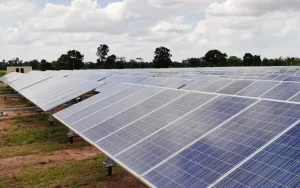
- Row pitch and array height determine whether maintenance can be carried out from the ground or requires platforms and harnesses
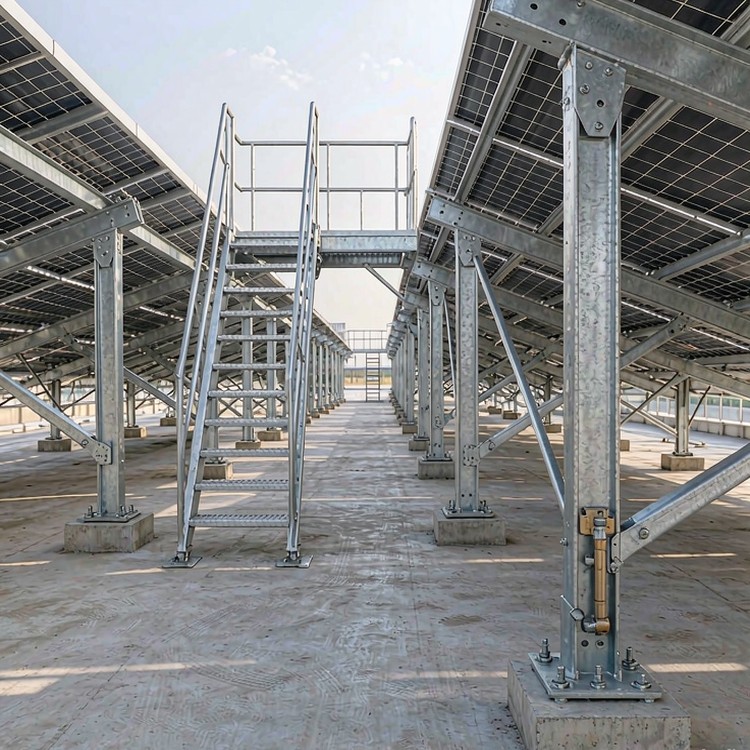
- Walkway provision and cable management affect both access and the risk of damage during maintenance
- Accessibility is almost free at design stage and expensive to retrofit, because retrofitting means working around an installed structure
Requisitos de engenharia
These are the inputs required to design for O&M accessibility.
- The maintenance tasks expected over the asset life, with their frequency and their access requirements stated individually
- Module replacement method intended, including whether replacement is expected to be possible without disassembling the structure
- Array height, row pitch and tilt or rotation range, since these determine whether tasks can be performed from ground level
- Connection detailing, including which connections require torque verification and how they will be reached
- Cable routing and walkway provision, so maintenance access and cable protection are designed together
- Site access for maintenance vehicles and equipment, including any restriction that limits the machinery available
Selection guidance: list the maintenance tasks before designing the layout. Accessibility requirements follow from the tasks, and a layout designed without them cannot be assessed for accessibility at all.
Como resolvemos isso
- Module replacement possible without rail disassembly, through clamp geometry that allows individual module removal
- Connections positioned so torque verification can be completed with hand tools from an accessible working position
- Array height, row pitch and tilt selected with maintenance access considered, where the energy and cost effect is acceptable
- Walkways and cable management designed in, protecting cables from foot traffic and providing defined maintenance routes
- Coating and fastener inspection points identified, with the access required for each stated in the maintenance manual
- Maintenance manual issued with the structure, listing tasks, intervals, access requirements and acceptance criteria
Além da estrutura
- Accessibility assessed across the fleet, so procedures and access equipment are common between sites
- Spares and tools specified to the maintenance tasks, so access equipment and replacement parts arrive together
Benchmarks de referência
Os benchmarks abaixo são projetos de referência da indústria, de tipo e escala comparáveis e documentados publicamente, citados para ilustrar a prática de engenharia. Eles não representam nosso histórico de entregas.
- A 200 MW owner-operator project in the United States where clamp geometry allowed individual module replacement without rail disassembly, reducing maintenance cost per event.
- A 150 MW project in Spain where walkway provision and cable routing were designed together, reducing cable damage during maintenance.
- A 250 MW portfolio in Australia where accessibility was assessed across sites, allowing common access equipment and procedures to serve the fleet.
Normas e Conformidade
- Combinações de carga de vento ASCE 7 / EN 1991 e carga sísmica EN 1998 / IBC, quando aplicáveis.
- Níveis de teste de carga mecânica do módulo IEC 61215 compatíveis com a pressão de projeto do seu conjunto de matrizes.
- Classes de execução EN 1090-1/-2 ou AISC para componentes de aço estrutural
- Galvanização ISO 1461 com massa de zinco escalonada por categoria de corrosividade C2 a C5.
- Gestão da qualidade ISO 9001:2015 e qualificação documentada de fornecedores.
- Apoio da DNV ou equivalente para avaliação de viabilidade bancária de projetos financiados
Garantia de Qualidade
O controle de qualidade é baseado em pontos de verificação: verificação da entrada de materiais, inspeção da posição de soldas e furos durante o processo, amostragem da espessura do revestimento e revisão do contêiner antes do embarque. Cada ponto de verificação gera um documento que sua equipe de qualidade pode arquivar, e a inspeção pré-embarque pode ser realizada pelo seu inspetor ou por uma empresa terceirizada.
Documentação que você receberá
A documentação é tão importante quanto o aço. A cada entrega, você recebe certificados de testes de fábrica rastreáveis por lote; registros de galvanização por lote, de acordo com a norma ISO 1461 ou a norma especificada por você; relatórios de inspeção dimensional de gabaritos de pré-montagem; rastreabilidade de lotes de parafusos e ferragens; desenhos "como construído" com as adaptações necessárias no local; e um documento de garantia que especifica os casos de carga cobertos, a vida útil de projeto e os procedimentos para reclamações. Tudo é indexado, portanto, seu registro de ativos não depende da memória de um único engenheiro.
Planejamento de Vida Útil e Manutenção
Planeje a manutenção com base em indicadores mensuráveis, não em estimativas de calendário: inspeção visual anual de amostras de torque de fixação, condição do revestimento nas bordas de corte e zonas de contato com o solo; inspeção detalhada após o primeiro ano com condições climáticas extremas; e verificação de reaperto após o primeiro ciclo térmico em instalações de longa duração. Fornecemos a lista de verificação de inspeção e os critérios de aceitação juntamente com o manual de instalação.
Custos e considerações comerciais
- Accessibility designed in costs a small amount at capital stage and saves repeatedly across the asset life, which makes it one of the more favourable levelised cost levers
- Module replacement cost per event depends directly on whether the structure must be disassembled, and that is a design decision
- Torque verification across a fleet is a recurring labour cost that connection detailing either minimises or inflates
- Access equipment is cheaper when it is common across the fleet, which argues for accessibility designed to a portfolio standard
- Retrofit accessibility work must be carried out around an installed structure, and it is several times more expensive than designing it in
Perguntas frequentes
Why does accessibility matter so much?
What are the key design features?
How do we specify accessibility?
Does accessibility conflict with cost optimisation?
What should the maintenance manual contain?
Guias e páginas de aplicativos relacionados
Continue com as páginas mais próximas do seu tipo de projeto.
- IPP & Asset Owner Programs – a visão geral do grupo para esta escala
- Padronização de sistemas de armazenamento para carteiras de ativos
- Spare Parts & Long-Term Availability
- Projetos de energia solar para estações de tratamento de águas residuais
- Projetos de energia solar flutuante em terra
- Projetos complementares de energia solar e pesca
O que precisamos para cotar
- Maintenance tasks expected over the asset life and their frequency
- Module replacement method intended and any requirement for individual module swap
- Array height, row pitch and tilt or rotation range currently planned
- Maintenance equipment available at site and any access restriction
Fale com um engenheiro estrutural.
Send the maintenance tasks you expect and the array layout, and we will return an accessibility assessment with the design features required and the access provision stated per task.
 English
 Español
 Deutsch
 Português
 Français
 Italiano