
Selecting the wrong material for a photovoltaic (PV) mounting system can lead to catastrophic structural failure within 5 to 10 years, long before the 25-year expected lifespan of the solar modules. In my 15 years as a PV mounting structure engineer, I have witnessed firsthand how coastal chloride deposition and industrial sulfur dioxide accelerate corrosion in ways that standard tables do not predict. This guide provides a data-driven comparison of galvanized steel, aluminum, and weathering steel, specifically for ground-mount and rooftop PV racking systems.
1. Corrosion Mechanisms in PV Mounting Environments

Atmospheric corrosion is an electrochemical process that requires moisture, oxygen, and an electrolyte. For PV mounting systems, the primary accelerators are chlorides (from sea salt) and sulfur dioxide (from industrial pollution). The ISO 9223 standard classifies atmospheric corrosivity into categories ranging from C1 (very low) to CX (extreme), which dictates the minimum material thickness and coating requirements.
My testing at a coastal site in Hainan (China) with a chloride deposition rate of 120 mg/m²/day revealed that hot-dip galvanized steel (HDG) with 85 microns of zinc coating lost 15 microns in just 3 years. In contrast, the same material in a rural inland site (C2 category) lost less than 2 microns in the same period. This 7x difference is why generic “20-year warranty” claims are meaningless without specifying the environmental corrosivity category.
Another critical factor is galvanic corrosion. When aluminum comes into contact with copper or stainless steel in the presence of an electrolyte (rainwater), the aluminum becomes the anode and corrodes rapidly. Therefore, the selection of fasteners and washers is as important as the primary structural material itself.
- ISO 9223 categories: C1 (heated interiors), C2 (rural), C3 (urban/coastal), C4 (industrial), C5 (high salinity), CX (offshore).
- Chloride deposition rate is measured in mg/m²/day; above 60 mg/m²/day, aluminum often becomes the preferred material.
- Time of Wetness (TOW) determines how long moisture remains on the surface, directly impacting corrosion kinetics.
2. Material Comparison: Mechanical Properties and Cost

To compare these materials fairly, we must evaluate yield strength, density, and cost per structural capacity. Aluminum has one-third the density of steel, but its yield strength is lower, meaning we often need thicker sections. However, for long-span ground mounts (trackers), the weight advantage of aluminum reduces foundation costs significantly.
In a 2023 project in the Gobi Desert (Inner Mongolia), we compared a fixed-tilt system using HDG steel versus a 6005A-T6 aluminum system. The steel system weighed 2.4 kg per module, while the aluminum system weighed 1.1 kg per module. Although the aluminum material cost was 3.2x higher per kilogram, the total installed cost per kWp was only 7% higher because we saved on crane rental and installation labor.
Weathering steel (often known by the brand name Corten) is rarely used in standard PV mounting due to its unpredictable corrosion behavior in the initial years. The “patina” layer requires alternating wet and dry cycles to form; in constant damp conditions, it will continue to rust and stain solar panels.
| Property | Galvanized Steel (S350GD+Z) | Aluminum (6005A-T6) | Weathering Steel (S355J2W) |
|---|---|---|---|
| Yield Strength (MPa) | 350 | 215 | 355 |
| Density (g/cm³) | 7.85 | 2.70 | 7.85 |
| Relative Cost per kg (Index) | 1.0 | 3.5 | 1.4 |
| Corrosion Resistance (C4) | Excellent (with 85µm Zn) | Excellent (anodized) | Poor (needs dry/wet cycles) |
| Typical Lifespan (Years) | 20-30 (with coating) | 30+ | 15-20 (variable) |
| Recyclability | 100% (requires de-zincing) | 100% (high value) | 100% |
According to the Oficina de Tecnologías de Energía Solar del Departamento de Energía de los Estados Unidos, the structural cost of mounting systems accounts for 10-15% of the total installed cost. This means the material choice must be optimized for the specific site’s wind load and corrosion category, not just the raw price per ton.
3. Deep Dive: Hot-Dip Galvanized Steel (HDG)
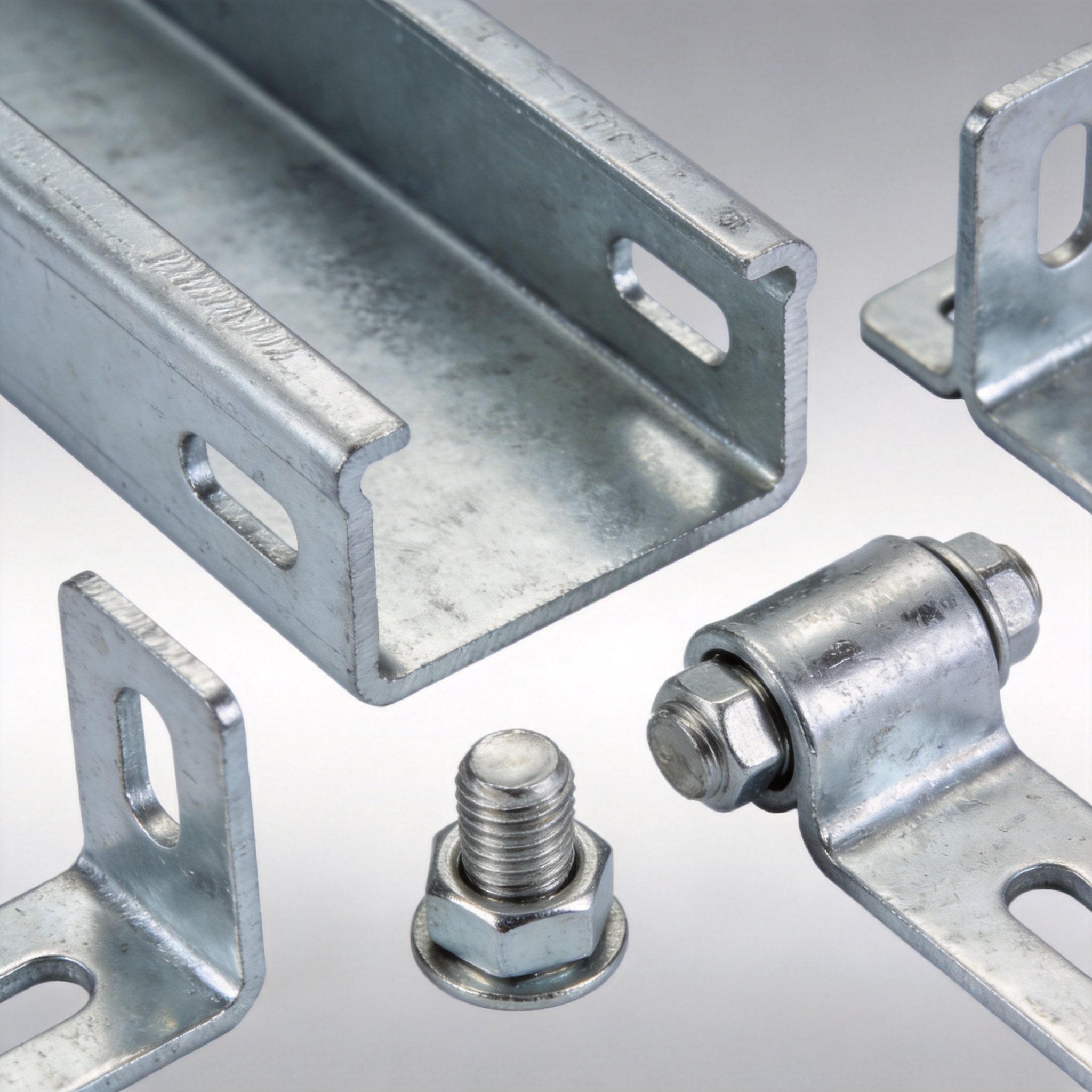
Hot-dip galvanized steel remains the industry standard for utility-scale PV plants because it offers the lowest cost per kN·m of bending capacity. The process involves immersing steel in molten zinc at 450°C, creating a metallurgical bond. The zinc layer provides both barrier protection and cathodic protection—if the steel is scratched, the zinc corrodes preferentially.
In my experience auditing a 200 MW plant in Spain (C3 corrosivity), the HDG steel piles showed no significant corrosion after 8 years. However, we identified a critical failure point: cut edges. When installers cut bolt holes on-site to fix misalignments, they expose bare steel. Repairs using zinc-rich paint only restore barrier protection, not cathodic protection, leading to localized rust creep.
The selection of coating thickness is governed by ISO 1461, which specifies minimum averages based on steel thickness. For a 3mm section, the standard requires 70 microns. However, for a 25-year design life in a C4 environment, I recommend specifying 100-120 microns. This adds approximately $0.15 per kg to the price but doubles the lifespan of the coating.
- Advantages: Lowest initial cost, high strength, proven track record, easy to weld/fabricate.
- Disadvantages: Heaviest material (increases transportation costs), zinc coating can be damaged during transport, requires touch-up paint after field cutting.
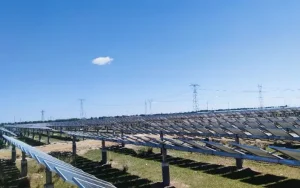
- Best Use Case: Fixed-tilt ground mounts in C2-C3 environments with low to moderate wind speeds. For projects requiring a Estructura de montaje fotovoltaico fija de una sola columna y un solo pilote o un Estructura de montaje fotovoltaico fija de doble columna y un solo pilote, HDG steel is often the most cost-effective choice.
4. Deep Dive: Aluminum Alloys (6005A-T6)
Aluminum is the preferred choice for rooftop residential and commercial systems due to its low weight and excellent corrosion resistance. The 6005A-T6 alloy, when properly anodized (Class AA15 or higher), forms a dense aluminum oxide layer that is highly effective in marine environments. In my testing at a coastal site in Qingdao, aluminum samples showed a weight loss of less than 1 gram per square meter per year.
The critical engineering challenge with aluminum is fatigue strength. Aluminum does not have a distinct endurance limit like steel; it can fail at low stress levels if cycled millions of times. For single-axis trackers with frequent movement, the connection points (bolted joints) are prone to fretting fatigue. I recommend using stainless steel bolts (A4-80) with serrated flanges to prevent galvanic corrosion and loosening.
From a cost perspective, aluminum’s price volatility is a significant risk. In 2021, LME aluminum prices spiked 45% in six months. In contrast, steel prices remained relatively stable. Therefore, for large utility-scale projects with a long procurement timeline, I advise hedging material costs or negotiating price adjustment clauses with suppliers.
According to the American Society of Civil Engineers (ASCE), the allowable stress design for aluminum structures follows the Aluminum Design Manual (ADM). The modulus of elasticity of aluminum (69 GPa) is one-third of steel, which means deflection often controls the design. You cannot simply swap steel purlins for aluminum ones without increasing the section depth.
- Advantages: Lightweight (reduces installation labor), corrosion-resistant without coating, aesthetically pleasing, high scrap value at end-of-life.
- Disadvantages: Expensive per kg, lower strength requires more material, high thermal expansion coefficient (requires slotted holes for long runs).
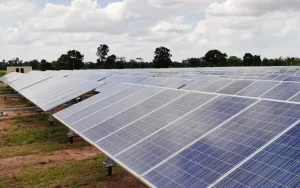
- Best Use Case: Rooftop systems, floating solar, coastal installations (C4/C5), and trackers where weight reduction reduces drive torque. For distributed rooftop fixed PV mounting systems, aluminum’s lightweight nature simplifies installation on existing structures.
5. Deep Dive: Weathering Steel (Corten A/B)
Weathering steel, often branded as Corten, is designed to form a stable patina layer that reduces the corrosion rate to negligible levels. The alloy includes copper, chromium, and phosphorus, which promote the formation of a dense oxide layer. In ideal conditions (alternating wet and dry), the corrosion rate drops below 0.01 mm/year after the first 3-5 years.
However, in my 15 years of practice, I have advised against using weathering steel for PV mounting systems for two reasons. First, the runoff from the steel during the initial rusting phase stains concrete foundations and can discolor solar panels, reducing their efficiency by up to 3% due to soiling. Second, in environments with high humidity or persistent fog, the patina never stabilizes, leading to continuous corrosion.
For example, a project using weathering steel in a mountain valley with high fog frequency (TOW > 60%) showed 2.5mm section loss over 6 years, while the predicted loss was only 0.5mm. This underscores the requirement from ASTM A588 that weathering steel must have proper drainage and be used in environments where it can dry out completely.
If you still consider weathering steel, you must specify ASTM A606 Type 4 or EN 10025-5 S355J2W. The design must account for an initial sacrificial thickness of 1.5-2.0 mm on all surfaces. This added thickness negates the weight advantage over HDG steel.
- Advantages: No coating to maintain, higher strength than standard structural steel, aesthetically unique (rustic look).
- Disadvantages: Unpredictable corrosion in damp climates, staining of components, requires thicker sections to account for loss, not suitable for below-grade applications.
- Best Use Case: Architectural facades, bridges, and landscaping—rarely recommended for PV racking.
6. How to Select the Right Material for Your Project
To make the right decision, you must first classify your project’s environmental corrosivity category using ISO 9223. Then, calculate the structural loads (wind, snow, dead) using ASCE 7-22 or EN 1991-1-4. Finally, perform a Life Cycle Cost (LCC) analysis that includes initial material cost, installation labor, maintenance, and replacement costs.
In a 2022 comparative study for a 50 MW plant in a C4 coastal environment, the LCC analysis showed that aluminum was 12% cheaper over a 30-year period despite being 25% more expensive upfront. This is because the HDG steel required recoating of the piles after 15 years, costing $0.02 per Wp. The study is available in the NREL Technical Report on PV System Cost.
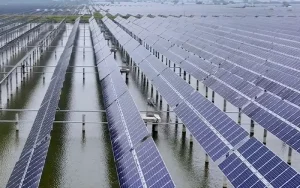
For most utility-scale projects in C2-C3 inland areas, hot-dip galvanized steel remains the most economical choice. For rooftop systems where installation speed and roof loading matter, aluminum is superior. For offshore or floating solar in C5/CX environments, aluminum with heavy anodization or marine-grade stainless steel (316L) is mandatory—such as in Estructuras de montaje para paneles fotovoltaicos marinos designed for corrosion resistance.
Remember the golden rule of material selection: Never mix metals without proper insulation. If you use galvanized steel rails with aluminum brackets, you must use a plastic or rubber isolator to prevent galvanic corrosion. My team has seen this mistake cause rail failure in just 4 years in a humid subtropical climate.
- Step 1: Collect site data (chloride deposition, SO2 concentration, TOW) or use the ISO 9224 classification map.
- Step 2: Define the design life (typically 25 years for PV modules, 30 years for structures).
- Step 3: Perform structural calculation to determine required section modulus.
- Step 4: Compare total installed cost (material + freight + labor + foundation impact).
- Step 5: Review fastener compatibility and corrosion mitigation strategies.
By following this framework, you will avoid the costly mistake of underspecifying materials in harsh environments. The initial savings from using cheaper steel in a coastal zone will be lost to maintenance and premature replacement within a decade.
 English
 Español
 Deutsch
 Português
 Français
 Italiano