


Por qué esto es difícil
Under-scoped investigations fail in predictable ways, and each failure has a well-known remedy that costs far less than the consequence.
- A single central borehole on a 200 hectare site describes one point and leaves the rest of the site as an assumption
- Soil corrosivity is frequently omitted from solar investigations, and it drives both pile coating class and corrosion allowance
- Foundation quantities are priced from the investigation, so an over-general report produces either over-design or a variation claim
- Refusal, groundwater and rock head depth are the three conditions that most often stop a piling programme, and all three are measurable in advance
- Foundation design risk is usually allocated to one party by contract, so an ambiguous investigation transfers a large contingent liability
- Later stages such as access roads, inverter pads and cable trenches reuse the same data, so under-scoping the investigation constrains the whole project
Requisitos de ingeniería
These are the elements a solar geotechnical investigation should contain.
- Borehole or cone penetration test density based on site area and variability, with a defined layout rather than an arbitrary number of holes
- Soil classification and stratification to the depth of interest for foundation design, typically beyond the maximum expected embedment
- Groundwater level and its seasonal variation, since it affects both capacity and foundation durability
- Corrosivity testing: soil resistivity, pH, sulphate and chloride content, mapped to a corrosivity class
- Rock head depth and refusal potential identified in the report rather than discovered by the piling rig
- Recommended foundation types with preliminary capacities, so the investigation produces design input rather than description
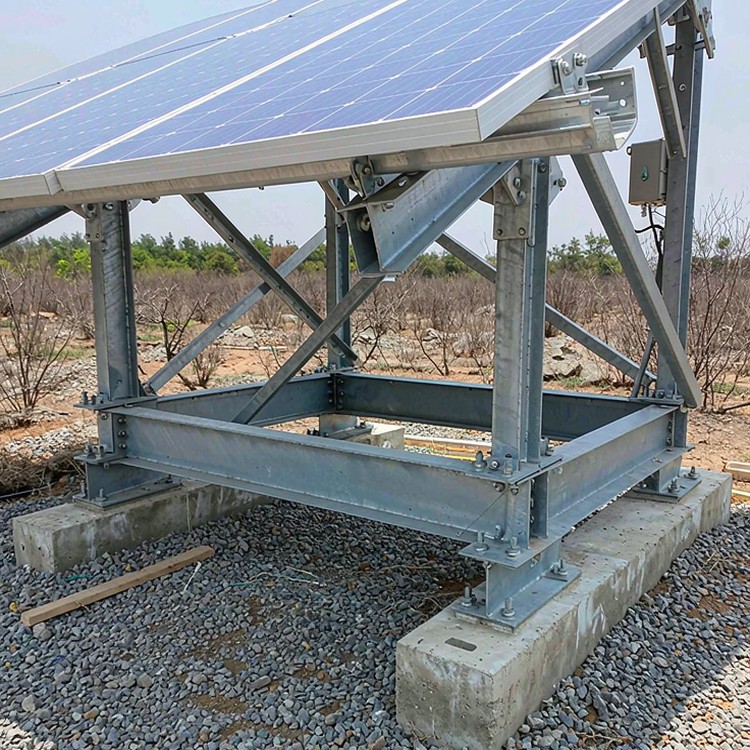
Selection guidance: scope the investigation against the foundation decision it has to support. The number of boreholes matters less than whether the layout captures the variability that will actually change the foundation design.
Cómo lo resolvemos
- Investigation scoped to the site variability, with borehole density set by area and geological setting rather than by convention
- Corrosivity testing included as standard, producing a class that maps to a specific coating specification and corrosion allowance
- Findings presented as foundation design input: recommended types, preliminary capacities and refusal risk by zone
- Groundwater and rock head depths reported per zone, supporting both foundation design and civil works planning
- Results delivered in a format that supports the tender pack, so bidders price from the same data and variations are reduced
- Zone mapping across the site, so foundation types and depths can be varied where conditions change
Más allá de la estructura
- Data reused across the project, since access roads, inverter pads, trenches and civil works all draw on the same investigation
- An early investigation is also a procurement instrument, because it lets bidders price foundations rather than carry contingency
Puntos de referencia
Los ejemplos que se muestran a continuación son proyectos de referencia del sector, documentados públicamente y de tipo y escala similares, que se citan para ilustrar la práctica de la ingeniería. No constituyen nuestro historial de proyectos.
- A 200 MW site in the Middle East where corrosivity testing drove a coating class change that would otherwise have been assumed from atmospheric conditions alone.
- A 150 MW project in Spain where rock head mapping allowed foundation types to be varied by zone, avoiding a uniform deep-pile design across the whole site.
- A 120 MW project in Australia where groundwater depth reported by zone changed the corrosion allowance and reduced a contingent risk carried in the EPC price.
Normas y cumplimiento
- Casos de carga de viento según ASCE 7 / EN 1991 / AS-NZS 1170 con categorías de terreno específicas del sitio.
- Requisitos estructurales de los seguidores de la norma IEC 62727 cuando las estructuras de seguimiento están incluidas en el alcance.
- Documentación de clase de fabricación y ejecución según EN 1090-2 o AISC 360
- Galvanizado por inmersión en caliente según ISO 1461, clasificación de corrosividad según ISO 9223 para la masa de zinc impulsora
- Sistema de calidad ISO 9001:2015, gestión ambiental ISO 14001 bajo petición.
- Estudio aeroelástico en túnel de viento realizado por terceros disponible para módulos de gran formato.
Seguro de calidad
Cada lote se envía con certificados de fábrica, registros de espesor de recubrimiento y registros de pernos; las soldaduras cumplen con las normas EN 1090 o las clases de ejecución AISC. La garantía de la estructura es de 10 años, frente a una vida útil de diseño de 25 a 30 años, y los paquetes de repuestos están documentados para que las reparaciones del año 12 no dependan de la información del año 1.
Documentación que usted recibe
La documentación está diseñada para auditorías, no para fines decorativos: notas de cálculo estructural que especifican los casos de carga y las normas utilizadas; base de diseño de la cimentación vinculada a su informe geotécnico; certificados de materiales para acero y fijaciones; certificados de galvanizado con espesor de recubrimiento medido por lote; planos de montaje con tablas de par de apriete; y documentación de embalaje que coincide con los manifiestos de los contenedores. Para proyectos financiados, añadimos declaraciones de cumplimiento en formato de entidad financiera; para licitaciones públicas, respondemos a los cronogramas de documentación línea por línea.
Planificación de la vida útil y el mantenimiento
La planificación de reemplazos forma parte del diseño: la geometría de las abrazaderas permite el intercambio de módulos individuales sin necesidad de cortar los rieles, las cabezas de los pilotes admiten la renivelación tras el asentamiento y los paquetes de repuestos se dimensionan según la clase de entorno y la capacidad requerida. Esto garantiza que las reparaciones a mitad de vida útil sean rápidas, predecibles e independientes del catálogo de productos del proveedor original.
Costos y consideraciones comerciales
- Investigation cost is typically a fraction of one percent of project capex, and it is the cheapest insurance available against foundation variations
- Additional boreholes are priced individually and cheaply relative to the variation claims they prevent
- Corrosivity testing added to an existing investigation is a marginal cost, while commissioning it separately later is a new mobilisation
- An investigation delivered with preliminary capacities reduces bid contingency, which is a measurable saving in the tender result
- Lead time: 2-4 weeks for field work and reporting on a typical utility-scale site, longer where permitting or seasonal access constrains the programme
Preguntas frecuentes
How many boreholes does a solar project need?
Is corrosivity testing really necessary?
What should the report actually deliver?
Can we design foundations before the investigation is complete?
Does the investigation help beyond foundations?
Guías y páginas de aplicación relacionadas
Continúa con las páginas más cercanas al tipo de tu proyecto.
- Foundation Strategy by Project Scale – la descripción general del grupo para esta banda de escala
- Cimentaciones de pilotes hincados para sistemas de montaje solar
- Cimentaciones con tornillos de tierra para paneles solares
- Proyectos solares en zonas salinas-alcalinas, marismas y salinas
- Gobi, Gravel & Hardpan Solar Projects
- Wetland, Marsh & Mangrove Solar Projects
Lo que necesitamos citar
- Site boundary, area and any available geological or prior investigation data
- Intended foundation type and approximate maximum embedment depth
- Access constraints and seasonal limitations for the field investigation
- Whether corrosivity and groundwater testing are required, and to which standard
Hable con un ingeniero estructural.
Send the site boundary and the foundation concept you are working to, and we will return a suggested investigation scope and a mapping from its findings to foundation design decisions.
 English
 Español
 Deutsch
 Português
 Français
 Italiano