


Por qué esto es difícil
Coastal corrosion failures follow a consistent pattern, and each element of the pattern has a design answer.
- Chloride deposition is the governing mechanism, and it is highest on surfaces exposed to wind from the sea, so exposure varies across a coastal site
- Humidity extends the time surfaces remain wet, which accelerates corrosion beyond what the chloride concentration alone would predict
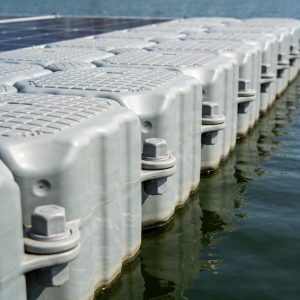
- Fasteners are frequently the first component to fail, since a small volume of metal with a thin coating corrodes through quickly
- Dissimilar metals in contact create galvanic corrosion, which is a design and assembly issue rather than a coating issue
- Buried steel at and below the ground line faces a different environment from the above-ground structure, and soil chloride content can be high on coastal sites
- Drainage and detailing determine whether salt-laden water collects in crevices or drains away, which changes the local corrosion rate substantially
Requisitos de ingeniería
These are the inputs required to specify protection for a coastal or high-salinity site.
- Site corrosivity classification to ISO 9223, with the distance from the shoreline and the prevailing wind direction taken into account
- Soil corrosivity data for the buried section, including resistivity, chloride and sulphate content
- Required service life and the maintenance interval, since these determine how much protection is justified
- Fastener specification and materials, including the coating class or alloy to be used
- Detailing review covering drainage, crevices, dissimilar-metal contact and the treatment of interfaces between components
- Any appearance, wash-down or maintenance regime intended, since a washing programme changes the effective corrosivity of the surfaces

Selection guidance: specify the fastener before the structure. On coastal projects the fastener is usually the first component to fail, and a structure specification that does not address fasteners has not addressed coastal corrosion.
Cómo lo resolvemos
- Coating class selected for the site corrosivity category, with the specification stepped up where the exposure assessment shows it is required
- Fasteners specified in a corrosion-resistant alloy or with a coating class matched to the structure, so the assembly has no weak component
- Dissimilar-metal isolation through washers, coatings or material selection, eliminating the galvanic couple at interfaces
- Drainage and detailing designed so water does not collect in crevices or on horizontal surfaces where chloride can concentrate
- Buried sections protected against soil corrosion with a coating class and corrosion allowance suited to the soil chloride content
- Maintenance regime stated, including whether washing is intended and what interval, since it changes the expected corrosion rate
Más allá de la estructura
- Coating inspection records per batch, so the delivered protection can be verified against the specification
- Selective use of higher protection classes on the most exposed components, rather than a uniform upgrade across the whole structure
Puntos de referencia
Los ejemplos que se muestran a continuación son proyectos de referencia del sector, documentados públicamente y de tipo y escala similares, que se citan para ilustrar la práctica de la ingeniería. No constituyen nuestro historial de proyectos.
- A coastal project in Japan at a short distance from the shoreline where coating class was increased and fastener materials changed to eliminate the most exposed failure mode.
- A 100 MW project in the Netherlands on a saline soil site where buried-section protection was specified separately from the above-ground coating.
- A 150 MW project in the Middle East where the corrosivity assessment varied across the site, and the protection class was applied selectively by exposure zone.
Normas y cumplimiento
- Las cargas de viento según la norma ASCE 7 / EN 1991 se resuelven teniendo en cuenta el terreno y los factores de exposición específicos del emplazamiento.
- Compatibilidad de la interfaz del módulo IEC 61215 / IEC 61730 verificada con la hoja de datos de su módulo.
- Clases de ejecución EN 1090 o AISC para trabajos de acero soldados y atornillados.
- Galvanizado por inmersión en caliente según ISO 1461, masa de zinc especificada por la corrosividad del suelo y atmosférica.
- Gestión de la calidad de la producción según la norma ISO 9001 con trazabilidad a nivel de lote.
- Paquete de documentación CE/EN 1090 cuando los mercados de destino lo requieran.
Seguro de calidad
Cada lote se envía con certificados de fábrica, registros de espesor de recubrimiento y registros de pernos; las soldaduras cumplen con las normas EN 1090 o las clases de ejecución AISC. La garantía de la estructura es de 10 años, frente a una vida útil de diseño de 25 a 30 años, y los paquetes de repuestos están documentados para que las reparaciones del año 12 no dependan de la información del año 1.
Documentación que usted recibe
La documentación está diseñada para auditorías, no para fines decorativos: notas de cálculo estructural que especifican los casos de carga y las normas utilizadas; base de diseño de la cimentación vinculada a su informe geotécnico; certificados de materiales para acero y fijaciones; certificados de galvanizado con espesor de recubrimiento medido por lote; planos de montaje con tablas de par de apriete; y documentación de embalaje que coincide con los manifiestos de los contenedores. Para proyectos financiados, añadimos declaraciones de cumplimiento en formato de entidad financiera; para licitaciones públicas, respondemos a los cronogramas de documentación línea por línea.
Planificación de la vida útil y el mantenimiento
La vida útil es un resultado de diseño, no una promesa. La masa de zinc, la clase de recubrimiento de los sujetadores, los detalles del drenaje y el aislamiento de metales diferentes se seleccionan en función de la categoría de corrosividad de su instalación, y el intervalo previsto para el primer mantenimiento se especifica por escrito. Para entornos agresivos, mejoramos el sistema de recubrimiento en la etapa de diseño, lo cual siempre resulta más económico que una modificación posterior.
Costos y consideraciones comerciales
- Coating class is the largest cost item in coastal protection, and specifying it from an exposure assessment avoids both over-protection and premature failure
- Fastener upgrades are a small proportion of the structure cost and the most frequent cause of coastal failures, making them the highest-value specification change
- Dissimilar-metal isolation costs almost nothing if designed in and is expensive to retrofit after installation
- Buried-section protection is often overlooked and, once the structure is installed, cannot be applied
- A washing regime reduces the effective corrosivity and can justify a lower coating class, but its cost over 25 years should be included in the comparison
Preguntas frecuentes
How close to the sea does a site become a C5 environment?
What fails first on a coastal structure?
Is stainless steel the answer?
Does washing help?
How is the buried section protected?
Guías y páginas de aplicación relacionadas
Continúa con las páginas más cercanas al tipo de tu proyecto.
- Corrosion Protection & 25-Year Durability – la descripción general del grupo para esta banda de escala
- Especificaciones de galvanizado en caliente para estructuras de montaje solar
- Acero ZAM y revestimiento avanzado para una mayor resistencia a la corrosión.
- Proyectos solares en zonas salinas-alcalinas, marismas y salinas
- Proyectos solares en alta mar, cerca de la costa y marinos
- Proyectos complementarios de pesca y energía solar
Lo que necesitamos citar
- Site location, distance from the shoreline and prevailing wind direction
- Soil investigation data with resistivity and chloride content
- Required service life and any planned maintenance or washing regime
- Fastener types in the assembly and any existing material preference
Hable con un ingeniero estructural.
Send the site exposure data and the component list, and we will return a coastal protection specification covering coating class, fasteners, isolation detailing and buried-section protection.
 English
 Español
 Deutsch
 Português
 Français
 Italiano