




2 Engineering Disciplines Under This Hub
Gentle-Slope & Hillside PV Racking
Solar Racking for Gentle Slopes & Rolling Hills — Low-Gradient Hillside Mounting
Terrain-Adaptive Hill Racking & Tracker Pedestal
Terrain-Following & Contour-Following PV Racking with Rolling-Terrain Tracker Pedestal
Why Gentle Slope / Hills projects are demanding
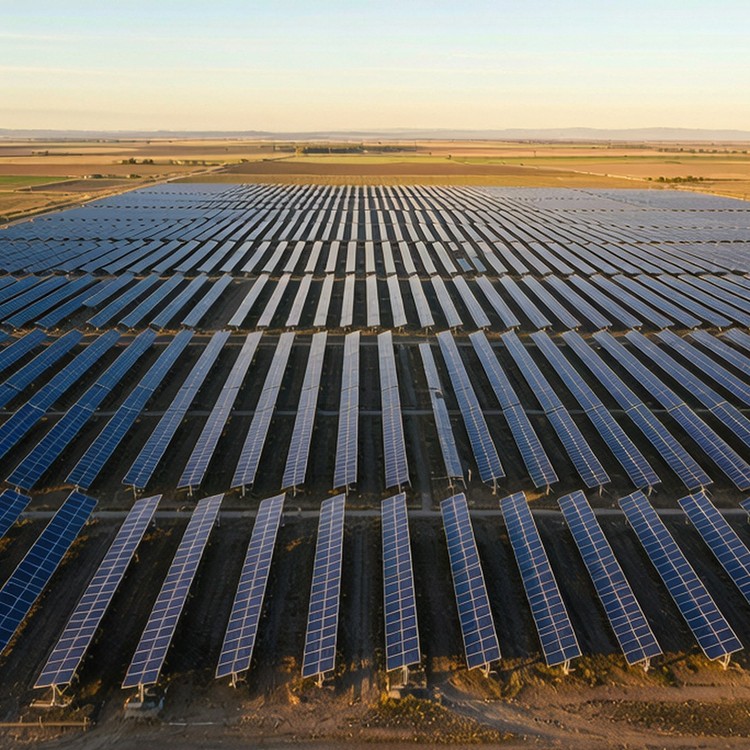
Gentle slopes and rolling hills are the fastest-growing utility segment after flat land: land is cheaper, grid corridors often cross them, and layouts can follow contours. The design work is in terrain-adaptive geometry – keeping row lengths, tracker drives and pile embedment workable on ground that is never quite regular.
Herausforderungen vor Ort, die wir durch unsere Konstruktionen bewältigen:
Herausforderung 01
Erosion channels form along rows after grading and must not undermine pile embedment
Herausforderung 02
Mixed soil profiles on slopes: shallow rock in one borehole, colluvial soil in the neighbor
Herausforderung 03
Tracker driveline slope limits (typically 8-12 percent) constrain which blocks can take trackers
Herausforderung 04
Equipment access narrows: piling rigs and cranes need planned corridors that survive wet weather
Wie man die richtige Seite auswählt
- If your slopes are moderate and you are weighing fixed versus tracker, start with the hillside racking page
- If trackers are planned and pedestal height or driveline slope is the open question, start with the tracker pedestal page
- If erosion channels or cut-fill balancing are your main concern, read both and bring us your grading plan
Wichtigste technische Parameter im Überblick
Typische technische Rahmenbedingungen für dieses Segment; jedes Projekt wird vor der Fertigung anhand der Bauvorschriften des Zielmarktes neu berechnet:
| Parameter | Typischer Wert / Ansatz |
|---|---|
| Schnee und Eis | 0,4-1,5 kN/m² Bodenschneeband mit geprüften unausgewogenen Lastfällen |
| Tilt envelope | 10-35 deg fixed-tilt window set by latitude and row-spacing study |
| Module interface | 30-35 mm framed modules, mid and end clamps per layout drawing |
| Fastening system | grade 8.8 bolts with flanged nuts and wedge-lock anti-loosening washers |
| Slope following | rails step across grades up to 10 deg without re-grading |
| Post adjustment | raked posts absorb cross-slope up to 15 deg |
Technische Anforderungen und Konstruktionsgrundlagen
- Erosion control integrated with foundation plan – hydroseeding, check dams, slope drains
- Slope-limited tracker selection or fixed-tilt substitution on steeper blocks
- Pre-assembly yards positioned to minimize steel handling on grades
- Contour-following layout with slope-adaptive table segmentation instead of one-size rows
Was dieses Hub abdeckt
- Contour-following layouts and slope-adaptive table segmentation
- Stepped and terrain-adaptive racking for uneven ground
- Tracker pedestal solutions within driveline slope limits
- Foundation mixes per slope band, including anchors at rock outcrops
Welche Konfiguration passt zu Ihrer Website?
Three supply configurations cover most gentle slope / hills procurement cases:
| Konfiguration | Struktur und Ausführung | Am besten geeignet für | Kostenindex |
|---|---|---|---|
| Economy-Linie | Q235B-Hauptstahl, feuerverzinkt nach ISO 1461 | rolling grades up to 10 deg | 1,0 (Ausgangswert) |
| Standardlinie | Hauptelemente aus Q355B, Zink 85 µm+, vormontierte Halterungen | typical gentle slope / hills tenders with standard code loads | +15-25% |
| Schwerlast-Standortlinie | Verstärkte Profile, Duplex-Beschichtung, abgedichtete Beschläge | cross-slope creep and cut-fill transitions | +35-50% |
Technische Lösung
- Two-tier foundation strategy across slope bands, priced transparently per zone
- Stepped or articulated table options where cut-fill would otherwise destroy topsoil
- Access corridor engineering: temporary crane pads and haul routes included in the delivery package
- Post-installation erosion kit sized for local rainfall intensity
- O&M path planning that keeps cleaning and replacement equipment reachable after grass establishment

Branchenstandards
Die folgenden Referenzwerte sind anonymisierte Branchen-Benchmarks, die aus vergleichbaren öffentlichen Projekten dieser Art stammen. Sie stellen keine Aussagen über von uns realisierte Projekte dar, und es werden weder Auftraggeber, Projektentwickler noch Betreiber genannt.
- A wind-solar-storage-hydrogen integrated base in Hebei on mixed terrain, with hillside PV blocks using combined piling and ballasted foundations. Reference for multi-technology bases where racking must coordinate with wind and storage contractors.
- A 300 MW project on Gobi gravel near Gaotai, Gansu, using screw piles and preassembled fixed structures to avoid concrete on hardpan. A practical cost reference for gravel-site foundations.
- A PV-agriculture composite project in Hubei on gentle farmland slopes, with elevated rows keeping farm machinery passing beneath. Demonstrates clearance-height coordination between cropping plans and racking geometry.
- A wind-solar complex in Piaui, Brazil (as publicly reported) on caatinga terrain, referencing deep foundations and long-distance grid integration in the Brazilian Northeast.
Installationsmethode und Produktivität der Baustelle
Bevor Sie den Stahlpreis vergleichen, erkundigen Sie sich nach der Montageabwicklung. Unsere Systeme werden mit Standardbaumaschinen installiert – ohne Spezialwerkzeuge und ohne Schweißarbeiten im kritischen Bereich. Die Pfähle werden mit branchenüblichen Bohrgeräten gerammt oder verschraubt, und Schablonen gewährleisten die Einhaltung der Einbautoleranz. Die Tische werden vormontiert in Bausätzen geliefert, die Ihrem Stapelplan entsprechen. Drehmomentkontrollierte Verschraubungen mit den mitgelieferten Drehmomentwerten ersetzen Schweißverbindungen. Die Verstellbereiche der Schienen gleichen Unebenheiten im Gelände aus, die durch die Planierung entstehen. Wir stellen Ihnen Montagezeichnungen, eine Schritt-für-Schritt-Anleitung, Tabellen für Drehmoment und Toleranzen sowie Fernsupport während des gesamten Installationszeitraums zur Verfügung. Auf Wunsch schult ein Montageleiter Ihr Team bei den ersten Blöcken.
Standards und Einhaltung
- ASCE 7 / EN 1991 wind with orographic speed-up on ridgelines
- Local slope-stability and erosion-control codes where grading exceeds thresholds
- ISO 1461 galvanizing; coating classes per ISO 12944 where soils are aggressive
- IEC 62738 site-design guidance for utility plants
- Qualitätsmanagement nach ISO 9001; Chargenrückverfolgbarkeit
- CE-/EN-1090-Dokumentation, sofern in den Zielmärkten erforderlich
Budgetfaktoren und Vorlaufzeit
- Slope over 10 percent typically adds 10-20 percent to foundation and installation labor versus flat ground
- Cut-fill earthworks can exceed structure cost if layout ignores contours – layout is the cheapest lever
- Rock excavation or anchor drilling is a discrete cost line; confirm with trial bores, not assumptions
- Lead time: 6-10 weeks fixed tables including slope adapters; trackers add driveline slope assessment
- Die Angebote enthalten explizit Angaben zur Stahlsorte, Zinkmasse und zum Beschichtungssystem; Incoterms und Containerpläne werden bis zu Ihrem Zielhafen angeboten.
Vergleich von Lieferantenangeboten
Eine sinnvolle Vorgehensweise: Angebote zunächst nach Vollständigkeit und dann nach Preis bewerten. Ein vollständiges Angebot enthält die Tragwerksplanung, die Annahmen zum Fundament, die Spezifikationen für Material und Beschichtung, Details zur Modulschnittstelle, die Dokumentation zur Qualitätssicherung, den Lieferplan mit Incoterms sowie die Garantiebedingungen mit den Kriterien für Reklamationen. Fehlende Angaben bedeuten keine Einsparungen – sie führen dazu, dass Entscheidungen bis zum teuersten Zeitpunkt, mitten in der Installation, aufgeschoben werden. Wir erstellen Angebote standardmäßig in dieser vollständigen Form und kalkulieren dokumentierte Alternativen neu (z. B. schwerere Bauteile bei weniger Pfählen, höherer Zinkanteil bei kürzeren Wartungszyklen), damit Ihre Auftragsentscheidung auf realen und nicht auf versteckten Faktoren basiert. Fordern Sie Ihre Mitbewerber auf, dies ebenfalls zu tun; die Branche braucht mehr vergleichbare Angebote.
Häufig gestellte Fragen
At what slope does racking design change fundamentally?
How do you stop erosion from undermining piles?
Can cut-and-fill be avoided entirely?
How is the hardware packed for ocean freight?
Bieten Sie Installationsschulungen vor Ort an?
Ready to Start Your Gentle slope / hills Project?
Was Ihre Angebotsanfrage enthalten sollte
- Topographic survey and slope classification by block
- Whether trackers are required, and any driveline slope limit
- Erosion-control obligations from the permit
- Rock outcrop locations and depth if known
Von der Angebotsanfrage bis zur Inbetriebnahme: So arbeiten wir
Zwei Faktoren entscheiden über den Erfolg eines Regalsystems: die vor Produktionsbeginn getroffenen Vereinbarungen und die während der Produktion dokumentierten Abläufe. Vor Produktionsbeginn stimmen wir uns auf fünf Punkte ab: die statische Berechnung, die Fundamentart je nach Bodenzone, die Korrosionsschutzklasse, die Modulschnittstelle und die Lieferreihenfolge. Während der Produktion erstellt jede Charge Dokumente, die Sie Ihrem Kreditgeber oder Eigentümer ohne Übersetzung vorlegen können: Werkszeugnisse, Beschichtungsmessungen, Drehmomentnachweise und Packungsgrößen. Auch nach der Lieferung bleiben wir für Sie da – mit Montageanleitung, Unterstützung bei der ersten Abnahme und einer auf die Nutzungsdauer Ihres Standorts abgestimmten Ersatzteilempfehlung anstelle einer starren Katalogliste. Fragen Sie frühere Kunden, wie Änderungsanforderungen während der Produktion gehandhabt wurden; das ist der wahre Test für einen guten Lieferanten.
Share your topographic survey – we will propose a slope-adaptive segmentation and flag where cut-fill can be avoided.
Qualität, Garantie und Lieferung
Wir kontrollieren die Qualität an drei Kontrollpunkten: Wareneingangszertifizierung des Stahls, Maßprüfung der Vorrichtungen vor der Montage und Dickenkontrolle nach dem Verzinken pro Charge. Die Garantiebedingungen basieren auf Belastungsfällen und Umgebungsbedingungen, nicht auf bloßen Adjektiven – lassen Sie sich von uns die Dokumente vor der Auftragsvergabe erläutern.
Kontrollpunkte von der Aufnahme bis zur Übergabe
| Bühne | Was wird geprüft? | Sie erhalten |
|---|---|---|
| Materialaufnahme | Stahlsorte und Zinkmasse wurden anhand von Werkszeugnissen überprüft. | Werkszeugnisse und Eingangsbericht |
| Produktion | Schweißnahtqualität, Lochpositionierung und Beschichtungsdicke wurden pro Charge stichprobenartig erfasst. | Chargenrückverfolgbarkeitsblatt und QC-Fotos |
| Vor dem Versand | Containerladeplan, Anzahl der Schraubensätze und Packliste geprüft | Packliste und Verladefotos |
| Standortübergabe | Installationsanleitung mit Bestätigung der Drehmomentwerte | Installationsanleitung, Drehmomenttabelle und Garantieschreiben |
| Standortspezifische Prüfung | rail slope-following check across cut-fill transitions | projektspezifische Methodenbeschreibung |
Dokumentation, die Sie erhalten
Buyers comparing suppliers should compare document depth, because claims are easy and records are not. We provide: design basis documents that name standards, load cases and safety factors explicitly; batch-level quality records (steel, galvanizing, fasteners) retained for the warranty period; installation and maintenance manuals written for site crews, not marketing; warranty terms that specify what is covered, for how long, and the claim process; and end-of-project dossiers suitable for handover to your O&M contractor. For multi-project buyers we keep a document history per site, so year-eight extensions reference year-one assumptions instead of starting from zero.
Lebensdauer- und Wartungsplanung
Planen Sie die Wartung anhand messbarer Auslöser, nicht anhand von Schätzungen. Jährliche Sichtprüfung der Anzugsmomente von Befestigungselementen, des Beschichtungszustands an Schnittkanten und Bodenkontaktflächen; detaillierte Inspektion nach dem ersten Extremwetterjahr – Taifun, Sandsturm oder starker Schneefall, je nach Region; Nachprüfung der Anzugsmomente nach dem ersten Temperaturzyklus bei langen Strecken. Wir liefern die Inspektionscheckliste und die Abnahmekriterien zusammen mit der Installationsanleitung, sodass Ihr Betriebs- und Wartungsteam die gleichen Werte wie unser Werk verwendet. Bei Bauwerken in aggressiven Böden oder Salzzonen empfehlen wir von vornherein eine höhere Zinkmasse und eine detaillierte Entwässerung – kostengünstiger als nachträgliche Nachrüstungen.
 English
 Español
 Deutsch
 Português
 Français
 Italiano