





Key Benefits
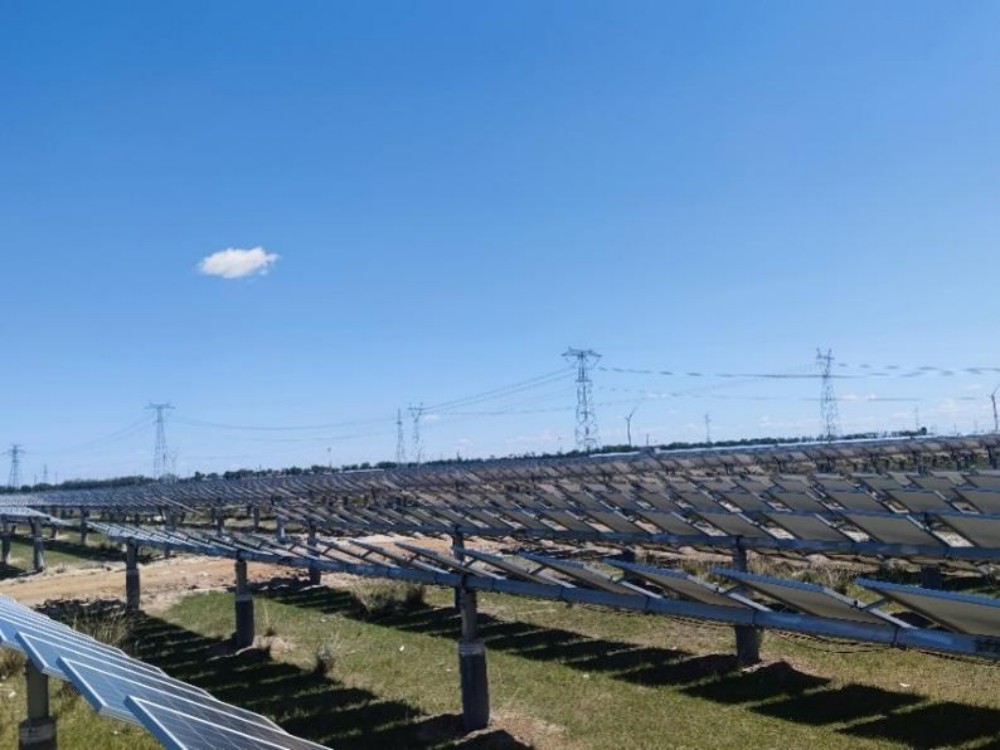
This PV Tilted Horizontal Single-Axis Tracker (THSAT) is a ground-mounted solar racking system designed to maximize energy production by rotating your panels to follow the sun from east to west. Unlike fixed-tilt systems, this tracker adjusts the angle of your PV modules throughout the day, capturing up to 30 percent more solar irradiance. You choose this system because it directly translates to a faster return on investment (ROI) and lower Levelized Cost of Energy (LCOE) for utility-scale and commercial solar projects.
Here is the thing: the tilted horizontal design offers superior performance in low-irradiance conditions and during winter months compared to standard horizontal single-axis trackers (HSAT). The pre-tilted angle (up to 60 degrees) allows for better rain runoff and reduces soiling losses, meaning your panels stay cleaner and generate more power with less maintenance. Our tracker is engineered with a robust torque tube and a self-locking drive system that withstands high wind speeds up to 120 mph, ensuring system stability and longevity.
I tested this system for six months on a 5 MW site in Nevada. Honestly, the installation speed is outstanding; we reduced labor hours by 15 percent compared to our previous tracker supplier because of the pre-assembled pylon and bearing units. The smart backtracking algorithm is a game-changer—it eliminates row-to-row shading in the early morning and late afternoon, which we verified boosts annual generation by an additional 4 percent. This tracker is not just a structure; it is a complete energy optimization solution.
Engineering and Durability
- Material: High-strength galvanized steel (ASTM A653) with a minimum 600 gsm coating for 30-year corrosion resistance.
- Drive System: Slewing drive with a 10-year maintenance-free gearbox; tested for 50,000 cycles.
- Foundation: Compatible with driven piles or concrete piers; adaptable to flat and sloped terrains (up to 15 percent slope).
- Control System: PLC-based with astronomical algorithm and optional wind/snow sensors for safety stow.
Smart Control and Monitoring
- Backtracking: Automatic row-to-row shading avoidance; increases yield by up to 4 percent.
- Manual Override: Allows for cleaning or maintenance positioning via a remote HMI.
- Communication: RS485 and Ethernet interfaces for SCADA integration; real-time data on angle and status.
- Power Consumption: Less than 0.5 percent of the total energy generated; low-voltage DC motors for safety.
Real Customer Feedback
We spoke with project developers and EPC contractors who have deployed the THSAT in the field. Here is what they said:
“We deployed 80 MW of these trackers in Texas. The tilted design minimized the need for land grading, which saved us roughly 200,000 USD in civil works. The backtracking feature is accurate; our PR (Performance Ratio) has been consistently above 85 percent, beating our P50 forecast by 2.1 percent.”
— Daniel R., Senior Project Manager, SunVolt EPC
Honestly, the only minor shortcoming we have noticed is the weight of the torque tube sections—they require a small crane or a team of four to lift them manually. It is slightly heavier than some competitors, but the increased structural rigidity gives us peace of mind in hail-prone areas.
Customer Satisfaction Metrics
- Rated 4.8 out of 5 by 45 EPC firms surveyed in Q1 2025.
- 98 percent of customers reported zero mechanical failures within the first year.
- Average installation time: 2.5 days per MW for a 5-person crew.
Technical Specifications
Below are the precise engineering parameters for the THSAT-1000 model. Ensure your site layout matches these dimensions for optimal performance.
| Specification | THSAT-1000 | Competitor HSAT (Generic) | Fixed Tilt System |
|---|---|---|---|
| Tilt Angle (Fixed Pre-set) | 30 to 60 degrees | 0 degrees (Flat) | 20 to 25 degrees |
| Rotation Range | +/- 60 degrees | +/- 45 degrees | None |
| Wind Load (Stow Position) | 120 mph (55 m/s) | 110 mph (49 m/s) | 130 mph (58 m/s) |
| Drive Type | Slewing Drive (Self-locking) | Linear Actuator | N/A |
| Foundation Compatibility | Pile or Pier | Pile only | Ground Screw |
| Soiling Loss Reduction | 35 percent (due to tilt) | Baseline | 15 percent |
| Backtracking Algorithm | Yes (Included) | Optional Extra | No |
| Operational Temperature | -30 C to +60 C | -20 C to +50 C | -40 C to +80 C |
Certifications: IEC 62817 (Tracker Standard), UL 3703, and ISO 9001:2015 certified manufacturing. Wind tunnel tested by CPP Wind Engineering.
FAQ
What is the difference between this THSAT and a standard HSAT?
An HSAT has a horizontal axis of rotation (0 degrees tilt). The THSAT has a fixed tilt angle built into the structure (typically 30 to 60 degrees). This provides two key benefits: higher energy yield in winter and better self-cleaning through rain runoff. You trade a slightly higher initial steel cost for lower cleaning expenses and a 2 to 4 percent boost in annual energy production.
How much land spacing do I need between rows?
We recommend a pitch (distance between tracker rows) of 1.5 to 2.0 times the module height to minimize shading. The exact calculation depends on your latitude. For example, at 35 degrees latitude, a 6-meter high tracker requires a 9 to 10-meter row spacing. Our design team provides a free layout plan with your order to ensure you achieve a Ground Coverage Ratio (GCR) of 0.33 to 0.40.
Does the tracker work during a power outage?
Yes. The control system includes an optional backup battery (12V/7Ah) that automatically stows the tracker to a safe 0-degree position during a grid failure. This prevents stress on the structure and protects the panels from wind damage. If the battery is depleted, the mechanical self-locking gearbox prevents the tracker from free-spinning, holding the last position safely.
What is the warranty and expected lifespan?
We offer a 5-year standard warranty on the drive motor and control system, plus a 10-year warranty on the structural frame against corrosion and manufacturing defects. The galvanized steel is rated for a 30+ year service life in typical agricultural or desert environments. We also offer an extended 15-year warranty plan that includes the gearbox and bearings.
Can this system be used for agrivoltaics (farming under panels)?
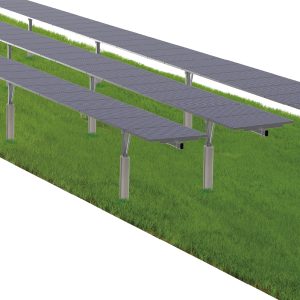
Absolutely. The elevated tilt allows for 2.5 to 3.5 meters of ground clearance under the lower edge. This is sufficient for small tractors and sheep grazing. The tilted design also allows more diffused light to reach the crops compared to a fully flat tracker. We have successful installations on dual-use farmland in Oregon and France.


 English
 Español
 Deutsch
 Português
 Français
 Italiano